

To bolster our fragile road and rail system we need to add a 'micro-mobility' network
- Written by Tony Arnold, PhD Candidate, University of Sydney
We all know the feeling. You’re on your way to an important appointment when disaster strikes. A glitch in the transport matrix leaves you waiting for a train that never arrives, or in bumper-to-bumper traffic with little chance of making it to your destination on time. If you are like me, you may wonder: why are our transport systems so fragile, and how could we make them more resilient?
The answer may lie in the infrastructure we provide for the emerging trend of micro-mobility – devices that are small, light and usually electric-powered. Greater investment in a micro-mobility network could improve the reliability of our current transport system, which offers two main networks in road and rail for journeys that are not walkable. This micro-mobility network can be developed by greatly improving the fragmented bicycle networks in our cities.
Read more: Banning 'tiny vehicles' would deny us smarter ways to get around our cities
To understand how this could improve our overall transport system, we must first look at how transport projects are funded and how diversification and redundancy can make up for shortcomings in this process.
Selecting the best transport projects
When deciding which projects to build, transport agencies rank projects using a benefit-cost ratio (BCR). This number is the predicted benefits of a project divided by the predicted costs.
Unfortunately, benefit-cost ratios are often misused to suit political motives. They are inherently flawed and uncertain for at least three reasons:
- modelling often miscalculates future traffic volumes
- inaccurate assumptions are used to estimate the dollar value of costs and benefits
- many uncertain costs and benefits are simply ignored.
Read more: How do we restore the public's faith in transport planning?
Reducing investment risk through diversification
In the financial sector, uncertainty is simply a risk to be managed. This can be done with diversification, which is achieved by bundling different assets into a portfolio. For example, bundling shares from different industries reduces the risk that these “diverse” investments will all suffer losses at the same time.
Similarly, investing in a variety of transport modes is a form of diversification. This makes our transport systems more resilient to long-term changes in the economy, the climate, technology, energy and so on. For example, a transport system that provides alternatives to car travel is resilient to increases in the price of fuel or the cost of emissions.
Transport diversification reduces investment risk, so we are likely to get a more stable return on our transport investment. But diversification alone does not prevent a traffic accident blocking a motorway, or a power outage shutting down a railway line.
To tackle those problems, we should consider approaches the technology sector has been using to manage component failures for decades. It can provide services with 99.9% availability. That would be quite an achievement for the transport network!
Managing component failure using redundancy
The technology sector uses redundancy to ensure service is maintained even when one part of the system fails. IT managers keep local and cloud backups so data can be retrieved even if the office burns to the ground. Aircraft designers install multiple flight control systems so the failure of a single system does not cause a crash.
In the transport sector, redundancy is achieved when several modes can be used to make the same journey. While the technology sector can offer redundancy through duplicate systems, providing a duplicate train line “just in case” the first one fails is simply too costly. Instead, we rely on the train network to move people when a road crash halts traffic and we rely on the road network to move people when a train line is closed.
Unfortunately, Australian transport networks do not offer enough capacity or alternatives when one mode is crippled. The predictable result is a fragile transport system with unplanned but not entirely unexpected faults causing frequent delays.
Tapping into micro-mobility solutions
A new wave of mobility solutions is on the horizon. Many are described as “micro-mobility”: electric scooters, electric bicycles and automated delivery pods fit this description, as do conventional bicycles.
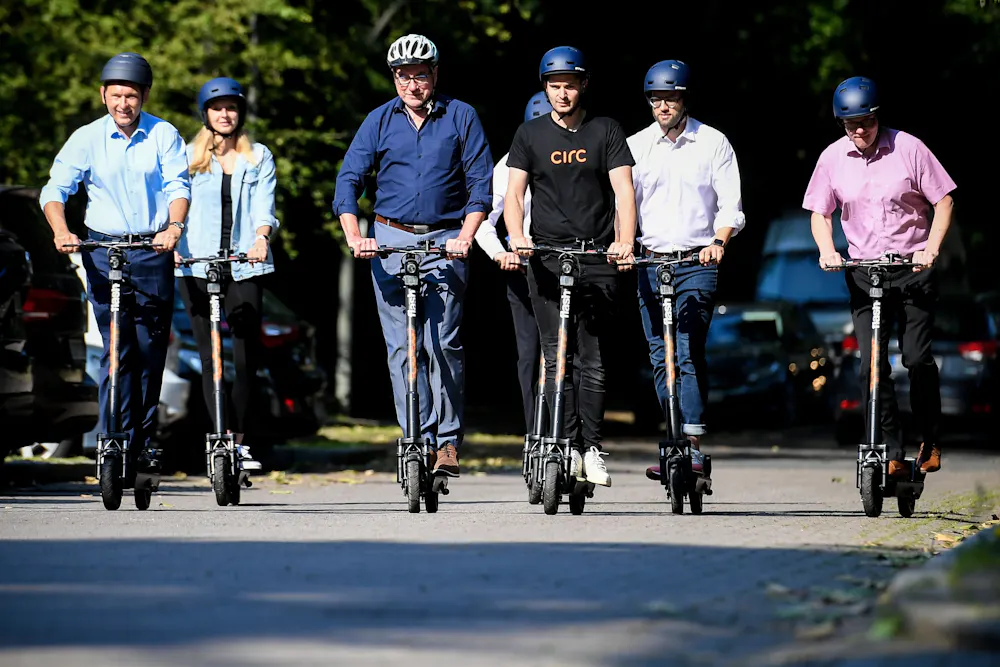 Electric scooters are part of the emerging wave of micro-mobility options, but the question is where these best fit into our transport system.
Sascha Steinbach/EPA
Electric scooters are part of the emerging wave of micro-mobility options, but the question is where these best fit into our transport system.
Sascha Steinbach/EPA
These devices are perfect for short trips in crowded cities. They are used for individual mobility and micro-freight (such as small packages and takeaway food).
These devices travel faster than pedestrians, so can be unwanted on footpaths. However, they are slower than motor vehicles, so can be unwanted on roadways. And as people using micro-mobility devices are not protected from collisions, they are often reluctant to mix with motor vehicle traffic.
Read more: Limes not lemons: lessons from Australia’s first e-scooter sharing trial
The logical place for micro-mobility devices is on a network that is designed for unprotected humans to travel at around 10-30km/h. In other words, the bicycle network.
The benefits of a bicycle (or “micro-mobility”) network
The evidence for investment in bicycle infrastructure is strong. It has the benefits of tackling big challenges including obesity, emissions and traffic congestion.
This article highlights three additional benefits that are not included in traditional benefit-cost ratio analysis:
- providing a bicycle network increases transport diversification and therefore minimises investment risk
- a bicycle network provides redundancy to keep the transport system functioning when other networks fail
- bicycle networks support the emerging micro-mobility market.
However, investment in bicycle networks in Australia has been miniscule for decades. For example, in 2015-16, A$25.1 billion was invested in roads and A$8.7 billion in rail. But only A$121.8 million was spent on the bicycle network – just 0.36% of transport infrastructure spending, or A$5.27 per capita.
Read more: Cycling and walking are short-changed when it comes to transport funding in Australia
The bicycle networks in Australian cities are therefore fragmented and incomplete, as seen below in the map of Sydney.
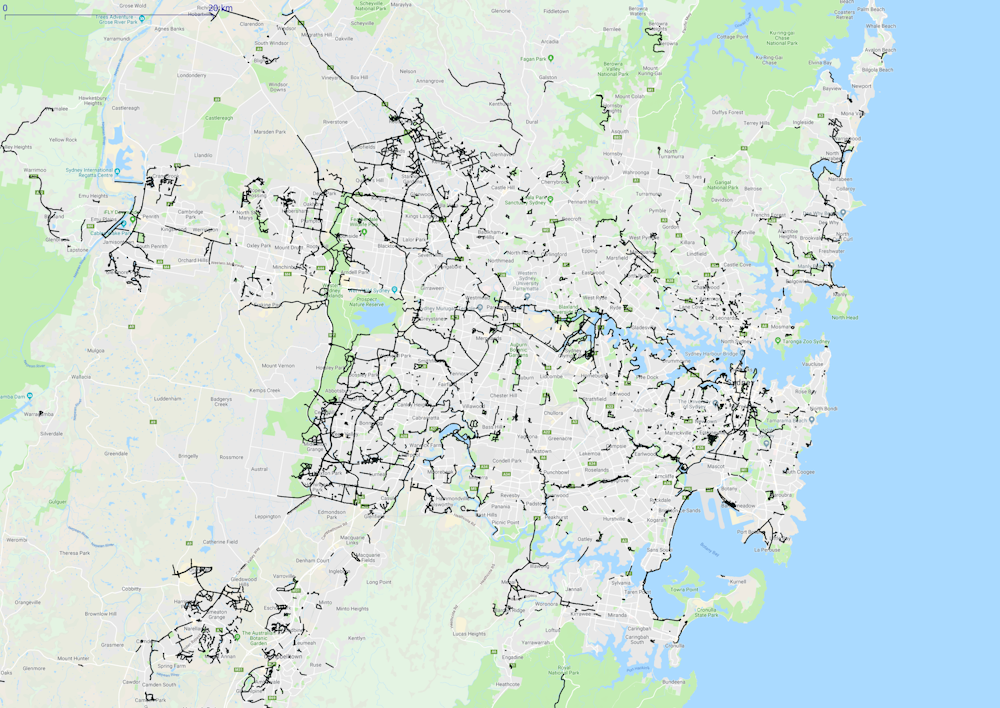 Sydney bicycle network.
Author using Transport for NSW data, CC BY
Sydney bicycle network.
Author using Transport for NSW data, CC BY
Without a functioning bicycle network, the overall transport system is susceptible to investment risk and network failure. We will also be left behind as micro-mobility options proliferate and our transport system becomes less and less fit for purpose.
So let’s build a comprehensive bicycle network fit for scooters, delivery pods, bicycles and more, and let’s do it quick smart.
Authors: Tony Arnold, PhD Candidate, University of Sydney

















