

Politicians must mine the divide between coal lobbies and energy companies
- Written by Christian Downie, Australian Research Council DECRA Fellow, Australian National University
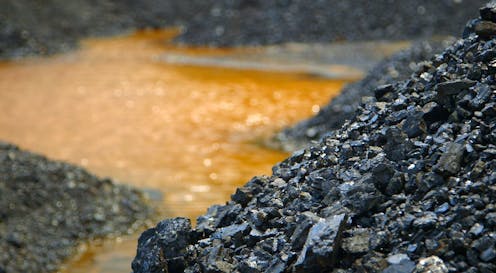
It’s time we started talking about the principal opponents to action on climate change – fossil fuel industries. If history has taught us anything, it is when oil, gas and coal industries oppose policies to reduce greenhouse gas emissions, those policies fail.
And make no mistake, they do oppose. Revelations this year that mining giant Glencore spent millions of dollars globally to bankroll a pro-coal campaign are just the latest example.
However, my research shows that there are specific strategies policymakers can use to help overcome the resistance from incumbent fossil fuel industries, including exploiting the divisions within and between fossil fuel industries.
Read more: Carbon emissions will reach 37 billion tonnes in 2018, a record high
I have spent the past few years studying the behaviour of these firms and industries in the United States – the home of fossil fuel resistance. After all, the US is now the largest producer of oil and gas, with the largest reserves of coal on the planet, and it is the home of companies, such as ExxonMobil, that have known about climate change for 40 years and have been denying its existence for almost as long.
To get to know the way they work, I spent countless hours in the offices of major coal corporations and their lobbyists. I met with executives from oil and gas corporations in Houston, and their lobbyists in Washington DC.
I also spoke with small renewable startups, and billion-dollar companies running endless battles to preserve tax subsidies for wind and solar, which they claimed were only fair given the subsidies to fossil fuels.
So what are the lessons for policymakers seeking to advance a clean energy transition? Three stand out.
Support clean energy industries
First, governments need to entrench and build existing interests in support of clean energy. Targeted policies, such as subsidies to the solar industry or tax rebates to households for solar power, both boost the industry and build a specific political constituency in support of solar power.
For example, US investment tax credits for solar power helped drive a boom in recent years, growing into an industry measured in the billions of dollars. As industry revenues increased, so has the industry’s power to defend the investment tax credit and oppose fossil fuel companies.
Indeed, the Solar Energy Industries Association in the US is now a vocal advocate for clean energy in Washington, just as the Solar Council is here in Australia. Both groups have helped offset the tide of fossil fuel lobbying that regularly washes against the shores of government.
Split fossil fuel industries
Second, policymakers should seek to exploit divisions within and between fossil fuel industries. When incumbent industries are divided or politically weak, green coalitions are easier to build.
For example, if the aim is to regulate coal, policies are more likely to succeed if they exploit the natural divisions between coal mining companies and the electric utilities that burn it to generate electricity.
In this case, the best bet is to target politically weak industries less able to mount a resistance campaign.
In the US the obvious example is the coal industry. The US coal industry is in structural decline, with production and revenue falling steadily. In fact, between 2012 and 2015, more than 50 firms representing 50% of US coal production filed for bankruptcy protection, including three of the largest: Peabody Energy, Alpha Natural Resources, and Arch Coal, all of whose share prices have plummeted.
Coal’s decline has been manifest in a shrinking lobbying presence, with key coalitions reducing their operations, and with it the industry’s capacity to oppose policies that support clean energy.
Shift interests
Third, policymakers should not only seek to entrench existing commercial interests and exploit divisions, but also to shift commercial interests.
Policies, such as renewable energy targets that compel utilities to invest in renewable energy, over time will shift the commercial interests of these firms towards policies supporting renewable energy.
Read more: When it comes to climate change, Australia's mining giants are an accessory to the crime
Indeed, repeat signals demonstrating to business the regulatory landscape is changing can create a tipping point, when a critical mass of affected companies stop opposing a specific policy such as emissions trading.
This was the view of many electric utilities during the Obama administration who decided to support climate policies. As the CEO of Duke Energy, Jim Rogers put it at the time, “if you’re not at the table, you’re going to be on the menu”.
Of course none of this will be easy. BHP shareholders last week voted to remain a member of the coal lobby Minerals Council of Australia, showing the fossil fuel industries are far from toothless.
Read more: How to transition from coal: 4 lessons for Australia from around the world
But with the science showing a third of the world’s oil reserves, half the world’s gas reserves and 90% of global coal reserves must be left in the ground to meet the Paris targets, governments urgently need effective action.
Otherwise, no matter what administration is in power, climate action will continue to be delayed, and even derailed by the industries that stand to lose.
Authors: Christian Downie, Australian Research Council DECRA Fellow, Australian National University

















