

the ABC's complex debate over its role as sports broadcaster
- Written by Michael Ward, PhD candidate, University of Sydney
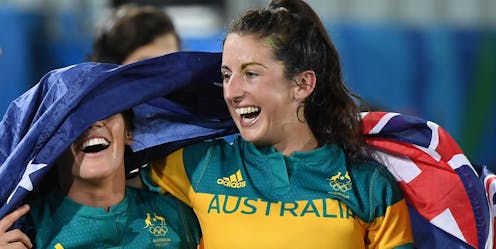
The ABC has announced it will not provide live radio coverage of the Olympics for the first time in 67 years for budgetary reasons, and because Australians now have the “increased ability to access Olympics coverage in other ways”.
The decision sparked a furious response from some, such as veteran sports broadcaster Quentin Hull, who deemed it a “national shame”.
But was the decision a snub to sports fans in favour of other types of broadcasting, or just a matter of hard-nosed accounting?
Funding cuts forcing difficult decisions
The ABC’s decision needs to be viewed in two contexts: internal competition for increasingly scarce resources, and a battle to define how sport now fits into the ABC’s charter obligations.
First, the money. The ABC’s financial situation is in dire straits, especially given the range of services it is now expected to provide.
In the past two decades, the ABC has transformed from a radio and television broadcaster to a multi-channel media organisation. It’s done this to meet the responsibilities of its comprehensive service charter, ensuring it reaches Australians across a range of new digital platforms (three digital television channels, digital radio services, podcasts and apps).
At the same time, the government has frozen the ABC’s budget for three years from 2019, which comes on top of earlier budget cuts. The decision not to send a radio team to the 2020 Tokyo Olympics is a direct result of these cuts.
Read more: The ABC didn't receive a reprieve in the budget. It's still facing staggering cuts
Prior to the federal election in May, and the funding freeze, the ABC expected to receive an extra $14.6 million in indexed funding for 2019-20, sufficient to cover occasional events like the Olympics and the current bushfires.
Now, it faces an $84 million shortfall over the next three years instead.
There’s an added problem created by the annual approval of divisional budgets.
This year, ABC Radio’s budget would have needed special top-up funding to meet the cost of the Olympics. Sources have told me this is estimated to be $1 million (for the rights and production costs).
Given top-up funding is not available in the current budget, executives would have had to make program or staff cuts elsewhere. That’s on top of the cuts already planned as a result of the budget freeze. They chose not to.
Sports fans may be outraged the ABC has chosen to ditch its Olympic radio coverage instead, but cuts anywhere else - say to regular religious or children’s programming - would have produced equally loud protests from other audiences.
A long history of sports coverage
Which leads to our second question: what is the ABC’s role in providing sports coverage in a multi-platform world?
For decades, the ABC and its constituents saw sports broadcasting as central to its charter roles: universal service, national identity and innovation.
The first ABC Annual Report noted in 1933 that the “keen national interest in sport” had inspired daily broadcasts of the “Bodyline” Ashes cricket series to a national network of 12 stations. Indeed, the ABC helped build a national audience for sports such as cricket and tennis, first on radio, and then on television.
Read more: Into the spotlight: media coverage of the Paralympic Games has come a long way
According to ABC historian Ken Inglis, the broadcaster believed sports broadcasting was its “most characteristic feature”, directly linked to its role in nation-building.
Sports broadcasts, especially of the Olympics, have also been opportunities for the broadcaster to try new programming approaches and delivery technologies. For instance, the use of shortwave and relay services enabled coverage of the 1952 Summer Olympics in Helsinki – the first ABC Olympics coverage.
Yet, ABC sports broadcasting has always been contentious.
In 1948, ABC Chairman Richard Boyer argued to General Manager Charles Moses that there was too much sport on ABC Radio. Although Moses countered that these broadcasts brought audiences to the ABC, the “commission insisted that the time devoted to sport be reduced” and savings spent on other programs.
However, Boyer changed his mind somewhat after the ABC’s re-broadcast of the BBC coverage of the 1948 Olympics was widely criticised for focusing too little on Australian competitors.
In 1956, ABC’s coverage of the Melbourne Olympics became a major moment in Australian television, though for most Australians it was ABC Radio that ensured they were able to share in the event.
Decades later, when top-tier sports like cricket were being commercialised, the Dix Inquiry argued the ABC needed greater diversity in its sporting output, leading to increased broadcasts of women’s sport and the Paralympics from 1988.
However, less than a decade after battling SBS for the Ashes cricket rights in 2005, the ABC started to become more ambivalent about sports as a fundamental part of its charter activities. Since the early 2010s, ABC TV has moved almost completely out of sports.
ABC Radio, in contrast, had maintained a strong commitment to sports broadcasting throughout the 2000s – until now.
Where can Australians go now?
So, without the ABC’s involvement, will Australians still have audio access to the Olympics?
Southern Cross Austereo was earlier tipped to be in position to buy the commercial Olympic radio rights, following its coverage of the 2016 Rio Games.
Read more: The Coalition government is (again) trying to put the squeeze on the ABC
But as its parent company shares hit a five-year low in mid-October and it recently slashed jobs, there’s a chance it won’t follow suit for Tokyo. It’s not yet clear.
What is clear is that in the “anywhere, anytime, any device” age, radio is still important to many Australians. For people driving, exercising or working, radio remains a critical sports delivery platform.
The ABC has decided this will no longer be a priority. The question, then, is whether Australians who want to follow the Olympics on radio will have any options at all in 2020.
Authors: Michael Ward, PhD candidate, University of Sydney

















