

From beef to timber, a new era of labels will reveal where your shopping comes from
- Written by Marcelo Feitosa de Paula Dias, PhD candidate in Environmental Law, Queensland University of Technology
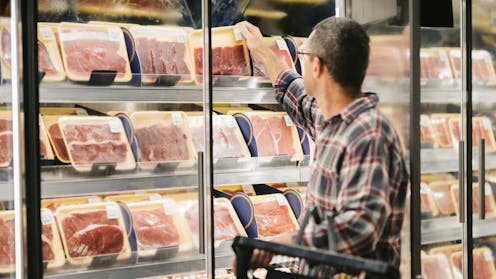
Have you noticed more QR codes or country-of-origin labels on the meat at the supermarket or timber decking from the hardware shop? You’re not imagining it.
We’re in a new era of “traceability”. Labels – often with a QR code – will show shoppers where a product came from, who handled it and how it was checked to ensure it was not linked to illegal logging or deforestation.
Shoppers will also be able to see the country or region of origin, the product type, a certification ID (for timber, for example) and a code that links to more information, such as the locations of farms or forests.
These tighter labelling laws overseas in the European Union and Brazil are expected to change what’s available on Australian shop shelves, now and over the next few years. For example, stock levels of products might fluctuate as suppliers drop cheap but ecologically-damaging items and replace them with more responsible alternatives.
Already in Australia, most food products have to carry country-of-origin labels to help compare provenance at a glance. Many timber products in major retailers are Forest Stewardship Council-certified to show they are responsibly sourced or recycled. Other Australian businesses, such as fruit growers, are introducing QR-enabled traceability to let consumers scan their fruit to see where it was grown, and even who picked and packed it.
The trend towards traceability
Two forces are responsible for this push towards tracking produce.
The first is tougher regulation. Australia tightened timber import rules in March this year, requiring importers to know the country, area of harvest and species the wood came from. Many companies share this information via on-pack labels or QR codes. In Europe, anti-deforestation laws will come into force at the end of this year for large companies, prompting exporters to collect similar data and share it with customers.
The second is technology. Retailers are shifting to scannable barcodes linking products to information about their origins. By 2027, point-of-sale systems worldwide are expected to be able to read 2D codes, which are similar to QR codes.
Beefing up cattle IDs
In Brazil, the primary cause of deforestation is the expansion of agriculture and cattle ranches.
To combat this, a national system is being introduced to link each animal to its farm of origin, which means exporters or regulators can reject cattle from deforested areas.
The Brazilian state of Pará, which is the leading native timber producer in Brazil, has already mandated this individual animal traceability. Combined with audits and enforcement, this is designed to choke off “cattle laundering”, as it is known, where meat producers try to hide the illegal origins of their cattle and sell meat from cattle farmed on deforested areas.
As exporters and multinationals adjust to these rules, some imported lines could face temporary changes in supply. Most public warnings focus on EU-bound supply chains rather than Australian, so the local effect remains uncertain and will vary by supplier.
Illegal logging reforms
In March 2025, Australia updated its illegal-logging regime. This means importers and processors have legal responsibilities to make sure the products they bring to Australia or process here do not contain illegally logged timber.
In short, the reforms aim to prevent trade in illegal timber, protect forests and create a level playing field for lawful suppliers. So, what does that mean on the shop floor at Bunnings, for instance?
More timber and wood-containing products will be certified. This means some lines of timber may go in and out of stock as suppliers switch to better-traced products. Prices on certain tropical hardwoods could increase as low-cost, higher-risk supply is squeezed out.
Deforestation-free Europe
The European Union has grown increasingly concerned about logging pressure on biodiversity and forests. While full implementation of its flagship Deforestation Regulation has been postponed to 2026, the purpose of the regulations remains clear: keep deforestation-linked commodities such as cattle, wood and cocoa out of the market.
Over time, clearer labels and even digital passports are expected to encourage consumers to choose certified or recycled options. This passport is a standardised digital file linked to a product via a scannable label.
This matters to Australians, too. Large multinationals typically design their compliance systems to satisfy the market with the toughest rules. If Europe requires farm-level geolocation for beef or cocoa, suppliers will record the farm’s coordinates for every lot at the point of origin, regardless of the final destination. This means Australian buyers will also get this information.
The bottom line
Next month, the COP30 global climate summit will be held in Belem, the gateway to the Brazilian Amazon. Deforestation will be a key focus. The summit will explore ways to align commodity trade with the goal of zero-deforestation. The ability to trace and verify origins will be essential to make this possible.
It’s not just timber and beef that will be traced to their origin. Cocoa, coffee, palm oil, soy, rubber and leather are already being considered for EU due-diligence rules. And batteries will need digital passports recording their origins and compliance.
There may be short-term friction as these changes come into effect. Consumers may see this through occasional shortages or slower restocks. But the dividends are lasting: clearer information for shoppers, a level playing field for compliant businesses and tangible progress towards stopping deforestation and ecosystem harm.
Authors: Marcelo Feitosa de Paula Dias, PhD candidate in Environmental Law, Queensland University of Technology

















