

Protected areas in the Hauraki Gulf nearly triple under a new law – but it comes with a catch
- Written by Conrad Pilditch, Professor of Marine Sciences, University of Auckland, Waipapa Taumata Rau
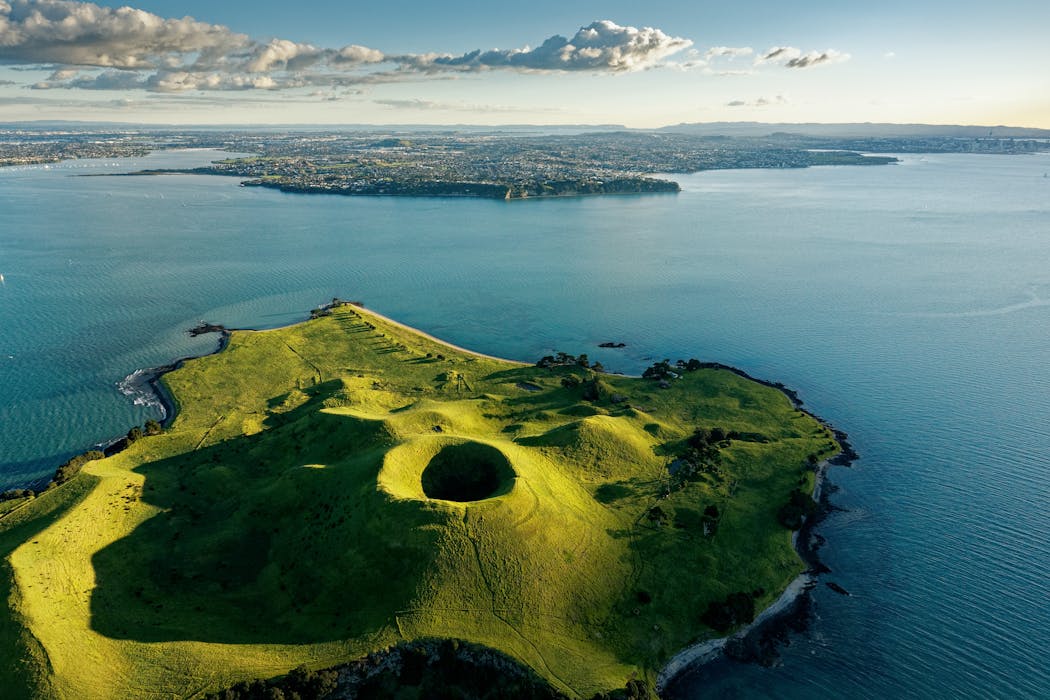
A new law that almost triples the protected area in the Hauraki Gulf Tīkapa Moana – New Zealand’s largest marine park at more than 1.2 million hectares, surrounding Auckland and the Coromandel peninsula – is something to be celebrated.
But it comes with compromises, and it is especially disappointing that some forms of commercial fishing will continue in some areas.
This week, parliament passed the Hauraki Gulf/Tīkapa Moana Marine Protection Bill into law. It increases areas under some form of protection from 6% to 18% by extending two existing marine reserves and adding 12 high protection areas and five seafloor protection areas.
These new areas add to the diversity of habitats under protection, including under-represented soft sediment ecosystems, and provide new opportunities for customary management. While fishing will be restricted in 18% of the gulf, there is a carve-out for commercial ring-net fishing in high protection areas.
This diminishes their status as protected areas and makes it more difficult for New Zealand to fulfil its promise under the Global Biodiversity Framework to protect 30% of the marine environment by 2030.
We should also recognise this is only a starting point in restoring the mauri (life force) of the gulf. Animals that live in the gulf’s water column remain vulnerable, and given the rate of environmental change in New Zealand’s waters, we need to fast-track the conservation process.
Levels of protection
The new legislation has three forms of protection.
Marine reserves are complete no-take zones. High protection areas (HPAs) allow for restoration activities and provide for customary practices of tangata whenua. Seafloor protection areas (SPAs) protect habitats on the seabed, but they allow for activities that don’t damage them, such as non-bottom fishing.
All three forms of protection share a common theme in restricting large-scale seafloor disturbances from bottom trawling and dredging, large-scale removal of non-living material such as sand, and dumping or discharge of waste.
The protection of the seafloor is critical to preserving the many benefits we gain from its ecosystems, including carbon storage, the processing of excess nutrients, provision of food for fish, and nursery habitats.
HPAs value Māori management and support the restoration of nature and culture. This opens up opportunities to undertake active restoration to accelerate passive recovery. Such activities may include large-scale kina (sea urchin) removal and re-seeding of shellfish populations.
Many of the HPAs are alongside areas where significant restorative efforts are happening on land. This acknowledges land-sea connections and these areas will hopefully become successful examples of what integrated management can achieve.
Lessons from NZ’s oldest marine reserve
The Cape Rodney-Okakari Point (Goat Island) Marine Reserve at Leigh became New Zealand’s first legislated marine reserve 50 years ago.
This reserve, on the north-east coast of the Hauraki Gulf, will quadruple in size under the new law. It has taught us many lessons about how coastal reef ecosystems are affected by human activity and how marine reserves benefit people, including fishers.
For example, we know that marine reserves maintain populations of predators, such as large lobsters and snapper, which stop sea urchins from becoming too abundant and over-grazing coastal kelp forests.
The ability to protect large snapper has also demonstrated that size matters in fish reproduction. The marine reserve contributes disproportionately to the snapper population across a large part of the gulf. If this is scaled with the new protection area, it should lead to a more productive fishery that will benefit all.
The expansion of the Cape Rodney-Okarkai Point Marine Reserve and the Te Whanganui-A-Hei Marine Reserve at Hahei will open up new opportunities for learning about connections between reef and soft-sediment habitats and how they influence biodiversity.
Fast-tracking marine conservation
Overfishing, pollution, climate change and invasive species mean marine ecosystems are changing rapidly. Management responses must do so as well.
Successive State of the Gulf Reports have documented the continued decline of its ecosystems. This new legislation builds on decades of efforts to protect the gulf. It follows the 2016 Sea Change/Tai Timu Tai Pari marine spatial plan and the Hauraki Gulf Marine Park Act 2000 which provided special recognition for the gulf but no additional protection.
During times of rapid environmental change, we need strong connections between science, policy and management. Otherwise, we’re at risk of missing the connections and processes responsible for ecological tipping points.
This new law must not be the end to marine protection and restoration of the Hauraki Gulf. Early European settlers reported an abundance of fish, invertebrates, whales and dolphins and we are a long way from these historical baselines.
The new measures protect from some important forms of stress, namely overfishing and seafloor disturbance, but there are many others that continue to affect the gulf, including those that begin on land. Unless we work to substantially reduce the flow of sediment, nutrients and microplastics into the gulf, recovery will be slow.
We also need to remember what these new measures do not protect: the fish, marine mammals and seabirds that live or move through the water column or depend on it.
Our research and experience so far highlights the need to apply systems thinking to the management of marine environments. This means recognising and accounting for the dependencies between the ecological health and economic and social wealth of the Hauraki Gulf.
Authors: Conrad Pilditch, Professor of Marine Sciences, University of Auckland, Waipapa Taumata Rau

















