

why wombats have such whiskery snouts
- Written by Julie Old, Associate Professor in Biology, Zoology and Animal Science, Western Sydney University
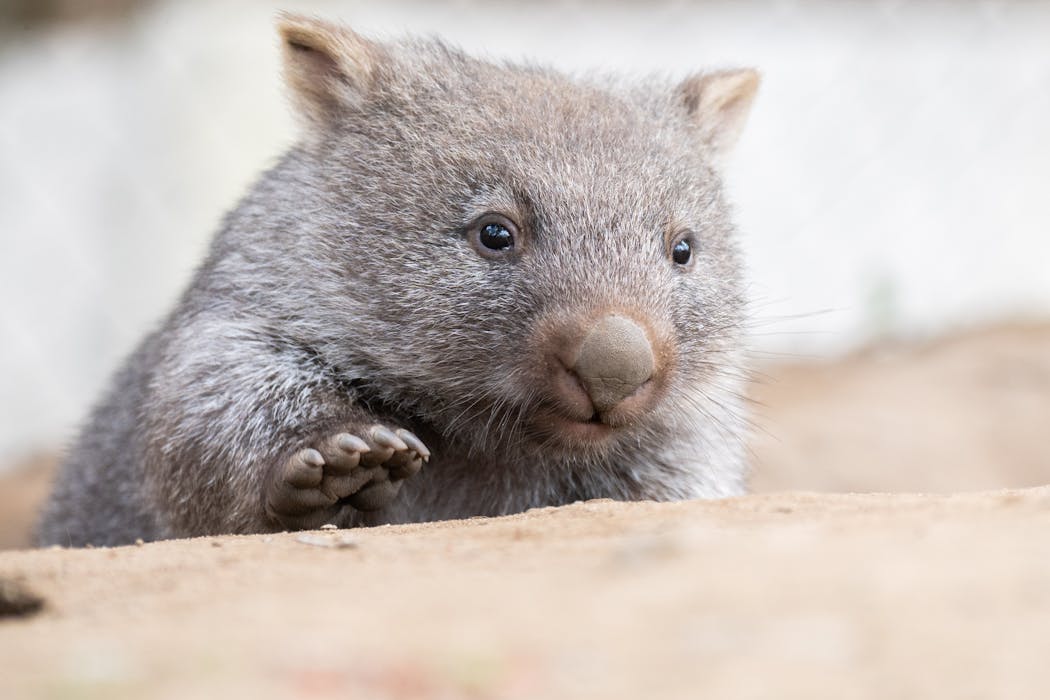
Wombat noses and whiskers don’t just make them adorable. Both are unique sensory organs essential for navigation, foraging and communication. They’re crucial to wombat survival in complex environments. The two different types of wombats are even named and classified according to their noses and whiskers.
Our recent research on wombat whiskers and noses reveals how these unique structures help wombats navigate underground and thrive in their habitats. Well-loved wombats are still full of surprises.
Understanding why wildlife species have specific anatomical features and how they use them helps scientists understand more about their place and importance in the environment. It ultimately helps us conserve these incredible species.
The need for a nose
Wombats are found in every part of Australia, except the Northern Territory.
Like many other marsupials, female wombats have pouches. The joey lives in the pouch for several months, permanently attached to the teat and becomes independent between 18 months and two years of age. Wombats live for around 20 years but have been known to survive more than 30 in captivity, such as elderly Wain, who is about 36 years old and lives in a zoo in Japan.
A wombat’s snout, or nose, is one of its most important and recognisable features. Wombats are classified and named based on the presence or absence of a rhinarium, the hairless area around the nostrils. The two hairy-nosed wombat species lack a rhinarium, while bare-nosed wombats have one.
In other animal species, the rhinarium is important for sensing touch and temperature, and for chemical detection. Dog rhinaria are thought to be used for heat detection, while the wet rhinaria of cows are associated with many glands thought to support olfaction (detecting smells and scents).
Shaping our environment
Wombats are ecosystem engineers – animals that significantly shape their environment. Within their range, wombats have multiple burrows they can share. Their digging turns over the soil, providing aeration and drainage, and supporting plant growth. Their burrows also provide shelter for other species, such as possums and birds.
Mammals use whiskers – specialised hairs associated with sensory receptors – to help navigate. Whiskers are particularly important in nocturnal animals and those that dig and live in burrows, such as wombats. Receptors convert whiskers’ movement into signals sent to the brain, which allow the animal to obtain important information from their environment, such as where they are in the burrow.
Wombats also use whiskers, along with scent, to help find grass, their favourite food.
Whiskers to navigate
Hairy-nosed wombats have a broader snout compared to bare-nosed wombats, which may increase the available space for whiskers.
When we examined and compared the whiskers on southern hairy-nosed wombats with bare-nosed wombats we found southern hairy-nosed wombats had longer and thicker whiskers. There were also significantly more whiskers on the muzzle and above the eyes compared to bare-nosed wombats.
We think this might be because hairy-nosed wombats excavate larger and more complex warrens than bare-nosed wombats. They may also rely more on their whiskers to navigate or when interacting with other wombats in shared burrows.
A strong sense of smell
Like many other marsupials, wombats have a large olfactory bulb, a part of the brain associated with smelling. The size of an olfactory bulb corresponds to an animal’s ability to detect and process smells, providing further evidence of the importance of scent for wombats to help find food and detect predators.
Famously, wombats have cube-shaped poo. They often deposit their poo at burrow entrances and in unique areas such as on rocks, branches and tufts of grass. It’s likely they use their poo to mark their territory, just as rabbits do.
Like all marsupials investigated to date, wombats have a vomeronasal organ alongside their olfactory system. This is a separate smelling organ that detects pheromones, which are mostly used as chemical messages between wombats sharing a burrow. Importantly, pheromones support social interactions, including mother-young bonding and when wombats are ready to mate.
Just like cats and cattle, wombats exhibit a Flehmen response. This is when the animal curls back its upper lip, exposes its front teeth and inhales deeply. This behavioural response helps wombats process interesting smells by concentrating them in the nasal cavity.
The primary function of a nose is to act as an opening to allow air to flow in and out of the lungs. But noses also cool or warm, and moisten the air entering the body.
The nasal cavity is therefore moist and covered in mucous, and other secretions, which reduce bacteria and viruses from entering the lungs and causing infections and disease.
Surviving on a whisker and a prayer
Australia’s beloved wombats have evolved many features that let them thrive and act as ecosystem engineers.
Our research shows how important their snouts and whiskers are in supporting their lives, from identifying burrow mates and predators to finding food and navigating complex burrow systems in the dark. Without this, wombats would not survive.
Wombats are under pressure on multiple fronts, including being killed on roads and suffering from sarcoptic mange, a parasitic skin infection.
The more we know about these creatures, the better equipped we are to help them thrive.
Authors: Julie Old, Associate Professor in Biology, Zoology and Animal Science, Western Sydney University
Read more https://theconversation.com/whiskers-for-warrens-why-wombats-have-such-whiskery-snouts-266351

















