
Trump is pushing allies to buy US gas. It’s bad economics – and a catastrophe for the climate
- Written by: Christoph Nedopil, Director, Griffith Asia Institute and Professor of Economics, Griffith University
The price of partnership with the United States has changed. Washington is now using assurances of defence and trade access to pressure allies in Europe and Asia to buy more of its fossil fuels under decades-long contracts.
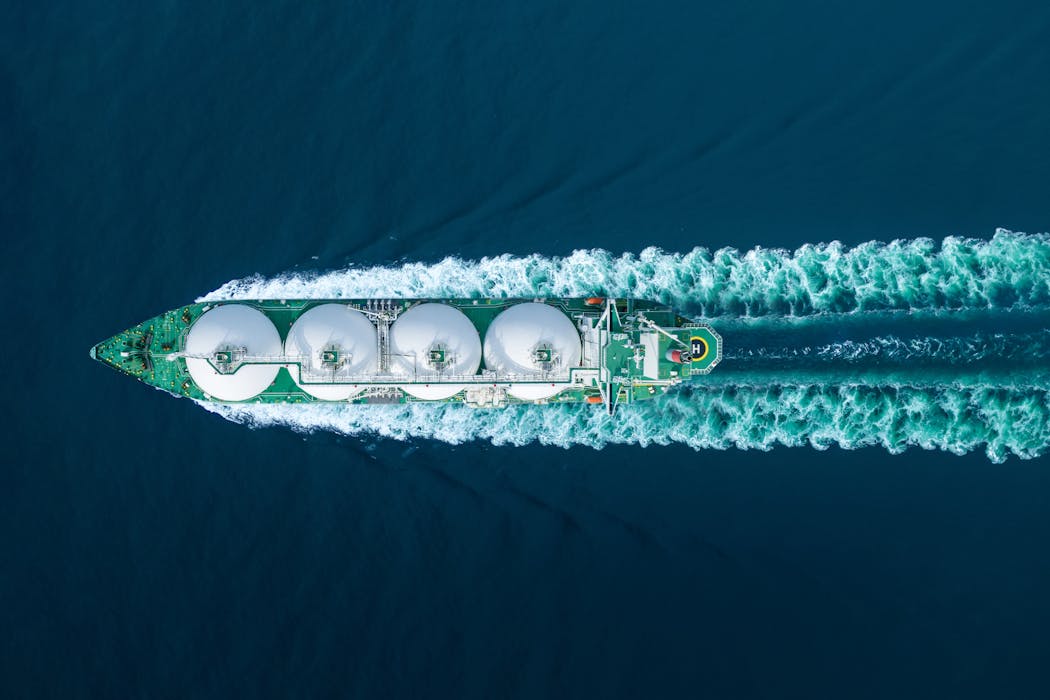
The scale is immense. The European Union intends to import up to A$1.15 trillion of US energy – mostly liquefied natural gas (LNG) – by 2028. That would be more than four times its current imports, though analysts are sceptical it will eventuate.
Indonesia has signed up for $24 billion in US energy imports and Japan is exploring a similar option.
These deals aren’t based on free trade. They represent the Trump administration’s geopolitical play using trade and security carrots and sticks to lock in long-term fossil fuel profitability and dominance. The goal: prop up energy sources facing cost pressures from clean technology, strengthen US control of the energy flows, and shut out China, the world’s top manufacturer of clean tech.
As Prime Minister Anthony Albanese meets US President Donald Trump this week, he will face pressure to boost US fortunes – complicated by the fact that Australia is itself a major LNG exporter.
(Buy) America First
For decades, the US has relied on energy imports as its own oil production slowed. But the fracking boom changed everything. By 2019, the US had gone from importer to net exporter. In 2023, it became the top LNG exporter, passing Qatar and Australia.
The Trump administration’s efforts to force its allies to buy more and more fossil fuels draws on a straightforward “America First” logic. Here are three reasons for the push:
1. Preserving business
The US now produces 22% of the world’s oil and 25% of its gas – well ahead of Russia and Saudi Arabia. But fossil fuels are projected to begin declining by 2030. The Trump administration wants to convert a risky commodity market facing long-term decline into a stable, decades-long “subscription model”. New gas plants or import terminals will only be viable if intended for long-term use.
2. Maintaining dominance
US dominance has long rested on control of global energy flows, both by protecting shipping lanes and by providing the currency to settle oil trades. Decentralised renewables and clean technologies such as batteries and electric vehicles weakens that grip. By tying allies to US gas, Washington wants to keep its ability to use energy as leverage.
3. Kneecapping China
China controls more than 70% of the world’s global solar, wind and battery manufacturing, positioning itself as the emerging energy superpower. Under Trump, the US has switched from competing on clean tech to defending fossil fuels, rejecting the transition and cancelling major domestic renewable projects. By forcing allies to buy gas, Washington seeks to delay the green shift and block China from gaining influence over energy. A related strategy is to vilify China over human rights abuses in its green supply chain.

Gas lock-in will cost US allies dearly
The consequences will be profound.
These unfair deals will make US allies less competitive. The main use for LNG is to burn it to produce electricity. But for almost a decade, solar and and wind have been the cheapest way to produce power, consistently outcompeting all fossil fuels.
As the cost of grid-scale batteries plummets, renewables are becoming even more competitive as daytime solar can be stored for the evening peak. Gas-dependent economies will face higher and more volatile energy costs, undermining competitiveness.
Worse, these deals threaten national security. That’s because relying on external suppliers for fuels reduces energy sovereignty. For instance, nations such as Nepal are embracing EVs to cut reliance on unreliable fossil fuel suppliers.
But the most critical issue is climate. Any fossil fuel infrastructure built today will keep running for decades – at a time when fossil fuel use needs to taper off sharply to hold climate change under 2°C. The billions spent on new LNG facilities are billions that can’t be spent on clean tech.
Australia embodies the contradiction, as a competing LNG exporter and one of the nations expected to be worst hit by climate change. The annual cost of climate-related disasters is projected to rise almost tenfold from $4.5 billion to $41 billion by 2050 – roughly the value of current gas exports. If Australia aligns with the US pro-gas agenda, it will mean favouring short-term profits for a few over national economic stability and climate security.

Which con job?
Trump last month declared climate change a “con job” in a speech at the United Nations. But this was a strategic distraction.
The real issue is his administration’s pressure on partners to sacrifice their long-term economic future and climate goals for the benefit of US fossil fuel interests.
It’s not inevitable. Asian economies and Australia can respond by accelerating their own green transitions, thereby securing cheaper power, greater energy independence and a long-term economic advantage.
Australia and Indonesia have large lithium and nickel resources, while China, Korea, Vietnam and others have the industrial might. This could anchor a regional supply chain for batteries, EVs and renewables.
Australia’s huge solar and wind potential can power large-scale green hydrogen and ammonia production useful in making low-carbon iron and steel. Cross-border electricity trade would further strengthen the system.
Linking Asia’s regional grids would smooth intermittency, lower power costs and boost mutual energy security. Early steps such as Laos ramping up hydropower exports to Vietnam point to how integration can work.
America’s goals are not the world’s goals
The current US administration wants to protect fossil fuel profits, slow the clean energy transition and curb China’s influence — whatever the cost to allies or the climate.
The rational response for Asian and Australian policymakers is equally clear: reject the fossil trap and invest in the future.
Shifting decisively toward renewables will deliver cheaper power, greater energy independence and heightened resilience. It will also position the region at the forefront of the next great industrial transformation.
Authors: Christoph Nedopil, Director, Griffith Asia Institute and Professor of Economics, Griffith University