

Blue carbon is not the silver bullet the Coalition wants it to be
- Written by Oli Moraes, Research Officer, School of Global, Urban and Social Studies, RMIT University
The only Australian achievement on display at last week’s COP25 conference was “blue carbon”, paraded in three minor side events on including carbon stored in coastal ecosystems in national carbon reporting.
Blue carbon, which is the storage of organic carbon in mangroves, seagrasses and tidal salt marshes, is irrefutably important. But it is not a panacea for climate change. Australia has been using it as a smokescreen for inaction and a tool to bully our Pacific island neighbours.
Read more: Mapping the world's 'blue carbon' hot spots in coastal mangrove forests
How much longer can the Coalition government defend inadequate climate commitments dependent on insufficient carbon conservation measures?
What is blue carbon?
Ecosystems like mangroves, seagrasses and tidal salt marshes are very good at storing carbon. They pull it out of oceans and atmosphere and store it in their roots and mud. It can remain there for thousands of years.
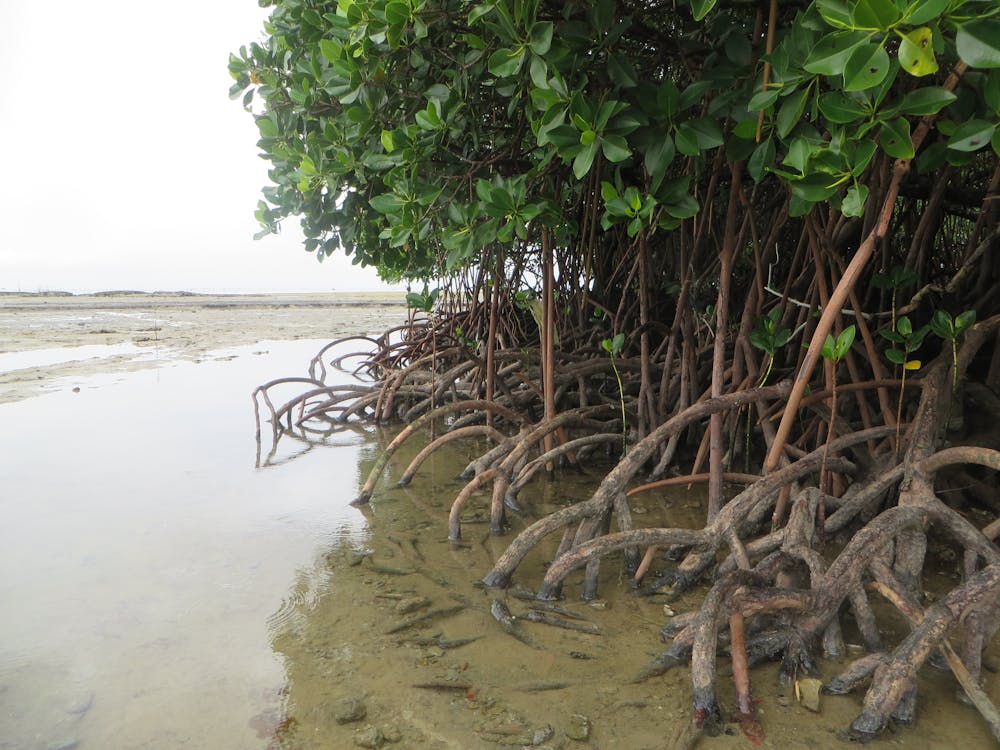 Mangroves in Fiji can store carbon in their roots and mud for thousands of years.
Oli Moraes, Author provided
Mangroves in Fiji can store carbon in their roots and mud for thousands of years.
Oli Moraes, Author provided
Beyond carbon storage, these landscapes provide habitat, spawning grounds and nurseries for fish, invertebrates and turtle species. They also provide protection for coastal communities from extreme weather events and rising sea level.
Shrimp farming, coastal development and agricultural expansion are a global threat to coastal ecosystems. These areas are also susceptible to heat waves, cyclones and storms, which climate change is intensifying.
When mangroves, seagrasses and tidal marshes are cut down, cleared or degraded, the carbon that was safely stored in mud is released back into the ocean and atmosphere as blue carbon emissions, further contributing to global warming.
So, conserving blue carbon ecosystems is critical to avoid a potential blue carbon bomb. Coastal areas in small island states, like those in the Pacific, are particularly vulnerable.
How is Australia responding?
During 2017’s COP23 climate summit presided over by Fiji, the then Australian minister for foreign affairs, Julie Bishop, announced Australia would invest A$6 million in protecting and managing Pacific blue carbon ecosystems.
This pledge has been cited often over the past two years to demonstrate Australia’s commitment to action on climate change; most recently by the government’s inexperienced COP25 delegation led by Energy and Emissions Reduction Minister Angus Taylor.
Prime Minister Scott Morrison cited Australia’s support of blue carbon in a much-criticised speech to the UN in September 2019.Not the caring neighbour we pretend to be
While it is undeniably important to protect blue carbon ecosystems, there are major problems with the Coalition’s approach that must be scrutinised.
Throwing money at blue carbon projects generates carbon credits, which nominally offset Australia’s emissions. Meanwhile, Australia remains one of the world’s largest polluters per capita and the third-largest exporter of fossil fuels.
Yet our government claims the moral high ground through modest blue carbon conservation efforts.
Most wickedly, the government’s own emissions data show Australia’s pollution continues to rise. It looks increasingly like we won’t reach our own inadequate targets of 26-28% below 2005 levels by 2030. The issue of Australia using carbon credits already earned under the Kyoto Protocol, which has been derided as exploiting a loophole, has been postponed until next year.
This is totally at odds with what regional leaders called for during the Pacific Island Forum in August. Earlier this month, former prime minister of Tuvalu Enele Sopoaga said Australian Prime Minister Scott Morrison “denies climate change is happening in the Pacific”.
It is completely disingenuous for our leaders to use blue carbon as an example of Australia’s support of our Pacific neighbours in the climate crisis.
The Paris Agreement will not force Australia to undertake ambitious climate mitigation until the late 2020s. We will then be forced to buy expensive international carbon credits through schemes like blue carbon conservation and restoration.
Rather than curbing our emissions now, Australia is sinking more research dollars into cheaper carbon credits to meet these future commitments. It’s clear Australia is bullying the Pacific into bailing us out on our failure to act.
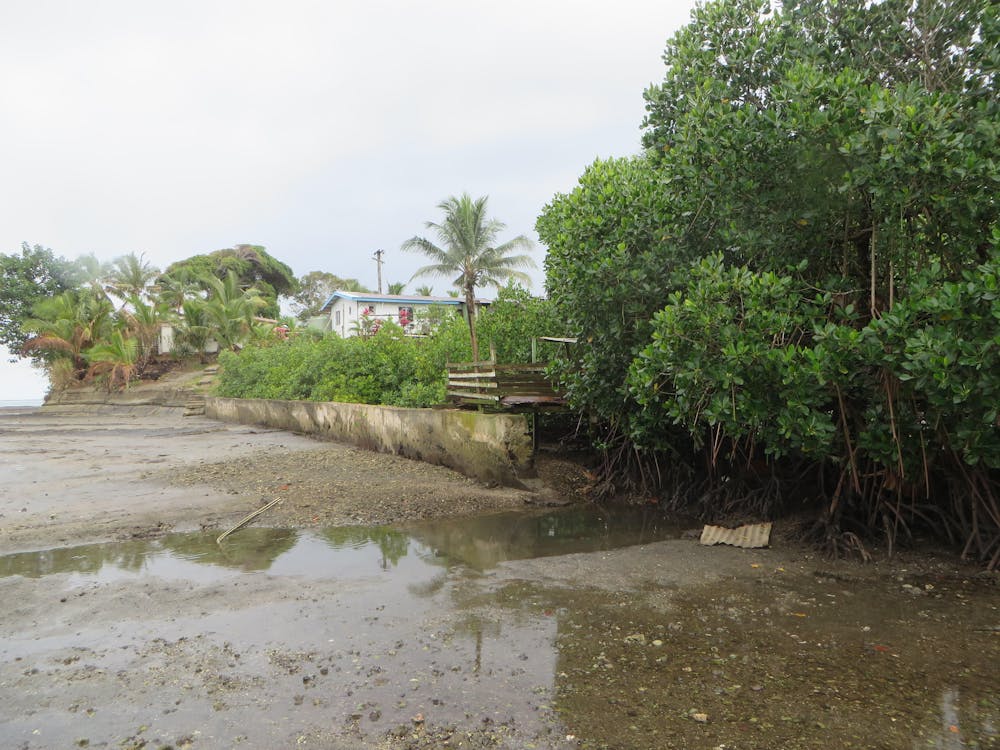 Coastal ecosystems are getting squeezed between rising seas and human construction.
Oli Moraes, Author provided
Coastal ecosystems are getting squeezed between rising seas and human construction.
Oli Moraes, Author provided
Blue carbon is not a silver bullet
A UN oceans report released earlier this year highlights problems with countries depending on blue carbon as their main form of climate change mitigation.
The report says blue carbon would offset only about 2% of current global emissions and would not be an effective replacement for the “very rapid reduction of greenhouse gas emissions” required to avoid catastrophic climate change.
While recent studies in Australia found sea-level rise could improve coastal ecosystems’ ability to sequester more carbon, the UN report states: “[…] under high emission scenarios, sea level rise and warming are expected to reduce carbon sequestration by vegetated coastal ecosystems”.
If emissions keep rising, the speed and scale of climate change will overwhelm blue carbon ecosystems’ ability to adapt. This problem will be compounded by “coastal squeeze” as rising seas butt up against human infrastructure, leaving coastal plants with shrinking habitats.
This demonstrates the perverse reality Pacific islands now face.
Australia is essentially telling our Pacific neighbours, who are on the front line of climate change: “We will protect your coastal carbon sinks in the short term for international credit, while continuing to burn and export coal, oil and gas.”
In the long term, Pacific islands will be devastated and even destroyed by cyclones and storms. Because those mangroves won’t be able to adapt in time to the hot, acidic and rising seas.
Read more: Acid oceans are shrinking plankton, fuelling faster climate change
Authors: Oli Moraes, Research Officer, School of Global, Urban and Social Studies, RMIT University
Read more http://theconversation.com/blue-carbon-is-not-the-silver-bullet-the-coalition-wants-it-to-be-128925

















