

4 ways to get your kids off the couch these summer holidays
- Written by Tim Olds, Professor of Health Sciences, University of South Australia
The sun’s shining and there’s a trampoline in the backyard. Yet your kids want to spend their summer holidays lying on the couch playing computer games all day.
So what can you do to help your school-aged kids stay active and healthy this summer?
Read more: More than one in four Aussie kids are overweight or obese: we're failing them, and we need a plan
Kids put on weight over the holidays
In 2016, a US study found that all the increase in fatness of school-aged children occurred over the summer holidays. During term time, kids get leaner and leaner, only to put it all back on, and then some, during the holidays.
Their fitness also declines during holiday time. To make matters worse, changes are greater in kids from poorer, less educated backgrounds, and the gap between rich and poor widens over multiple summer holidays. The work of the school is undone at home.
What’s going on, and what can parents do about it?
Holidays are different
Kids spend their time differently on holidays, as we showed in a study published earlier this year.
On holidays, Australian kids get 58 minutes a day more screen time than during term time, including spending 16 minutes a day more playing video games. They get 16 minutes less sport and vigorous exercise each day.
Read more: Explainer: why does the teenage brain need more sleep?
They also get 40 minutes more sleep, staying up about 40 minutes later, and sleeping in 80 minutes more.
All this adds up: their overall energy expenditure is more than 5% lower. Over six weeks of school holidays, that amounts to an extra half kilogram of fat in a typical 11-year old, and that’s without counting changes in diet.
Kids eat differently on holidays, too.
On school days, kids can only eat during recess and lunch. Their options are limited by school-based healthy eating initiatives such as “fruit time”, healthy canteen menus, and the curriculum about healthy lunchboxes.
All that goes out the window on holidays. Kids fall victim to the gravitational pull of the big white box in the kitchen.
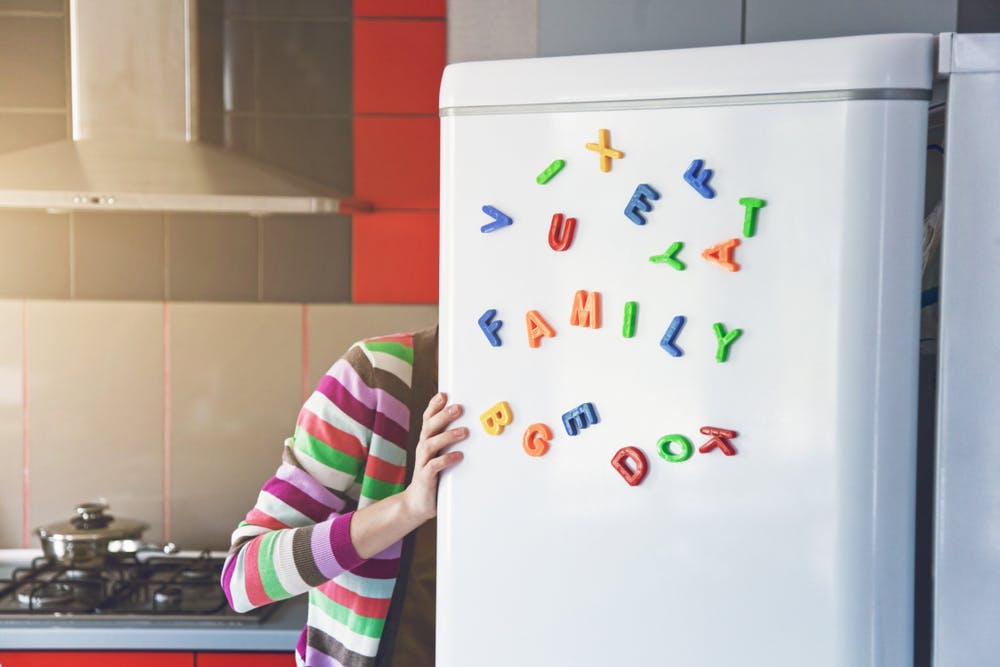 In the holidays, kids fall victim to the gravitational pull of the fridge.
from www.shutterstock.com
In the holidays, kids fall victim to the gravitational pull of the fridge.
from www.shutterstock.com
On weekends and school holidays, kids have greater choice of how much, what and when they eat. Most (knowingly) choose less healthy options.
Later bedtimes mean more screen time and more snacking. Longer lie-ins often mean kids skip breakfast.
The importance of structure
US researchers coined the idea of “structured days”. School days, they argue, are characterised by consistency and structure, which regulate how kids use their time, and when and what they eat.
On school days, for example, two-thirds of kids get up within an hour of each other (roughly between 6:30 and 7:30 am); on non-school days, it is over three hours (between 6:45 and 10:05 am).
Their review of 190 studies compared children’s sleep, physical activity, sedentary behaviours and diet on school days and weekends. They found that in 80% of studies, weekends were associated with unfavourable activity and dietary patterns.
 Unstructured time during school holidays can lead to longer lie-ins and missed breakfasts.
from www.shutterstock.com
Unstructured time during school holidays can lead to longer lie-ins and missed breakfasts.
from www.shutterstock.com
During school term, the unhealthy impacts of unstructured weekend days are diluted. In contrast, the school holidays, and particularly the summer holidays, involve a long string of unstructured days and unfavourable activity and dietary behaviours. This leads to a decline in fitness and accelerated weight gain.
The “filled-time perspective” describes the sensible idea that when children’s time is filled with favourable activities, the time cannot be filled with unfavourable ones.
This suggests it is helpful to fill children’s time with favourable activities, like physical activity and excursions, to reduce the time available for unfavourable activities, such as snacking and screen time.
So what can parents do to keep kids healthy and active on school holidays? Here are four ways, with a proven track record.
1. Get kids outside
Studies consistently show time spent outside is strongly associated with both physical and mental health. That effect is likely due to kids being more physically active outdoors.
2. Try summer camps
Summer camps are popular in Europe and North America, and also run in Australia.
An estimated 1.3 million French school children go off to their “colonies de vacances” each summer. In the US, over 14 million kids attend summer camps.
Children who spend more time in summer camp are more active than those who spend more time at home over the summer holiday.
Some 80% of boys and 73% of girls who attended a summer day camp met the daily physical activity recommendations of 60 minutes per day — about four times as many as those reaching that target during the year.
3. Activity before screen time
Only allow screen time when the kids have been physically active, even if that only means doing household chores. On holidays, kids spend 35 minutes more each day doing chores, so this may be your chance to get your kids to pitch in.
4. Plan the day
Organise time for physical activity with your child. Have a game of beach cricket or a mini-Olympics in the backyard. Take the dog for a walk. Organise excursions to the museum, or even shopping, where they get to walk around. Have regular times for meals and relaxation.
Good luck.
Read more: Why suburban parks offer an antidote to helicopter parenting
Authors: Tim Olds, Professor of Health Sciences, University of South Australia
Read more http://theconversation.com/4-ways-to-get-your-kids-off-the-couch-these-summer-holidays-123918

















