

There's no evidence 'greenies' block bushfire hazard reduction but here's a controlled burn idea worth trying
- Written by Jason Alexandra, PhD candidate, RMIT University
The current bushfire crisis provides compelling evidence of the dangers posed by extremely dry landscapes and hot, windy conditions.
While there’s no evidence “greenies” precipitated the current crisis by blocking hazard reduction, it is clear that we need to explore new ways to manage fuel loads to reduce the severity of bushfires.
It is worth considering how local, self organised, place-based, community groups could be supported to conduct various types of strategic hazard reduction, including targeted grazing and prescribed or fuel reduction burning.
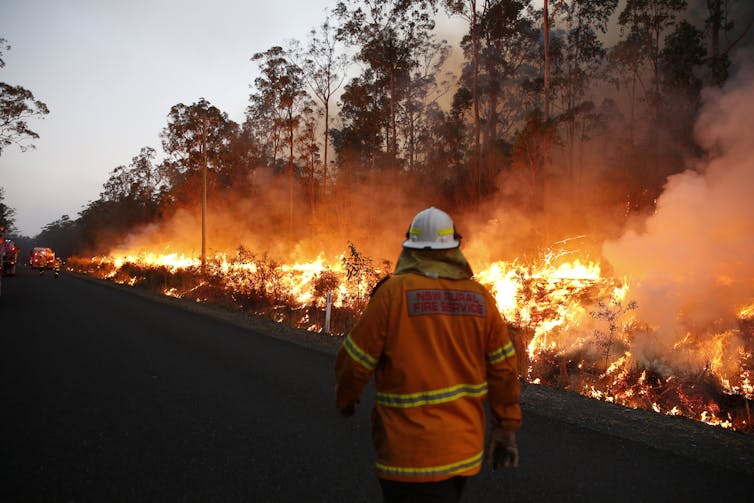 RFS firefighters attempt emergency backburns to reduce fuel in late October 2019, as fires rip through through the north coast of NSW.
AAP/Darren Pateman
RFS firefighters attempt emergency backburns to reduce fuel in late October 2019, as fires rip through through the north coast of NSW.
AAP/Darren Pateman
Using the Landcare model for bushfire hazard reduction
One model we could look to is Landcare, which has enjoyed 30 years of bipartisan support. Funded and supported by governments, local, semi-autonomous, self-directed groups aim to take a sustainable approach to land management through on-ground projects such as habitat restoration and improving biodiversity.
This model could be applied to prescribed or fuel reduction burning, carried out by local “GreenFire” groups. This would involve:
1. Developing and resourcing GreenFire groups.
These would be the equivalent of district Landcare groups, but focused on hazard reduction and fuel management. These groups could be encouraged to learn patch-burning techniques, and other landscape scale management practices, such as creating green firebreaks of non-flammable species.
If well coordinated, these techniques would reduce fire hazards across private and public lands. These groups could be an extension of existing Landcare groups combined with volunteer firefighting services. They would aim to increase capacity for fuel management at the landscape scale and provide opportunities for more people to learn skills and share knowledge, with and from professionals working in government forest and national parks agencies.
These kinds of activities, mostly in the cooler, green seasons would enhance the capacity of communities to prepare for future fires, and increase the capacity of traditional fire fighting to suppress dangerous fires.
2. These groups could work under the mentorship and authorisation of fuel management/reduction officers.
These could be public officers such as district fire officers or senior staff of public land management agencies who have had a long involvement in prescribed burning and fuel management on public lands.
3. In each district, fuel reduction periods could be officially declared. With this declaration state governments would assume liability for fuel reduction fires, so long as they had the appropriate planning, approvals and resourcing (for example, they were undertaken by trained groups and certified by appropriate officials).
4. Fuel reduction burning should employ Indigenous fire rangers, drawing on Indigenous knowledge and celebrating Indigenous patchwork burning practices.
Involving Indigenous communities in such a program would combine traditional and modern burning practices. Blending cultural and modern burning techniques has proven successful in major savanna burning programs reducing carbon emissions from late season fires in Northern Australia.
Prevention is better than firefighting
Land use planning and management play key roles in shaping exposure to bushfire risks, and are therefore central to disaster mitigation.
Under conditions that favour wildfires, no amount of firefighting effort can protect all lives and property. Victoria’s Black Saturday Royal Commission - a comprehensive inquiry into the fires in which 173 people died, more than 5000 were injured and more than 2,000 houses destroyed - found that under extreme conditions, wildfires overwhelm the capacity of emergency services.
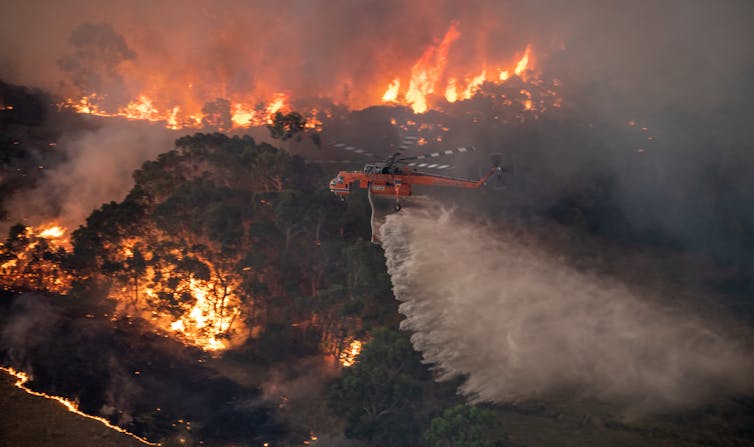 Even impressive tactics like water bombing are no match for an out-of-control blaze, but prevention can make fires more manageable.
AAP/State Government of Victoria
Even impressive tactics like water bombing are no match for an out-of-control blaze, but prevention can make fires more manageable.
AAP/State Government of Victoria
South-eastern Australia has long experience of intense fires, yet our population has spread into the bushlands of coastal hinterlands and urban fringes. This has occurred despite scientists warning for more than 30 years that wildfire risks were intensifying due to climate change.
There are no silver bullet fixes to reduce bushfires hazards. But pragmatic approaches based on extensive research have improved disaster responses, supported calls for stricter planning and building codes and quantified the benefits of strategically reducing fuel loads.
We must try creative new ways to reduce risk
Since the Stretton Royal Commission into the 1939 Black Friday bushfires, more than 16 major inquiries have called for greater use of integrated approaches to land use planning and management to minimise disaster risks.
With climate change increasing bushfire impacts and intensities, we need to build capacity in local communities to manage fire hazard. This requires education, training and adapting policies and landscape management practices to devise plans that suit local conditions.
Countless generations of Indigenous people have effectively managed fire risk through skillful burning. It is time to learn how to burn well and to share the techniques and methods that can enable us live well in our flammable landscape.
Authors: Jason Alexandra, PhD candidate, RMIT University

















