

What actually is fire? A physicist explains
- Written by: Emma Brown, Lecturer in Math and Physics, CQUniversity Australia
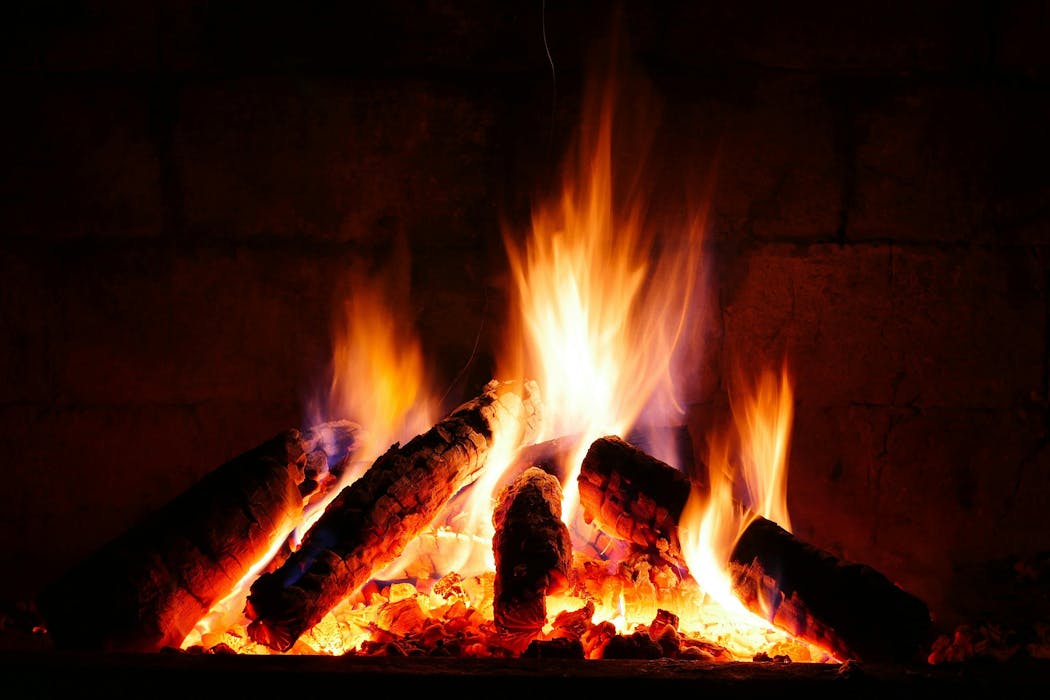
Fire is an ancient technology that has helped shape human evolution. Our ancestors used fire for safety, cooking and preserving food. They gathered around a flickering fire to share stories, pass on cultural knowledge and build community.
Today, fire is an important industrial tool. It remains woven into our daily lives and rituals (think blowing out candles on your birthday cake). As it did millions of years ago, fire can shape our landscapes, having the power to both devastate and rejuvenate entire ecosystems.
Fire is so familiar, and yet it can be hard to define. What actually is fire?
Let’s begin with a question that’s a little easier to answer.
What are the ingredients for fire?
To light a fire we need three things: fuel (something to burn), oxygen and an initial spark or heat source. This is known as the fire triangle, but you could also call the fuel and oxygen “reactants” and the initial heat the “activation energy”.
For a bushfire, organic matter (such as wood) provides the fuel. Oxygen is available in the air, and the activation energy could come from a range of sources, such as lightning or human activities.
If we remove one of the reactants, a fire cannot continue to burn. To extinguish a bushfire, heat can be removed by dousing the fire with water. The water is turned into steam, which also smothers the fire by displacing air. Fuel may be used up by the fire itself or be preemptively removed using hazard-reduction or cultural burns.
The main “product” of fire is energy, along with the gasses carbon dioxide and water vapour. When there is more fuel than there is oxygen for burning, which is the case in a bushfire, there can be additional products. One of them is soot, which is tiny half-burned particles of carbon. These products interact to provide what we feel and see when we experience fire.
The warmth we feel from a fire comes from energy as it radiates outwards in the form of heat. The hot gas products rise because they are less dense than the surrounding, cooler air. The gases carry with them soot particles that glow yellow-orange because of their high temperature.
In a bushfire or campfire, it is the glowing soot that we experience as flames. Flames actually extend well above where we can see them. As the soot moves higher up, it cools and emits light in colours that we cannot see, such as infrared light.
Read more: Human global domination began with fire, not factories or farms
So, what is fire?
It obviously isn’t a liquid or a solid. While flames do involve hot gases, flames only exist while a fire is burning. They don’t exist in a stable state on their own and we can’t collect flames in a container like we could CO₂ or water vapour. Therefore, flames and fire are not gases.
We can also rule out plasma – the fourth state of matter. Plasma is similar to an extremely hot gas but with some key differences.
A plasma contains so much heat energy that atoms in the plasma become ionised, meaning they can no longer hold on to all of their electrons. The plasma is like a soup of charged particles, both electrons and ionised atoms, which can conduct electricity and respond to a magnetic field.
In the hottest parts of the most intense fires, it is possible that there are enough ionised atoms to form areas of weak plasma. However, the plasma is not stable on its own and fire, as a whole, does not behave like a plasma.
In fact, fire is not matter at all. Fire is a process. It is a type of chemical reaction called combustion.
A process unique to Earth
Gasses and plasma are everywhere in the universe, but fire as we experience it – with visible, oxygen-fuelled flames – appears to be unique to Earth.
The Earth itself formed from dust and gas around a young Sun, which is so hot that it is almost entirely plasma. The universe is home to trillions of galaxies, each filled with stars and possible planetary systems, so there’s a lot of gas and plasma out there.
Meanwhile, our Earth is the only place in the universe where fire is known to be possible.
That’s because one of the key ingredients for fire – a stable supply of oxygen – is a byproduct of life. And as far as we know, life only exists here on Earth.
Authors: Emma Brown, Lecturer in Math and Physics, CQUniversity Australia
Read more https://theconversation.com/what-actually-is-fire-a-physicist-explains-269708


















