

Older people are more vulnerable in heatwaves. Here’s why – and how to stay safe
- Written by: Aaron Bach, Researcher and Lecturer in Exercise Science, Griffith University
Southeast Australia is enduring a record-breaking heatwave, with temperatures rising above 40ºC in many areas.
For vulnerable people, particularly older Australians, this heat is not only uncomfortable but dangerous. High temperatures can worsen existing health problems and in some cases even prove fatal.
So as the mercury climbs, it’s important to understand why some people are more at risk.
Here’s how to tell if someone is not coping with the heat – and how to stay safe.
Why is it harder for older people to keep cool?
Our bodies have a number of processes to regulate temperature.
First, the heart directs blood toward the skin, delivering heat from the body’s core to the surface.
Second, when we sweat and it evaporates off our skin, this allows excess body heat to escape into the air.
But as we age, these processes become less efficient. Older people’s blood flow and sweating are reduced compared to younger people. This means their bodies store more heat for longer.
Why this is dangerous
Often, the real danger isn’t simply overheating – it’s the strain heat puts on the cardiovascular system (the heart, blood and blood vessels) trying to serve two masters.
During hot weather, the heart works significantly harder. It diverts blood to the skin to shed excess heat, while still trying to satisfy the oxygen demands of other vital organs.
This helps explain why, during heatwaves, hospitals are not overrun with older people suffering from heatstroke. Instead, the overwhelming surge in emergency department admissions is mostly due to underlying health conditions that get much worse, such as diabetes and heart, lung or kidney diseases.
Older adults are more likely to have at least one chronic condition, and in heatwaves that last for days without a break these conditions can rapidly worsen.
The more chronic conditions someone has, the more likely they are to be hospitalised during hot weather.
Common medications can also interfere with the body’s cooling mechanisms.
Diuretics increase the risk of dehydration, while beta-blockers and some antidepressants can impair sweating, as can anticholinergic drugs (found in some medications for bladder problems, allergies and Parkinson’s disease).
Social factors can also make things worse
While the number of air conditioners has soared in Australia in the past two decades, rising energy costs mean many older adults may be reluctant to run their units.
Others may live alone or be less mobile. Conditions which affect thinking and memory, such as dementia, can also make it difficult for someone to assess their own risk and remember to drink fluids.
What to look for
Keep an eye out for signs you or your loved ones are not coping with the heat.
For older adults, these can be subtle. Early signs of heat stress include:
- being unusually tired or lethargic
- losing balance
- feeling confused
- feeling short of breath
- urinating less or dark urine (this can indicate dehydration and kidney strain).
In those with chronic conditions, watch for any worsening of usual symptoms.
Heat exhaustion is more serious, and requires fluids and rest in a cool environment. Signs of heat exhaustion include very heavy sweating, nausea, headache and muscle cramps.
Heat stroke has similar symptoms but is a medical emergency – it requires immediate medical attention.
Heat stroke is also characterised by hot and dry skin as the body’s heat regulation system fails.
This happens when the body’s core temperature exceeds 40ºC, and can lead to loss of consciousness and organ failure.
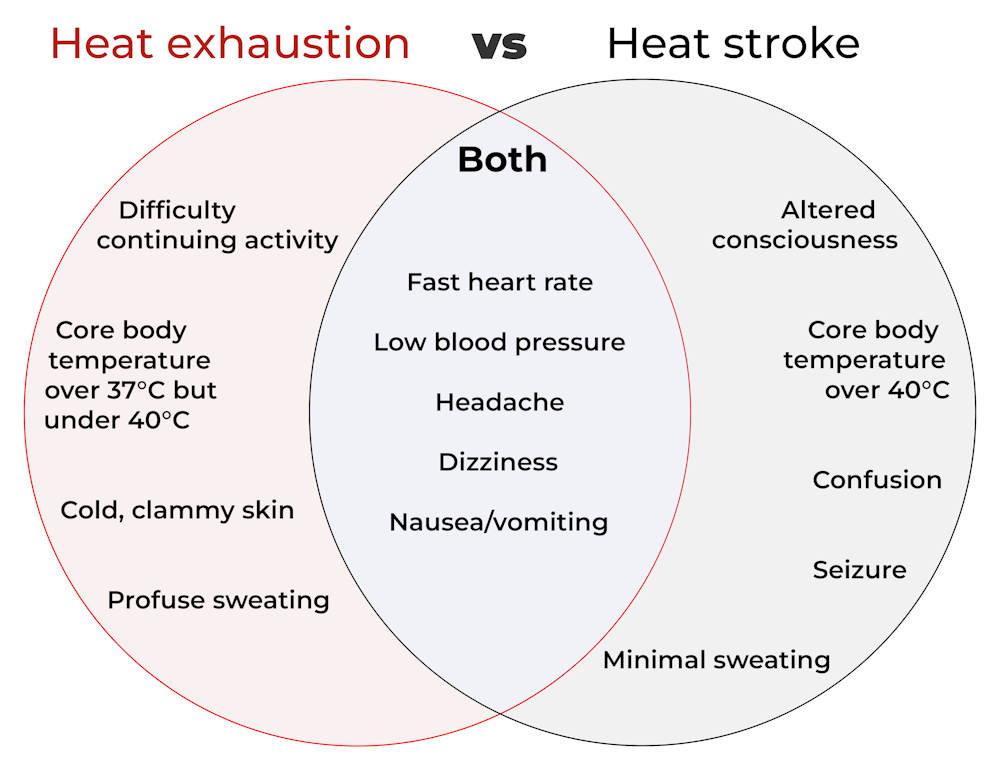
Read more: What's the difference between heat exhaustion and heat stroke? One's a medical emergency
How to stay safe
Beyond the usual advice to stay hydrated, seek shade and reduce physical activity, there are some simple strategies that can also help the impact of extreme heat for older adults.
Air conditioning remains the most effective defence against the heat. If you don’t have air conditioning at home, consider going somewhere such as a shopping centre or library during the hottest part of the day.
If you do have an air conditioner, setting it to 26–27ºC and using a pedestal fan can result in a 76% reduction in electricity consumption and improves comfort.
For those without air conditioning, fans alone can help. Wetting the skin or clothing in combination with a fan boosts evaporative cooling without requiring your body to produce more sweat.
However, for older adults (who sweat less) the effectiveness of fans begins to diminish between 33 and 37ºC. Above 37ºC, fans may actually make the body hotter faster than sweating can compensate for.
So for older adults it’s important to keep the skin moist or find other ways to cool down if using a fan when temperature is above 37ºC.
Even something as simple as immersing your hands and forearms in cool tap water – for ten minutes every half hour – has been shown to meaningfully lower body temperatures and stress on the heart.
The bottom line
Heat doesn’t discriminate, but its consequences do. In a heatwave, look out for older family members and neighbours.
If you or someone you know has symptoms of heat stroke such as slurred speech, confusion, fainting, or hot, dry skin, call 000 immediately.
Authors: Aaron Bach, Researcher and Lecturer in Exercise Science, Griffith University


















