

new study projects likely future rainfall impacts on NZ
- Written by: Muhammad Fikri Sigid, Doctoral Researcher, School of Science, University of Waikato
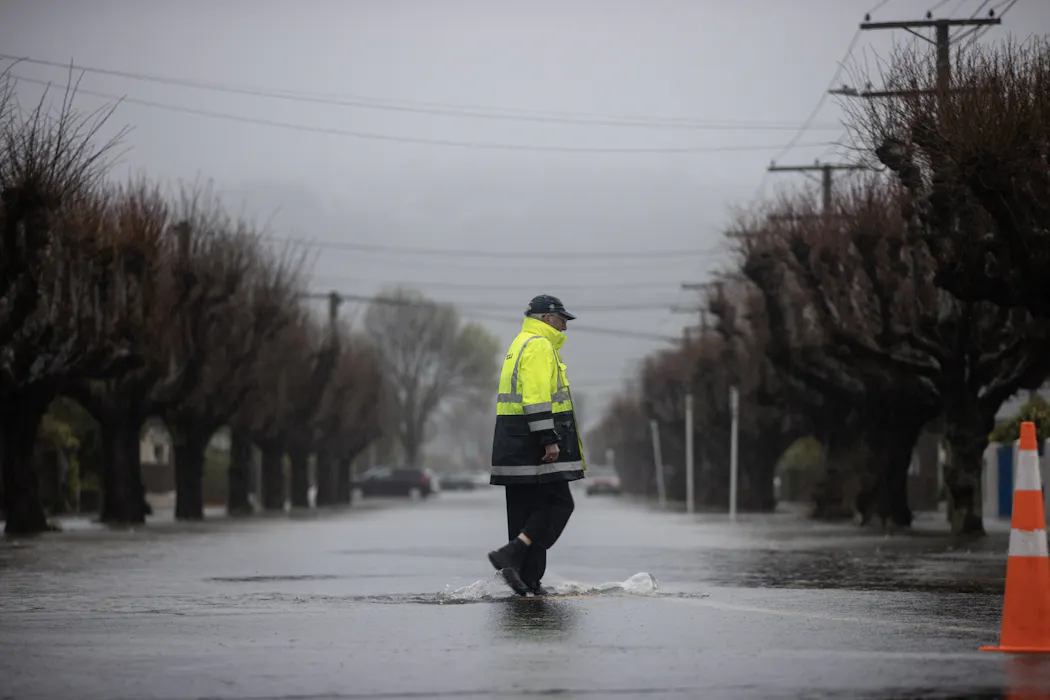
In the aftermath of the latest bout of extreme rainfall across New Zealand’s upper North Island, there were some familar scenes.
Submerged pastures. Silt carried by swollen rivers and piled against bridges. Floodwaters surrounding homes whose owners were forced to flee.
As we count the toll of these events, which have wrought billions of dollars in damage over the past few years alone, there are inevitably questions about the hidden hand of climate change.
But just as pressing is another question: just how much worse might they become in a potentially much warmer world, decades from now?
Our newly published research, exploring a range of warming scenarios and drawing on the Ministry for the Environment’s latest climate projections, provides some useful answers.
The results point to a future where extreme rainfall is both more intense and more frequent across much of the country – with some simulated storms bearing the hallmarks of weather disasters from Aotearoa’s past.
Why and where future storms get wetter
It has long been understood that, as global temperatures rise, the atmosphere can hold more water vapour, increasing the likelihood of heavier rainfall during storms.
This broad pattern is borne out in the climate model simulations we examined, which show the most extreme rainfall events are likely to intensify over the coming decades.
But our analysis also enabled us to tease out some finer insights about what may lie ahead.
By the second half of the century, we found the most intense one-day and three-day rainfall events in a typical year – often involving totals of hundreds of millimetres of rain – are projected to increase by around 10% to 20% across much of New Zealand.
The extent of these increases depends on future emissions, with larger shifts under higher greenhouse gas scenarios. Impacts also vary region-by-region.
Some of the largest increases are projected in the central North Island and parts of the South Island’s west coast – regions already prone to some of the country’s most intense rainfall. In contrast, some eastern regions, such as Hawke’s Bay and parts of Canterbury, are expected to see smaller or more variable changes.
Even so, the overall trend is toward more frequent extremes.
We examined changes under a middle-of-the-road emissions scenario, in which global greenhouse gas emissions peak around mid-century before gradually declining, while global warming reaches about 2.7C above pre-industrial levels by century’s end.
By that point, about half of the locations we analysed could have experienced at least a 50% increase in impactful rainfall events – which we define as events that historically occurred about once a decade – relative to New Zealand’s recent climate (1985–2014).
Around 30% of places could see a doubling, and roughly 10% could experience three times as many events. In some places, however, the largest events may still fall within threshold of events in the historical record.
The regional differences we observed reflect a mix of local geography, weather patterns and natural climate variability – meaning chance still plays an important role in how extreme rainfall is experienced in any one place.
When history repeats
In May 1923, days of intense rainfall inundated North Canterbury. In what was one of the most statistically extreme rainfall events recorded in New Zealand’s history, towns were swamped, roads were cut off and hundreds of families were forced to evacuate.
One century later, Cyclone Gabrielle left in its wake flooded communities, thousands of landslides and a national damage bill estimated at between NZ$9–14 billion.
In each of these cases, large-scale weather systems transported vast amounts of moisture across the ocean toward New Zealand before dumping it in torrential downpours.
These major storms also bore patterns that closely resembled those in several of the most extreme simulated rainfall events that we examined.
Naturally-driven rain-makers – be they low pressure systems, ex-tropical cyclones or moisture-packed “atmospheric rivers” – will always remain part of New Zealand’s weather mix.
But, while future extremes are likely to stem from same types of storm systems, the consequences will be more severe.
This carries important implications for how Aotearoa prepares for flood risk today and how it adapts to a warmer, wilder future. More than 750,000 New Zealanders already live in areas exposed to 1-in-100-year rainfall flood events.
If tomorrow’s extreme events exceed historic records more often, infrastructure designed for those past conditions may no longer be enough to protect people and property.
Authors: Muhammad Fikri Sigid, Doctoral Researcher, School of Science, University of Waikato


















