

Want to be a citizen scientist? Here are 5 ways to get involved
- Written by: Miki Perkins, Environment & Energy Editor, The Conversation
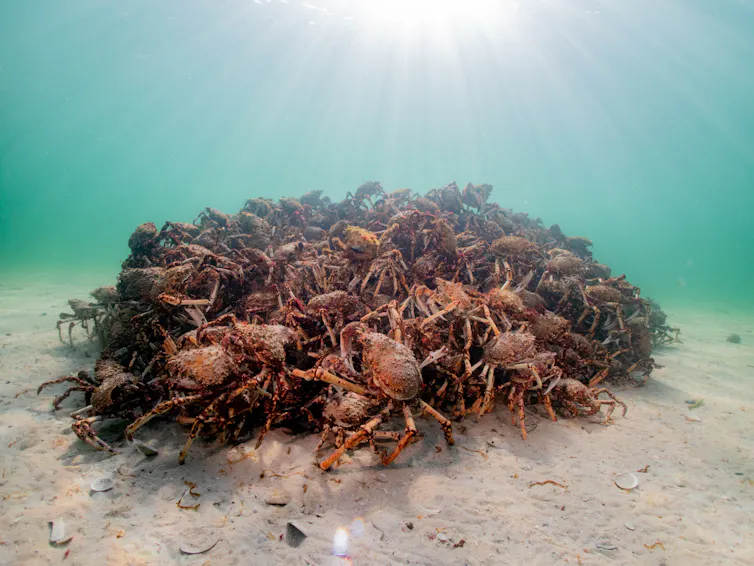
Ever wondered what it might feel like to spot giant spider crabs while you’re snorkelling? Or check plants for the circular holes that indicate native bees are collecting nest materials?
Citizen science relies on people like you – more than a million of them in Australia, actually – to collect and analyse valuable data about the world around us.
Here, we introduce five citizen science projects you can take part in. For most of them, all you need to get started is an app on your phone.
NOBURN
Sam Van Holsbeeck, Research Fellow – Forest Research Institute – University of the Sunshine Coast
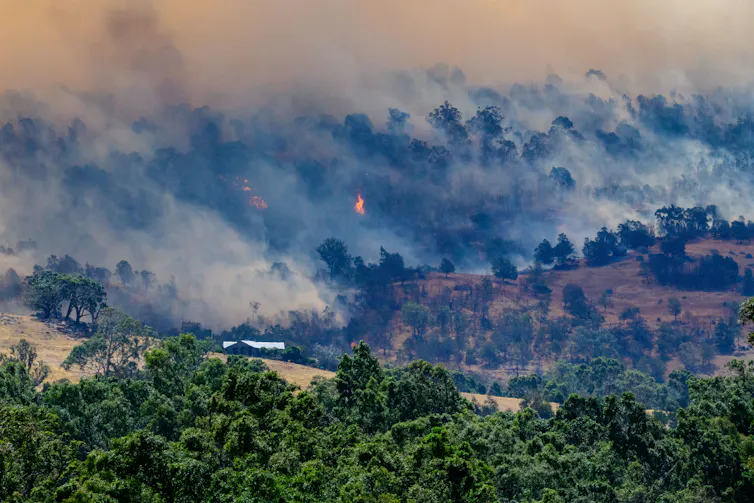
NOBURN (the National Bushfire Resilience Network) is a citizen science project aimed at improving our understanding of the role of vegetation in bushfire risk. Using an app, people around Australia can log their observations – including site photographs – to support research into fuel dynamics, fuel load and bushfire risk.
Guided by the app, participants assess vegetation at a site, noting factors such as shrub density and overall fuel hazard. Observations typically take 10–15 minutes and can be conducted by community members, landholders, students or land managers. To date, we have collected 154 verified site observations and more than 160 registered users.
Observations supplied by citizen scientists help researchers understand the structure, density and dryness of forest fuels. Combined with AI, this data allows for better prediction of the likelihood and severity of fires. While this data is not as detailed as a full expert assessment, they provide useful indicative information, particularly in areas where formal fuel monitoring is limited.
FrogID
Jodi Rowley, Curator – Amphibian & Reptile Conservation Biology – Australian Museum – UNSW Sydney
Australia’s frogs are in trouble. At least four species have been lost and dozens more are on the edge of extinction. Yet we lack the information needed to make informed decisions about how to conserve them. Frogs are very sensitive to environmental change. This makes them great indicators of environmental change (they’re often referred to as the “canary in the coal mine”). By monitoring them, we also gain insight into environmental health.
FrogID taps the keen eyes and ears of people across Australia to gather the data needed to help save Australia’s frogs.
Using our free app, people can record frogs wherever they hear them. The best time is after rain and in the first few hours after dark. Once submitted, Australian Museum frog experts listen to the recordings and identify species.
There are more than 100,000 registered users of FrogID who have together gathered almost 1.5 million records of frogs from across Australia. It’s safe to say this dataset has revolutionised our understanding of frogs in Australia – including finding 13 frog species new to science.

1 Million Turtles
James Van Dyke, Associate Professor in Biomedical Sciences – La Trobe University
Freshwater turtle numbers have fallen 60–90% across most of the rivers and wetlands of Australia, amid engineered flows and increasingly dry conditions. As turtles disappear, they leave a large gap. Turtles are the “vacuum cleaners” of the waterways, eating decaying organisms and vegetation and improving water quality.
The 1 Million Turtles project aims to increase survival rates of freshwater turtles and turtle nests, and increase Australia’s turtle population by at least one million animals.
People of all ages can download and record any turtles or turtle nests they see in Australia. They can also volunteer for other activities, such as nest protection, via our website.
To date, our citizen scientists have logged nearly 34,000 turtle records across the country. They have also saved more than 2,600 turtles from dangerous road crossings, and protected more than 1,940 turtle nests from invasive foxes and pigs.
Assuming each nest held an average of 15 eggs, and half of the turtles saved on roads were adult females of reproductive age, our program has given 400,000 turtles the chance of a future in just the past five years.
Data from this community conservation program has led to the conservation status of turtle species being upgraded to threatened or endangered. It has also prompted the development of state conservation programs for turtles in New South Wales, Victoria and South Australia.
 A broadshell turtle. Turtles are the
James Van Dyke, CC BY-ND
A broadshell turtle. Turtles are the
James Van Dyke, CC BY-ND
Australian ‘leafcutter’ bees
Kit Prendergast, Research Fellow – School of Science – University of Southern Queensland
Native bee numbers are declining and we have limited information about them. There are more than 2,000 species of native bee, including the Megachile bee. Some species of Megachile bee use plant leaves or even petals to build their nests, giving them the common name of leafcutter bees.
We don’t yet know which plants these bee species rely on. This citizen science project allows the public to use an app to identify which plants the bees are relying on. By noting preferred plants, we’ll have a better idea of how to create habitats for these gorgeous native bees and pollinators.
Most native bees cannot be identified by citizens, due to the specialised skills required, and most diagnostic features being microscopic. But when it comes to plants, these are much better known among the public and can be identified easily by photos.
Members of the public can download the free iNaturalist app and when they see a plant that has distinctive discs cut out, or see a Megachile bee in action, they can take a photo of the leaf “damage”. Once completed, gardeners, land managers and farmers will be able to access an evidence-based list of which nesting plants should accompany food plants.
 A megachile native bee cutting a leaf.
Lynda Wilson, CC BY-ND
A megachile native bee cutting a leaf.
Lynda Wilson, CC BY-ND
Authors: Miki Perkins, Environment & Energy Editor, The Conversation
Read more https://theconversation.com/want-to-be-a-citizen-scientist-here-are-5-ways-to-get-involved-278096


















