

Farmers are boosting their profits and production – with nature’s help
- Written by: Jim Radford, Associate Professor, Ecology and Environment, La Trobe University
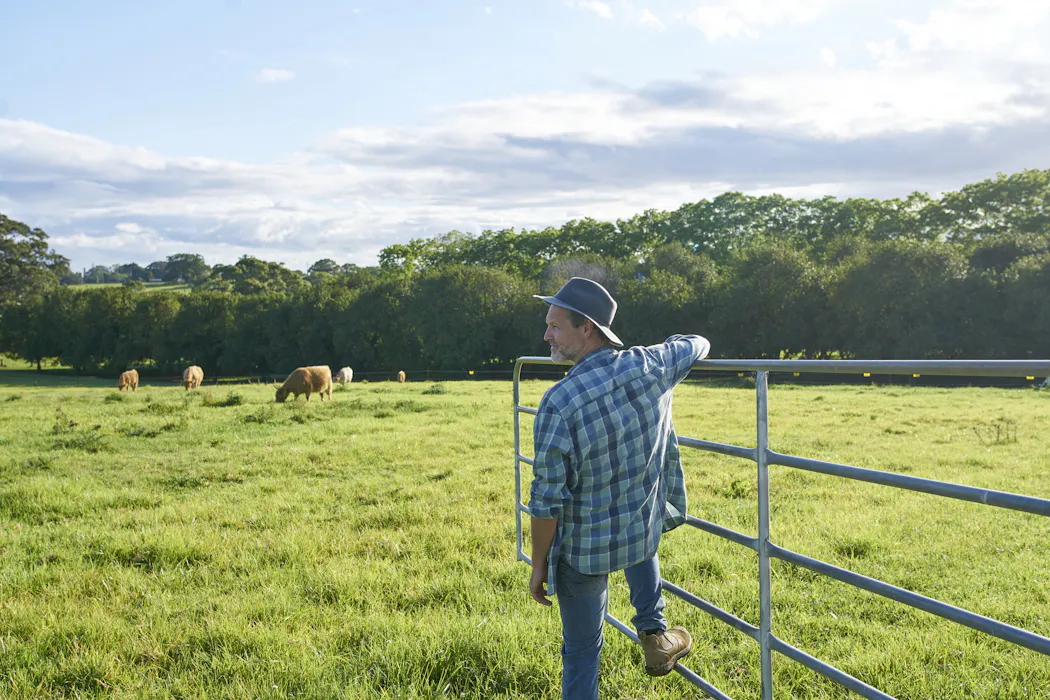
Farming is a vital industry, contributing an estimated A$100 billion to the Australian economy this year alone.
Nearly 60% of Australia is used for agriculture. The lion’s share of that land is used to graze livestock, such as cattle, sheep and, increasingly, goats.
However, our farming and environmental sectors have long been perceived to be at odds. This is because agriculture remains a major emitter of greenhouse gases. Another reason is it requires vast amounts of land to be cleared, often with devastating consequences for native wildlife and vegetation.
For many years now, governments and community organisations, such as local Landcare groups, have encouraged farmers to restore nature on their farms. This is one way to increase their “natural capital”, which refers to the sum of all natural resources that provide products and services of value to society. This includes the soil, air, water and all living organisms.
Some farmers have been keen to boost their natural capital. Others, however, see it as a waste of time or money.
But our world-first study shows maintaining and restoring nature on farms can actually increase farmers’ productivity and profits.
So how is this possible? And how can we encourage more farmers to invest in nature?
Why natural capital matters
Natural capital is more than a buzzword. For farmers, it’s a crucial part of running a productive and profitable business. And for the environment, natural capital serves as habitat for wildlife and a way to capture and store carbon.
Types of natural capital on farms include pastures used for grazing, remnant native vegetation and the soil beneath crops. These provide a range of ecosystem services. For example, planted shelterbelts, which are rows of trees and shrubs, help maintain soil moisture and protect livestock from wind.
It may seem intuitive that farms with more natural capital would be more productive and profitable than those with less. However, we don’t actually know if this is true. That’s because traditional accounting methods do not consider how natural capital may contribute to a farm’s productivity.
What we studied
In our world-first study, we investigated how the amount and quality of natural capital on a farm affects its economic performance.
Our study involved 114 livestock farms across the Australian states of New South Wales, Victoria, Tasmania and Western Australia. We tracked their economic performance in the five-year period between 2017 and 2022. This included both drought and high-rainfall years.
To do this, we looked at three main metrics:
- production efficiency, which is how well a farm turns inputs such as fertiliser and diesel into products such as meat and wool
- profitability, or how much a farmer earns after paying all their expenses
- financial resilience, which refers to how stable a farm’s income is, particularly in times of drought.
We also assessed the amount and condition of natural capital on each farm. This involved collecting data about the:
- amount of tree cover and how it is distributed across the farm
- types of pasture grasses present
- cover of low-growing plants, dead or alive, which help prevent soil erosion
- overall ecological condition, which relates to how much existing ecosystems have been modified.
Overall, we found livestock farms with higher levels of natural capital were up to 3% more productive than farms with the lowest levels of natural capital. This is significant given Australia’s agricultural productivity has, on average, grown by just 0.2% each year over the past decade.
Better still, our research suggests farms with more natural capital are more financially resilient. This means there is less year-to-year variation in how much those farms earn, even when they experience periods of drought.
Why does this work?
There are several ways natural capital can improve a farm’s economic performance. Here are three.
1. Increase its production efficiency
Our research suggests farms with healthier pastures, and with trees and shelterbelts scattered throughout their paddocks, are generally more efficient. In the case of a sheep farm, this would mean fewer inputs are required to produce the same amount of meat or wool. Sheep on farms with more natural capital would also be healthier and more likely to survive extreme weather events due to having more shade and shelter.
2. Reduce its costs
The price of inputs, such as pesticides and fertilisers, can be both high and volatile. But by grazing on native grasses and conserving and planting native vegetation, farmers can reduce their need for these inputs. This is because native vegetation helps suppress weeds but also provides habitat for beneficial insects, bats and birds, all of which eat pest insects.
3. Make its income more stable
Our research shows farms with more natural capital are better protected from adverse weather events, such as drought or intense rains. For example, a sheep farmer who maintains patches of native vegetation is less likely to lose lambs in wet, windy conditions. So by protecting their livestock, pastures and crops, nature restoration projects can also give farmers a more secure income.
However, we don’t want to turn farms into national parks. There is a point at which too much natural capital starts to reduce farm productivity and food security. This occurs when further reducing the amount of land used for agriculture outweighs the benefits of having more natural capital. Instead, we need to find the sweet spot where restoring natural capital boosts, instead of limits, a farm’s production.
Overall, our research challenges the perception that profitable farming and biodiversity can’t go hand in hand. Our research shows investing in natural capital actually stacks up financially. And the more we embrace this view the better off our economy, and environment, will be.
Authors: Jim Radford, Associate Professor, Ecology and Environment, La Trobe University


















