

How one local council helped 1,200 low-income residents finance solar and home energy upgrades
- Written by: Paris Hadfield, Research Fellow, Monash Sustainable Development Institute, Monash University
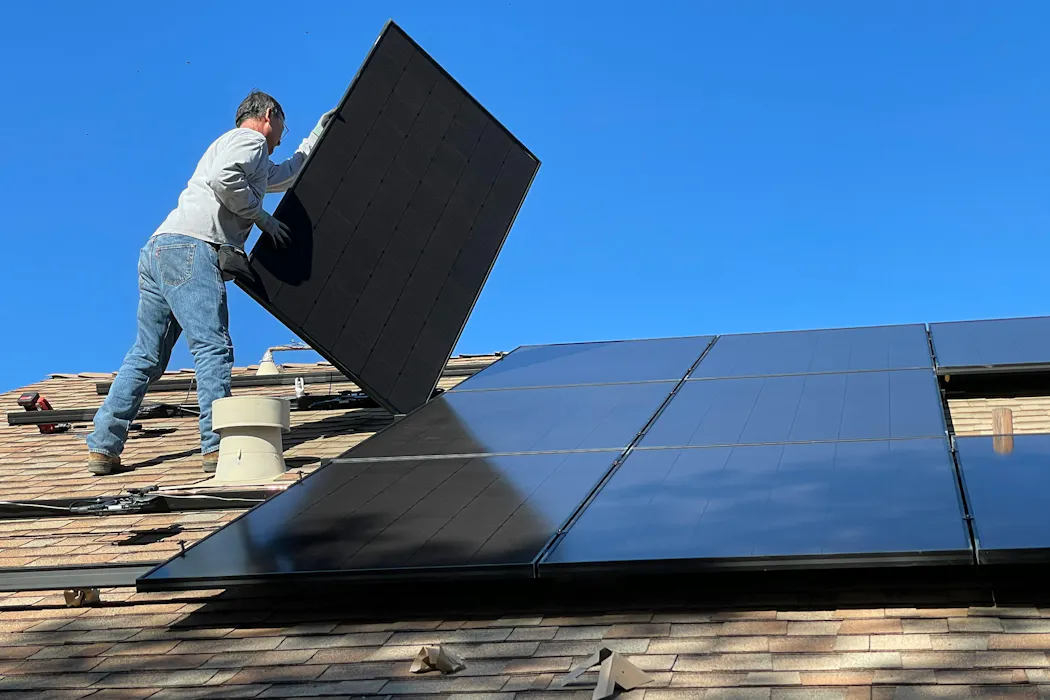
Most of Australia’s existing homes are old, uncomfortable, and expensive to run. Too many are energy inefficient, and rising electricity and gas prices are making things worse.
Mainstream programs are supporting home energy upgrades. But the transition isn’t happening quickly enough and risks leaving behind the households that could benefit most.
Innovative finance models could help. My new research shows how local initiatives can make solar and electrification more accessible.
Darebin City Council’s Solar Saver program
My research investigated a local government program in Melbourne that helped people get rooftop solar.
Running from 2014-2025, Darebin City Council’s Solar Saver program helped almost 1,200 low-income and vulnerable homeowners in the area get A$4.8 million worth of home energy upgrades.
Council paid the upfront cost of installing solar and, in later iterations of the program, reverse cycle air conditioners and hot water heat pumps.
Factoring in state government rebates, these costs were added to the homeowner’s property taxes as a “special rates charge”. The homeowner could then repay this money over ten years – interest-free.
Suppliers were selected through council tender to make the process easier for homeowners, while ensuring quality products and services including component and performance warranties. This provided certainty for residents, one of whom told me:
the council’s not going to get involved with some shonky person who’s going to come in and tell you: “Terribly sorry, we’ve got to double the price because you’ve got a nail in the wrong place on your roof” or something.
The scheme reduced financial risks and burdens for low-income homeowners.
By using council rates to repay the money, the loan is attached to the property itself rather than the homeowner.
This means any remaining debt is recouped if and when the house is sold, avoiding a situation where someone is paying a debt for solar on a house they no longer live in.
Homeowners were advised not to participate if debt repayments were more than they’d save in energy bills. Aged and disability pensioners were identified as a priority group because they were more likely to be at home during the day to reap the benefits.
Trust and relationships
Darebin Solar Saver shows how critical trust and relationships are for enabling household uptake.
Interviews with households and council officers highlighted the importance of council as an intermediary that could offer tailored and impartial advice, broker quality products and services, and channel finance without commercial terms.
Other electrification programs have shown how effective council rates notices are for household engagement.
Colleagues and I are now developing tools and resources based on these lessons to support the sector to design and deliver home energy upgrade programs.
Expanding beyond Darebin
For this model to be expanded to other local government areas, funding is needed.
Darebin City Council made a significant cash investment that other councils have struggled to replicate, even though households repay most of the costs.
Federal government could address this barrier through a national fund, while others see opportunities for commercial loans through environmental upgrade agreements (which is where councils work with banks to provide loans to households, and the loan is repaid via the resident’s rates).
Very few private renters accessed Darebin Solar Saver, highlighting a need for targeted finance, engagement, and regulation to encourage landlords to upgrade investment properties.
The Darebin Solar Saver program concluded in 2025 for a range of reasons. Council staff told me human resources and time are essential, with one noting:
We have to go through a fair amount of information to explain how solar works. We have to explain how the Solar Saver program works. Many residents struggle to actually understand or accept that you don’t have to pay anything up front, at all. That takes often several times in a conversation and written material just to prove that that’s the case.
Darebin City Council is now offering electrification rebates for a wider range of products, which are also much simpler for council to administer.
Finding alternative finance models
While over 30% of Australian households have rooftop solar, Australia needs 11 times more households to disconnect from gas each year if it’s to achieve its 2050 emissions reduction targets.
But getting off gas and getting solar panels is expensive. Studies in the US, Ireland, Norway, and among lower-income households in Victoria find cost concerns are the most common barrier to home energy upgrades.
For those with little to no available cash savings, partial subsidies and rebates are little help.
Discounted home energy upgrade loans still charge interest to be commercially viable. What’s more, many low-income homeowners may not have a high enough credit rating to get a loan from a bank. Buy Now Pay Later services typically pass on costs through the price of the solar system and late repayment fees. Interest-free loans for eligible households are no longer available from the Victorian government.
Inaccessibility is not just about cost. It’s also about a household’s ability and confidence to make decisions, especially as some solar and battery providers push bad deals.
All this means it is crucial we find more alternative finance models to help low-income households do energy upgrades.
As homes are increasingly exposed to worsening climate hazards like floods, bushfires, and cyclones, solving the finance problem will become more urgent.
Authors: Paris Hadfield, Research Fellow, Monash Sustainable Development Institute, Monash University


















