

The government has boxed itself in over fuel saving strategies – but there is a way out
- Written by: Timothy Welch, Senior Lecturer in Urban Planning, University of Auckland, Waipapa Taumata Rau
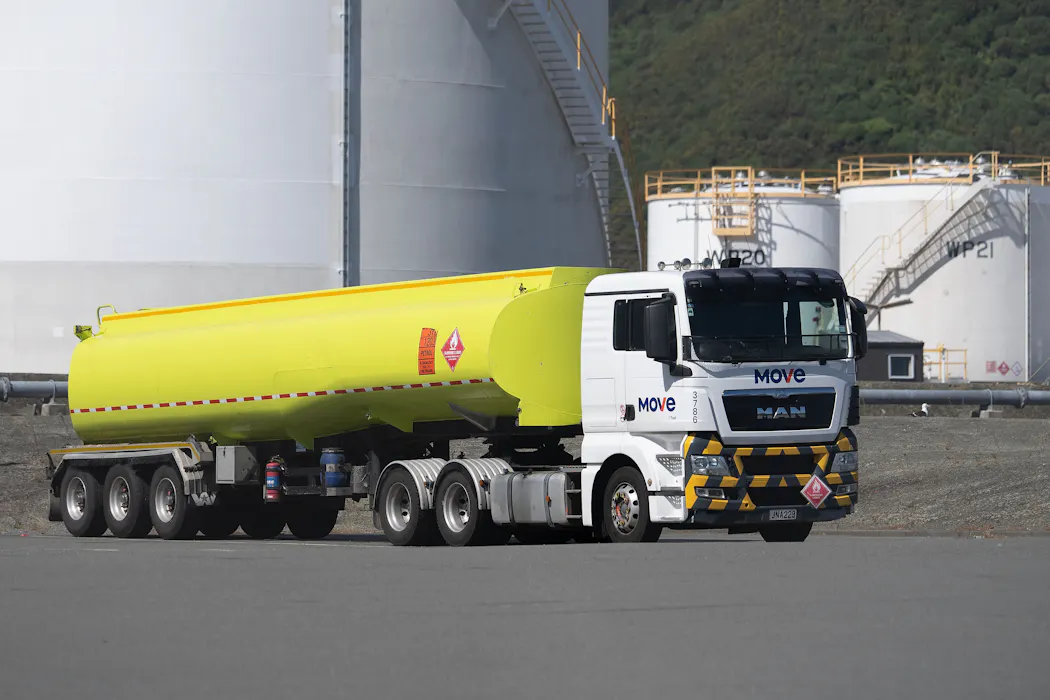
While the government works to reassure New Zealanders that fuel stocks are stable, the numbers tell an uncomfortable story: the country has about 27 days of onshore cover for petrol and 17 days of diesel.
Meanwhile, the Middle East crisis remains volatile, even after today’s announcement of a two-week ceasefire.
In a country that imports all of its refined petrol, diesel and jet fuel, petrol is above NZ$3 a litre and diesel has overtaken it for the first time in history.
Roughly 80% of New Zealand’s fuel supply originates from refineries in South Korea and Singapore, which rely heavily on the Strait of Hormuz for their crude oil.
It is one of the most serious energy disruptions the world has faced. And governments everywhere are responding accordingly, some capping fuel purchases and pulling the available levers to reduce how much fuel citizens burn each day.
The Australian states of Victoria and Tasmania have made public transport free, as has Pakistan. The International Energy Agency has urged governments to pursue rapid demand reduction through public transport, teleworking and promoting walking and cycling.
In contrast, New Zealand has offered a NZ$50-per-week tax credit for an estimated 143,000 working families to ease petrol costs. A phased fuel response plan remains at its lowest setting, encouraging the public to check their tyre pressure and consider public transport.
Reducing transport demand
As a country with one of the highest car ownership rates in the world and a transport system in which 82% of personal trips are made by private vehicle, New Zealand is more exposed to global oil disruption than virtually any developed nation.
And yet the government’s demand-side response is essentially non-existent. This is despite what we know works in an oil shock. In particular, public transport fare reductions can cut the number of car trips. In congested urban networks, the effect compounds.
New Zealand’s own transport cost modelling shows fuel consumption per car rises roughly 35% in stop-start traffic, so every vehicle removed from the road saves fuel for everyone still on it.
Lower speed limits reduce fuel consumption per kilometre. Fleet electrification displaces oil from the highest-mileage vehicles first.
This is all standard demand-side response to supply disruption, according to the International Energy Agency. But these strategies underpin climate change mitigation, too.
The Intergovernmental Panel on Climate Change’s transport recommendations identify the same “avoid, shift, improve” framework as being essential for both decarbonisation and energy resilience.
Read more: Iran oil crisis: why NZ’s car dependence is now a strategic liability
The wrong policy lane
The problem for the current government is that nearly every one of those levers is a policy it has spent two years dismantling, defunding or disavowing.
It has pushed public transport agencies toward higher fare recovery targets and halved walking and cycling investment to $460 million (with no new funding for the 2024–27 period). It cancelled Auckland light rail.
Better urban walking and cycling infrastructure is known to shift people away from short trips by vehicle. But former Transport Minister Simeon Brown has claimed New Zealanders were “sick and tired of the amount of money going into cycleways”.
The Clean Car Discount – framed by the government as a handout for wealthy Tesla buyers – was repealed under urgency in 2023. Electric vehicle fleet growth, which had exceeded 50% per year while the scheme operated, collapsed to under 10%.
The previous Labour government’s speed limit reductions were reversed and labelled “nanny state” policy. Councils were allowed to opt out of medium-density residential standards, despite this being a way to reduce private vehicle use.
Every effective oil-shock response sits in the policy lane the current government has disowned as wasteful, anti-motorist or ideologically driven. Deploying any of them now risks conceding the political point.
The timing deepens the bind. After the second phase of the Royal Commission into COVID-19 reported recently, the government seized on criticisms of Labour’s crisis interventions.
Having built a political brand around the idea that the previous government overreacted and overspent during an emergency, the coalition now faces its own crisis. But it has encouraged voters to distrust the kind of rapid, interventionist measures that might be most effective.
Promoting energy security
The process has been termed “reputational constraint”, meaning political parties avoid policy options that stray into territory already “owned” by the competition – even if it might be effective.
But there is a way out of this that doesn’t require ideological surrender. The government could frame temporary fare reductions not as subsidies but as what they actually are: energy security measures.
It could fund connected cycling networks as cheap emergency capacity to reduce cars on the road and keep them clearer for freight. And it could target funding for fleet electrification at high-kilometre commercial vehicles as strategic oil displacement policy.
The International Energy Agency endorses all of these as energy security instruments. The government’s own fuel plan already acknowledges demand management should be part of the response to extreme disruptions.
The government has boxed itself in, but the problem is political, not technical. By treating transport demand reduction as energy security, rather than a partisan issue, an evidence-led response is still available.
Authors: Timothy Welch, Senior Lecturer in Urban Planning, University of Auckland, Waipapa Taumata Rau


















