

In mediating the US-Iran peace talks, Pakistan is flexing its geopolitical muscles
- Written by: Samina Yasmeen, Director of Centre for Muslim States and Societies, The University of Western Australia
When news of the fragile ceasefire between the United States, Israel and Iran first broke, it came via a post on X by Pakistan’s Prime Minister, Shehbaz Sharif.
Securing such a big diplomatic win is highly significant for Pakistan, irrespective of how the agreement has since been tested.
Pakistan will remain central to ongoing peace negotiations, with talks between the parties being held in the country on April 10.
So how did Pakistan manage to bring the parties together? It harnessed long-running relationships, shared histories and security agreements to flex its diplomatic muscles.
Pakistan and Iran go back a long way
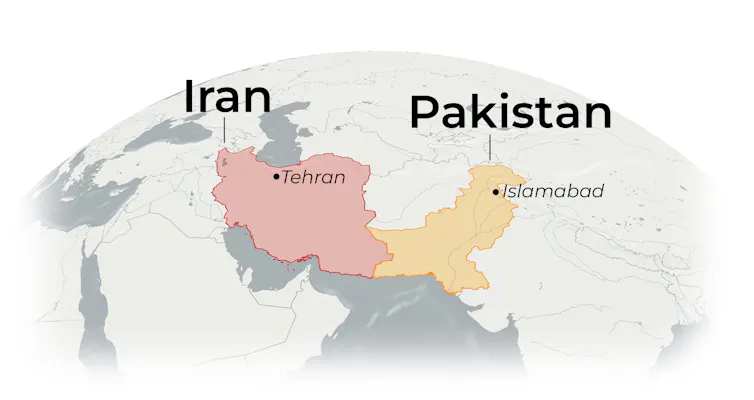
Pakistan and Iran have a long history as friends and allies. Sharing more than 900 kilometres of border, the countries have been involved in dispute mediation for one another since Pakistan’s creation in 1947.

Munir has also guided Pakistan’s Gulf policy, particularly the signing of a Strategic Mutual Defence Agreement with Saudi Arabia in September 2025. The agreement builds on the decades of a defence relationship between Pakistan and Saudi Arabia. It includes the clear articulation that any attack on one is considered an attack on both.
Though Pakistan is careful to stress that it does not extend a nuclear umbrella to Saudi Arabia, the agreement signals regional deterrence and ability of the two states collaborating against opponents.
The agreement was followed by a Strategic Defense Agreement between Saudi Arabia and the US during the Crown Prince Mohammed bin Salman’s visit to Washington in November 2025.
Effectively, therefore, a tripartite quasi alliance has emerged between the US, Saudi Arabia and Pakistan.
And then there’s China
At the same time, Pakistan also maintains strong military, economic, and political relations with China. Beijing has been keen to de-escalate the situation in the Gulf due to China’s reliance on oil supplies from the region.
This interest was categorically expressed during the visit by Pakistan’s Foreign Minister, Ishaq Dar, to China on March 31.
Coming soon after Pakistan’s quadrilateral meetings with Saudi, Egyptian and Turkish foreign ministers, the negotiations established Pakistan’s credentials as a state that has the backing of significant Muslim majority states. Combined with the support of China, Pakistan was in prime position to explore solutions to the conflict, without Trump losing face.
Authors: Samina Yasmeen, Director of Centre for Muslim States and Societies, The University of Western Australia


















