

How can I treat myself if I've got – or think I've got – coronavirus?
- Written by David King, Senior Lecturer, The University of Queensland
New cases of the coronavirus are reported every day, and as yet there’s no vaccine. So what treatments are available if you’re one of the unlucky ones who gets infected?
If your symptoms are mild, you should treat them the same way you would a cold or flu.
A spectrum of severity
SARS-CoV-2, the virus that causes COVID-19, is one of hundreds of viruses that cause colds and flu symptoms in humans.
The infection ranges in severity from almost silent (asymptomatic), to a mild cold, all the way to lung and organ failure. The symptoms may be worse than a normal cold or flu because this coronavirus is new (or “novel”) to our species and we haven’t built up herd immunity to it yet.
But current estimates suggest about 80% of cases will have relatively mild to moderate illness.
If you’re one of these, you might not know for sure whether you have COVID-19, as you may not be eligible for testing. It’s important you self-isolate if you’re unwell regardless.
But from the perspective of treatment, if your illness is reasonably mild, it doesn’t really matter whether you have a confirmed COVID-19 diagnosis or not.
So how do I treat the symptoms?
The World Health Organisation (WHO) says the most common symptoms of COVID-19 are fever, tiredness, and dry cough. Some patients may have aches and pains, nasal congestion, runny nose, a sore throat or diarrhoea.
The most bothersome symptoms tend to be fever and muscle pains. You can safely treat these with paracetamol.
The WHO initially recommended people with COVID-19 avoid taking ibuprofen to relieve symptoms. But it retracted that advice days later, so it seems reasonable to also consider using anti-inflammatory drugs.
You can treat nasal congestion with decongestants and nasal saline. Effective treatments for a sore throat include honey, salt water gargles, and sore throat sprays or gargles.
Read more: Health Check: what's the right way to blow your nose?
Cough is a more difficult symptom to control, but you may be able to improve it with honey, steam inhalations and saline nose sprays. Cough suppressants have only minimal benefit in reducing a dry cough.
It’s also important to support your immune system, particularly with rest and a healthy diet.
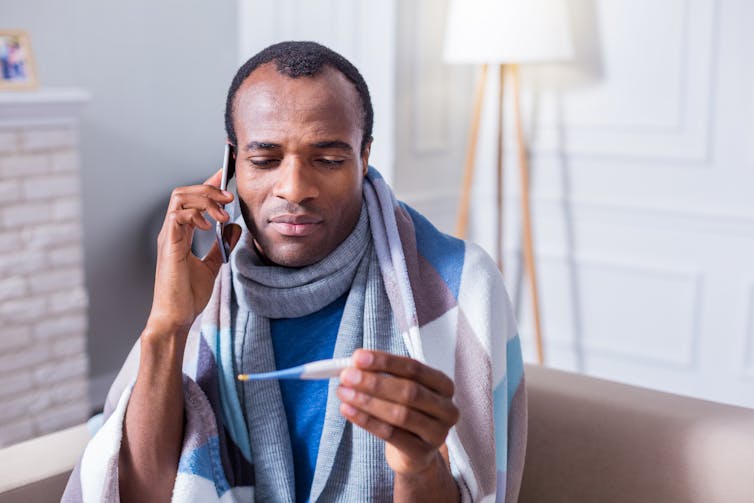 Look to the same kind of remedies you would if you were sick with a regular cold or flu.
Shutterstock
Look to the same kind of remedies you would if you were sick with a regular cold or flu.
Shutterstock
There’s some evidence zinc lozenges may shorten the duration of some colds and flus, including COVID-19. But this evidence is conflicting and not of high quality.
Meanwhile, there’s no convincing evidence beyond the placebo effect for a range of other common treatments, such a vitamin C and echinacea. But these are unlikely to cause harm.
Don’t try this at home
It’s important not to take medicines that haven’t been approved for the treatment of colds and flus.
Anecdotal reports and a small case series of patients in China have suggested a role for the antimalarial drug chloroquine in treating COVID-19.
Further clinical trials of this drug are currently underway, but at this stage it’s recommended as treatment only in COVID-19 cases complicated by viral or bacterial pneumonia, and under the guidance of medical professionals.
One HIV antiviral combination drug, lopinavir-ritonavir, seemed promising. But it failed to make a significant difference in 199 patients with COVID-19 in China.
So there are no effective curative treatments as yet, but clinical trials of different antiviral agents are continuing.
Read more: To get on top of the coronavirus, we also need to test people without symptoms
While lots of information about prevention and treatments for coronavirus is circulating online, a good rule of thumb is if it sounds too good to be true, it probably is.
If you’re unsure about anything, look to reliable sources like the Australian government or the WHO, or consult a doctor.
What about people with more serious illness?
About five to seven days after the onset of symptoms, some patients develop shortness of breath and trouble breathing, which will require medical attention.
Shortness of breath occurs when pneumonia develops, causing a buildup of thick mucus in the lungs that blocks the transfer of oxygen into the blood vessels.
If your condition deteriorates, call ahead to a doctor or hospital and inform them of your COVID-19 status. If you’re experiencing severe symptoms, such as shortness of breath, call an ambulance.
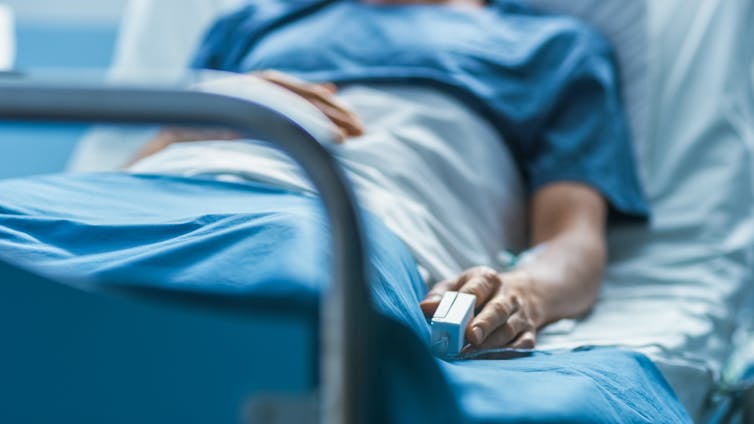 If your symptoms are more severe, you might need treatment in hospital.
Shutterstock
If your symptoms are more severe, you might need treatment in hospital.
Shutterstock
How long before I’m not infectious anymore?
If you’re hospitalised with COVID-19, you will remain in isolation until you’re no longer experiencing symptoms and a test confirms you’re no longer infectious.
In a group of hospitalised patients in China, the average duration of virus still detected in the respiratory tract was 20 days.
Mild cases, however, have a shorter duration of illness, and the virus clears more quickly from their bodies.
Australian guidelines state that cases with a mild illness not requiring hospitalisation can end their self-isolation if they meet these two criteria:
- at least ten days have passed since the onset of symptoms
- all symptoms of acute illness have been resolved for the previous 72 hours.
Authors: David King, Senior Lecturer, The University of Queensland
Read more https://theconversation.com/how-can-i-treat-myself-if-ive-got-or-think-ive-got-coronavirus-134654

















