

We don't know for sure if coronavirus can spread through poo, but it's possible
- Written by Vincent Ho, Senior Lecturer and clinical academic gastroenterologist, Western Sydney University
While we most commonly associate COVID-19 with fever and cough, gastrointestinal symptoms including diarrhoea, vomiting and abdominal pain are not unheard of in people who contract coronavirus.
This is likely because SARS-CoV-2, the virus that causes COVID-19, is found in the gut as well as the respiratory tract.
Importantly, the gut’s involvement in coronavirus illness points to the possibility COVID-19 could spread through faeces.
At this stage we don’t know for certain whether or not that occurs – but we can take precautions anyway.
Read more: How can I treat myself if I've got – or think I've got – coronavirus?
Coronavirus and the gut
SARS-CoV-2 gains entry into human cells by latching onto protein receptors called ACE2, which are found on certain cells’ surfaces.
Around 2% of the cells lining the respiratory tract have ACE2 receptors, while they’re also found in the cells lining the blood vessels.
But the greatest numbers of ACE2 receptors are actually found in the cells lining the gut. Around 30% of cells lining the last part of the small intestine (called the ileum) contain ACE2 receptors.
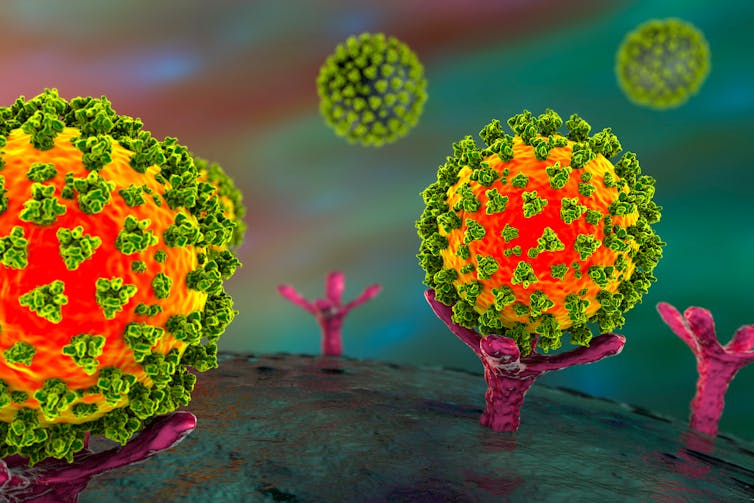 Coronavirus gets into our cells by latching on to ACE2 receptors.
Shutterstock
Coronavirus gets into our cells by latching on to ACE2 receptors.
Shutterstock
Clinicians have detected coronavirus in tissue taken from the lining of the gut (oesophagus, stomach, small bowel and rectum) through routine procedures such as endoscopy and colonoscopy, where we use cameras to look inside the body. They found abundant ACE2 receptors in those tissue samples.
While some researchers have proposed alternative explanations, it’s likely people with COVID-19 experience gastrointestinal symptoms because the virus directly attacks the gut tissue through ACE2 receptors.
How common are gastrointestinal symptoms?
Data from 55,000 COVID-19 cases in China has shown the most common gastrointestinal symptom, diarrhoea, occurs in only 3.7% of those affected.
But there’s emerging evidence gastrointestinal symptoms such as diarrhoea may actually be more common, particularly among patients who develop more serious disease.
In one study of 204 patients diagnosed with COVID-19 at three different hospitals in the Hubei province in China, almost 20% of patients had at least one gastrointestinal symptom (diarrhoea, vomiting or abdominal pain).
Read more: Your poo is (mostly) alive. Here's what's in it
The researchers found gastrointestinal symptoms became more severe as the COVID-19 illness worsened. And patients with gastrointestinal symptoms were less likely to recover than those without gastrointestinal symptoms.
The reason for this is not clear but one possibility is patients with a higher density of virus, or viral load, are more likely to have coronavirus wreak havoc in their gut.
Coronavirus in our poo
The presence of coronavirus in the gut and the gastrointestinal symptoms associated with COVID-19 suggest coronavirus could be spread via faecal-oral transmission. This is when virus in the stool of one person ends up being swallowed by another person.
A recent study from China found just over half of 73 hospitalised patients with COVID-19 had virus in their faeces. Many of them did not have gastrointestinal symptoms.
While testing stool samples may not be an efficient way to diagnose COVID-19 in individuals – it’s normally slower than testing samples from the respiratory tract – researchers are looking at poo to detect population outbreaks of coronavirus.
More than a dozen research groups worldwide are collaborating on a project analysing wastewater for the presence of coronavirus in target populations.
But just because the virus is found in faeces, it doesn’t mean it’s necessarily infectious when shed from the stool. We need more research to ascertain whether this is the case.
Read more: There's no evidence the new coronavirus spreads through the air – but it's still possible
The virus seems to last longer in faeces
One study in China followed 74 COVID-19 patients in hospital by taking throat swabs and faecal samples daily or every second day.
The researchers found in over half of patients, their faecal samples remained positive for coronavirus for an average of just over 11 days after their throat swabs tested negative. Coronavirus was still detected in one patient’s faeces 33 days after their throat swab had turned negative.
This suggests the virus is still actively reproducing in the patient’s gastrointestinal tract long after the virus has cleared from the respiratory tract.
So if coronavirus can transmit via the faecal-oral route, we’ll want to know about it.
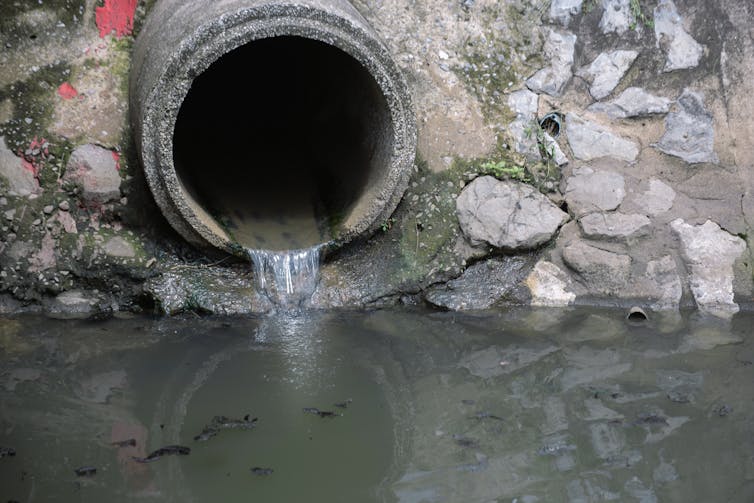 Sewage could offer clues about coronavirus transmission.
Shutterstock
Sewage could offer clues about coronavirus transmission.
Shutterstock
In order to prove coronavirus can transmit via the faecal-oral route we’d need to see larger cohort studies.
These studies would include gathering more information on how well the coronavirus survives in the gut, how it causes gastrointestinal symptoms like diarrhoea and how the virus survives in faeces at different temperatures.
Researchers have found live coronavirus in faecal cultures grown in the lab, but this was only in two patients, so other research teams will need to reliably confirm the presence of infectious virus in faeces.
Take precautions anyway
In one study, researchers collected samples from the bathroom of a COVID-19 positive patient with no diarrhoea. Samples from the surface of the toilet bowl, sink and door handle returned positive for the presence of the coronavirus.
So effective handwashing, particularly after using the toilet, is critical.
We know coronavirus can survive for up to three days on plastic and stainless-steel surfaces. So it’s sensible to regularly disinfect surfaces that will be touched when using shared toilets including doorknobs, door handles, taps, support rails and toilet control handles.
Finally, flush the toilet with the lid closed. This is particularly important for public toilets in communities where there is sustained transmission of coronavirus.
Flushing a toilet creates a phenomenon known as toilet plume where up to 145,000 aerosolised droplets can be released and suspended in the air for hours.
Scientists believe the infectious viral gastroenteritis caused by norovirus can be transmitted in aerosol form through toilet plumes. Coronavirus may be able to do the same. Closing the lid when flushing can prevent around 80% of these infectious droplets from escaping into the air.
Authors: Vincent Ho, Senior Lecturer and clinical academic gastroenterologist, Western Sydney University

















