

Hospitals have stopped unnecessary elective surgeries – and shouldn't restart them after the pandemic
- Written by Adam Elshaug, HCF Research Foundation Professorial Fellow, Professor in Health Policy and Co-Director, Menzies Centre for Health Policy, University of Sydney
Part of Australia’s response to the coronavirus pandemic was a severe reduction in elective surgery, and so private hospitals have stood almost empty for a month now.
People who might otherwise have had a procedure are experiencing “watchful waiting”, where their condition is monitored to assess how it develops rather than having a surgical procedure.
The big question is whether all those procedures which didn’t happen were even necessary. There has now been a steady stream of work which suggests many procedures don’t provide any benefits to patients at all – so called low- or no-value care.
Read more: Dodgy treatment: it's not us, it's the other lot, say the experts. So who do we believe?
Bringing about change in health policy is usually difficult (or slow, at best) because it’s like turning a big ship around. But in the past six weeks that ship has made a sudden about-turn.
Australia’s elective procedure system after the pandemic should be different from before the pandemic. We should dramatically reduce the number of low- or no-value procedures.
What is low- or no-value health care?
Low- or no-value health care mean the intervention provides no or very little benefit to patients, or where the risk of harm exceeds the likely benefit.
Reducing such “care” will improve both health outcomes for patients and the efficiency of the health system.
Research in New South Wales public hospitals showed up to 9,000 low-value operations were performed in just one year, and these consumed almost 30,000 hospital bed days that could have been used for high-value care.
One example of low-value care is spinal fusion surgery for low back pain. This is a procedure on the small bones in the spine, essentially welding them together. The alternative is pain management, physiotherapy and exercise.
 Spinal fusion for low back pain is an example of low-value care.
Shutterstock
Spinal fusion for low back pain is an example of low-value care.
Shutterstock
The NSW analysis revealed up to 31% of all spinal fusions were inappropriate. But even this figure is likely an underestimate.
Other examples include:
vertebroplasty for osteoporotic spinal fractures: surgery to fill a backbone (vertebrae) with cement
knee arthroscopy for osteoarthritis: inserting a tube to remove tissue
laparoscopic uterine nerve ablation for chronic pelvic pain: surgery to destroy a ligament that contains nerve fibres
removing healthy ovaries during a hysterectomy
hyperbaric oxygen therapy (breathing pure oxygen in a pressurised room) for a range of conditions including osteomyelitis (inflammation of the bone), cancer, and non-diabetic wounds and ulcers.
Low-value care can harm patients because of the risks inherent in any procedure. If a patient having a low-value procedure gets even one complication, the time they spend in hospital doubles, on average.
For some patients, the hospital stay can be much longer. For example, a low-value knee arthroscopy with no complications consumes one bed day. If a complication occurs, that length of stay increases to 11 days, on average.
Read more: Needless procedures: knee arthroscopy is one of the most common but least effective surgeries
For most low-value procedures, the most common complication is infection.
The situation is even worse in private hospitals, where a much greater proportion of elective procedures are low value.
Prioritise treatments that work
Most state health departments and private insurers now know the size of the low-value care problem and which hospitals are providing that “care”.
Due to the COVID-19 response, the tap for these procedures has been turned down for some and off for others. This is a risk for some patients, but others will benefit from not having the surgery. We must grasp the opportunity to learn from this enforced break.
Read more: The coronavirus ban on elective surgeries might show us many people can avoid going under the knife
One of the challenges for policymakers in the past in controlling low-value care has been difficulty in ratcheting down supply by reducing or redirecting a hospital’s surgical capacity and staff.
In many ways, the COVID-19 response has done this for them. After the pandemic, we can reassess and reorient to high-value care.
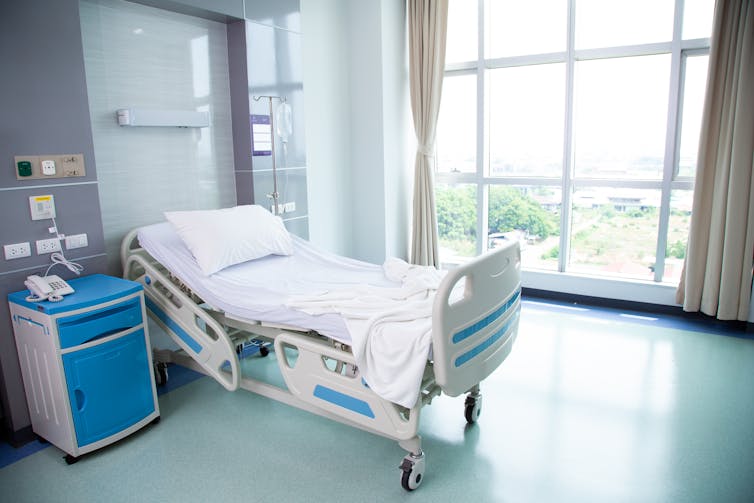 Some people will need catch-up surgeries after the pandemic, but some won’t.
Shutterstock
Some people will need catch-up surgeries after the pandemic, but some won’t.
Shutterstock
This does not necessarily mean reducing capacity. Some people aren’t currently getting the care they need. When the tap comes back on, this unmet backlog of care must be performed.
But this needn’t detract from a focused effort to keep the low-value care from re-emerging. The last thing we need is for low-value care to take the place of high-value care that has been delayed because of the COVID-19 response.
So how do you do it?
Australia should take three immediate steps to ensure we don’t return to the bad old days of open slather.
First, states should start reporting the rates of low-value care, using established measures. This reporting should identify every relevant hospital – public and private – and it should be retrospective, showing rates for the past few years.
Read more: Australians are undergoing unnecessary surgery – here's what we can do about it
Second, states should require all public hospitals to take steps to limit low-value care – and hospitals that don’t comply should be called to account.
States have the insights and data necessary to do this.
Hospital strategies might include requiring a second opinion from another specialist before a procedure identified as low-value care is scheduled for surgery, or a retrospective review of decisions to perform such surgery.
 Hospitals could require second opinions before scheduling low-value procedures.
Shutterstock
Hospitals could require second opinions before scheduling low-value procedures.
Shutterstock
In the post-pandemic world, states should also consolidate elective surgery, so the number of centres performing elective procedures in metropolitan areas is reduced, with decision-making tools to highlight downsides of low-value care and the alternatives.
Third, private insurers know low-value care is provided in private hospitals, but currently have fewer levers at their disposal to reduce such care. The Commonwealth government should legislate to empower funds to address this issue. Given the Commonwealth government is providing financial support to the private hospitals during their downturn, perhaps a requirement should be that they work with the insurers and Medicare to police the re-emergence of low-value care.
It would be a dreadful shame to waste this unprecedented opportunity, and revert to the old status quo of low- and no-value care.
Authors: Adam Elshaug, HCF Research Foundation Professorial Fellow, Professor in Health Policy and Co-Director, Menzies Centre for Health Policy, University of Sydney

















