

Even in a pandemic, continue with routine health care and don't ignore a medical emergency
- Written by Serra Ivynian, Research Fellow, Faculty of Health, University of Technology Sydney, University of Technology Sydney
As we continue to navigate the coronavirus pandemic, many hospitals and health services are actually less busy than usual.
Fewer patients are presenting to emergency departments and primary care services in Australia and around the world.
They might be choosing to stay away for fear of catching coronavirus, or because they don’t want to put pressure on the health system at this time, or both.
But particularly if you’re someone with a chronic health condition, it’s essential you continue to seek medical care routinely, and especially in an emergency.
Delaying or avoiding necessary medical care could lead to preventable deaths.
Read more: How we'll avoid Australia's hospitals being crippled by coronavirus
Anxiety and fear
Delaying or avoiding medical care despite health problems is not a new concept. People often downplay the severity of their symptoms, believe they will resolve on their own or perceive they can manage themselves at home.
This reasoning is now compounded by fear of becoming infected with COVID-19 as well as overburdening the health-care system.
 Hospitals remain well-equipped to care, particularly for time-critical events like heart attack and stroke. So in an emergency, don’t delay.
Shutterstock
Hospitals remain well-equipped to care, particularly for time-critical events like heart attack and stroke. So in an emergency, don’t delay.
Shutterstock
Some people living with chronic conditions such as heart failure, lung or kidney disease may be more concerned about contracting COVID-19. This is justified. People with chronic conditions tend to get sicker than the overall population if they catch coronavirus, and are more likely to die.
Concerns about overburdening the health-care system, which people already perceive to be stretched, has been a common reason for delayed care-seeking, even before the current pandemic.
But constant reports of overflowing hospitals and scarce resources during the coronavirus crisis may serve to validate this concern for people who are considering whether or not to seek medical care.
Read more: Why are older people more at risk of coronavirus?
While it’s too early to have definitive statistics, Australian estimates suggest attendance at hospitals and general practices could be down by as much as 50%.
Why it’s important to continue to seek care
People with chronic health conditions may need to seek medical care for a range of reasons. This could be routine care for a chronic disease such as chronic obstructive pulmonary disease (COPD), asthma, diabetes, cancer, bowel or heart disease.
They may need to seek unscheduled care if their condition flares up. For example, for a person with chronic heart failure, it would be important for them to seek timely health care if they were experiencing symptoms such as breathlessness, fatigue, or peripheral oedema (the accumulation of fluid causing swelling, usually in the lower limbs).
Read more: How to recognise a stroke and what you should know about their treatment
Importantly, if people delay seeking care for chronic illnesses, we may see an increase in preventable deaths.
For example, for people with heart disease, untreated symptoms could lead to long-term heart damage, need for intensive care, and death.
It’s also possible if a large number of people avoid seeking treatment now, hospitals will find themselves overwhelmed when the pandemic is over.
You can go out for medical care
While the global public health messaging urges people to stay home to save lives, it’s important to understand one of the key exemptions is medical treatment. And this doesn’t apply only to people with COVID-19 symptoms.
Regular GP or specialist appointments
People with chronic conditions may already be receiving advice from their health professionals about how regular appointments will be conducted.
To minimise risks to staff and patients, many health services are offering telehealth appointments (via phone or video conference). It’s best to contact your GP or specialist by phone prior to your appointment to see whether this service is available and appropriate.
Read more: What can you use a telehealth consult for and when should you physically visit your GP?
There will be times when a telephone or video-conference is not suitable, such as when your doctor needs to perform a physical examination, administer therapies including medications, or you need tests such as blood tests or x-rays.
If you do need to attend a clinic or hospital in person, you should be assured they’re taking additional precautions to prevent the spread of infection during this time.
If symptoms flare up or in an emergency
If your symptoms get worse, you should still contact your GP or specialist if this is your normal course. This is important even if you don’t think your symptoms are urgent.
And it remains critical that in life-threatening circumstances – like if you believe you’re having a heart attack or stroke – you seek medical attention immediately by calling triple zero (000).
These are medical emergencies and our hospitals are well-equipped to respond, even during COVID-19.
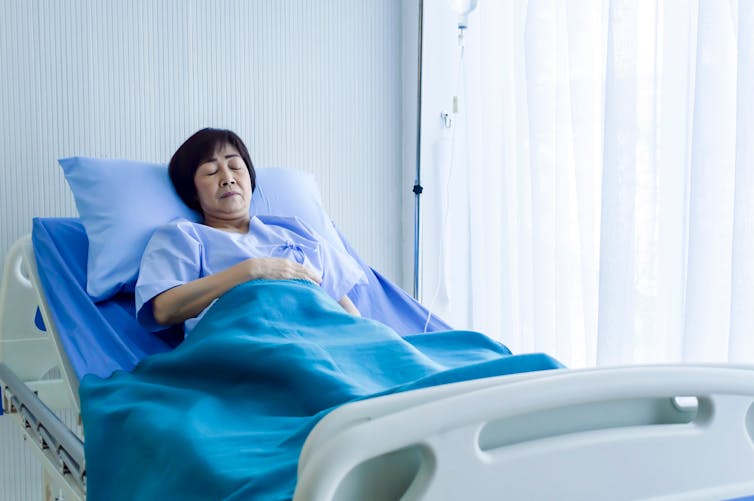 Hospitals have extra procedures in place to minimise the risk of coronavirus spread.
Shutterstock
Hospitals have extra procedures in place to minimise the risk of coronavirus spread.
Shutterstock
Some practical tips
The Heart Foundation offer the following advice for people living with chronic conditions during COVID-19:
keep looking after your health and stay connected with your doctor
get your annual flu vaccination
practise physical distancing and good hand hygiene
stay active and eat a healthy diet.
And most importantly: don’t ignore a medical emergency.
Authors: Serra Ivynian, Research Fellow, Faculty of Health, University of Technology Sydney, University of Technology Sydney

















