Stop removing your solar panels early, please. It's creating a huge waste problem for Australia
- Written by Deepika Mathur, Research Fellow, Northern Institute, Charles Darwin University
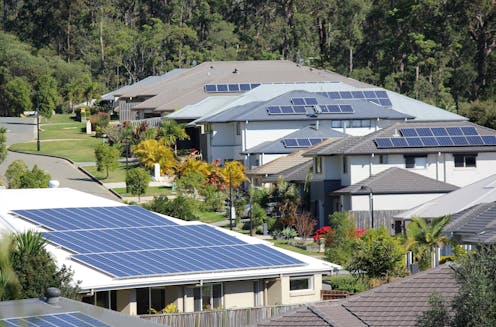
Installing solar panels is an easy way to lower your carbon footprint and cut electricity bills. But our recent research found there are many incentives to remove them prematurely, adding to Australia’s massive waste problem.
Researchers predict Australia will accumulate 1 million tonnes of solar panel waste by 2047 — the same weight as 19 Sydney Harbour Bridges.
But this number is likely to be higher, as we found people often choose to remove panels after just 10 to 12 years of use. This is much earlier than their estimated end-of-life age of 30 years (and potentially older).
Unfortunately, recycling is just a small part of the solution. So why is this happening, and what can we do about it?
Australia’s shocking ‘material footprint’
Australians have heeded the call to increase renewable energy. The installed capacity of panels across Australia has increased dramatically from 25.3 megawatts in 2007 to 77,078 megawatts in 2017. Likewise, the rooftop solar market capacity has almost doubled between 2014 and 2018.
Australia has committed to the UN Sustainable Development Goal of using fewer resources. And this requires us to use products (like solar panels) efficiently, with less waste. But Australia’s 2020 progress update shows our per capita material footprint is increasing. In fact, it’s one of the highest in the world, at 70% above the OECD average.
Read more: There's a looming waste crisis from Australia's solar energy boom
To help lower our growing material footprint and keep e-waste out of landfills, we need to ensure solar panels are sustainable in life, as in death.
It is assumed the primary reason why people remove solar panels is due to technical failures, such as when they’ve reached their expiry after 30 years, or breaking due to extreme weather or during transport. But failing to generate electricity doesn’t explain why many are thrown away prematurely.
 People often choose to remove panels after just 10 to 12 years of use. AP Photo/Ben Margot
So, we interviewed solar panel installers, recycling organisations, advocacy groups and local government waste managers across the Northern Territory. And our resulting qualitative research found social and economic incentives for removing solar panels.
Out with the new, in with the newer
We found a whole system of panels gets removed when only a few panels are damaged, as the new panels must have similar electrical properties to the old.
If the panels are still under warranty, the manufacturer often pays to replace the whole set, even when only a few are faulty. This means working panels are removed alongside the faulty panels, prematurely turning into waste.
Solar panels have also become a commodity item. Many of us dump old phones and cars when newer technology becomes available, and solar panels get the same treatment. After recovering the investment in solar panels through reduced electricity bills, some people are keen to get newer, more efficient models with a new warranty.
Read more: Indonesia can earn US$14 billion from old mobile phones and other e-waste in 2040
Our research also suggests government incentives aimed at rolling out more solar panels have caused consumers to replace their entire solar array. This is because previous rebates didn’t cover the replacement of only one or a few panels.
Finally, the life of solar inverters is usually 10-12 years, much shorter than the 30-year life span of the panels themselves. Some people use this as an opportunity to install a new set of solar panels when they change their inverters.
So why can’t we just recycle them?
There’s currently little research on what we can do with panels when they’re removed for reasons other than technical failure.
Researchers often put forward recycling as the preferred option for removed panels. But sending the growing number of working panels to recycling facilities is a tremendous waste of resources, and increases the burden for panel recycling, which is still in its nascent stages.
Managing waste is the responsibility of states and territories, and they align their waste strategies with the federal government’s National Waste Policy.
But there’s no directive yet at the national level on solar panel disposal, specifically. This means there’s a patchwork of policies across the states and territories for managing this waste.
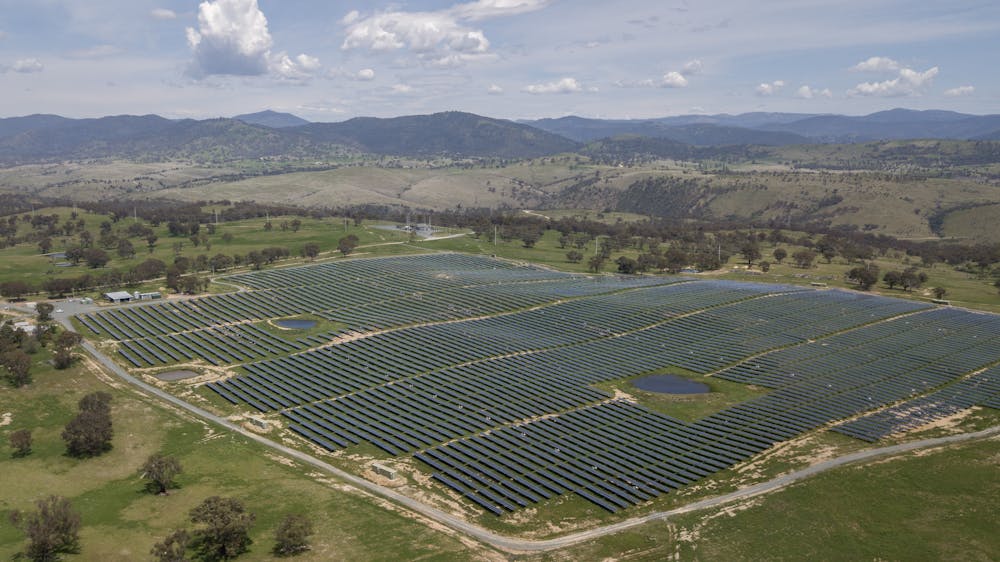 With many solar farms proposed, we need to find creative solutions to manage the panel waste problem. AAP Image/Mick Tsikas
Victoria, for example, has identified solar panels as the fastest growing waste stream in the state’s overall e-waste flow, and the state government has banned them from landfills.
But such measures wouldn’t work for the Northern Territory, given its lack of processing facilities and the distance to the recycling centres in southern Australia, which are at least 1,500 kilometres away. With ample open land, they’re more likely to end up dumped illegally.
What do we do?
Australia needs clear guidelines at a national level on collecting, transporting, stockpiling and disposing solar panels. A lack of clear policy hampers state, territory and local governments from managing this waste effectively.
By proposing recycling as preferred option to manage this waste, we risk excluding other important options in the waste management hierarchy, such as reducing waste in the first place by making solar panels that last, extending their life.
The federal government has also touted “product stewardship” as a potential solution. This is where those involved in producing, selling, using and disposing products share the responsibility to reduce their environmental impact.
But this model wouldn’t effectively service regional and remote areas, as collecting and transporting goods from remote locations comes at a very high financial and environmental cost.
It’s worth noting some panels do undergo a kind of “second life”. There’s a unique demand for secondhand panels from people who can’t afford new systems, those looking to live off-grid, small organisations keen to reduce energy bills, and mobile home and caravan owners.
But with a number of massive solar farms proposed across northern Australia, it’s more important than ever to explore new strategies to manage removed solar panels, with clear policies and creative solutions.
The authors gratefully acknowledge the contributions of Robin Gregory from Regional Development Australia, Northern Territory to this article.
Authors: Deepika Mathur, Research Fellow, Northern Institute, Charles Darwin University