Melbourne Airport is going to be as busy as Heathrow, so why the argument about one train line?
- Written by: Ian Woodcock, Lecturer, School of Global, Urban & Social Studies, RMIT University
Public discussion of rail links to airports has been narrowly focused on the idea of a single line and where to run it. In Melbourne, the politics of this debate has so far prevented a railway from being built, because it is not possible for one line to meet all of the landside access needs of the airport. The issue of rail access for a new western Sydney airport has also not been resolved.
Read more: Flying into uncertainty: Western Sydney's 'aerotropolis' poses more questions than answers
If we want anything to happen at all, we must move beyond barracking for one or other route. We have to recognise the need for multiple lines to serve everyone’s needs.
If we look further afield, of the world’s top 20 airports, 16 have rail access, 14 have integrated metros (i.e. part of the commuter rail network) and four have dedicated express lines as well as integrated metro lines (London Heathrow, Tokyo Haneda, Shanghai Pudong and Bangkok Suvarnabhumi).
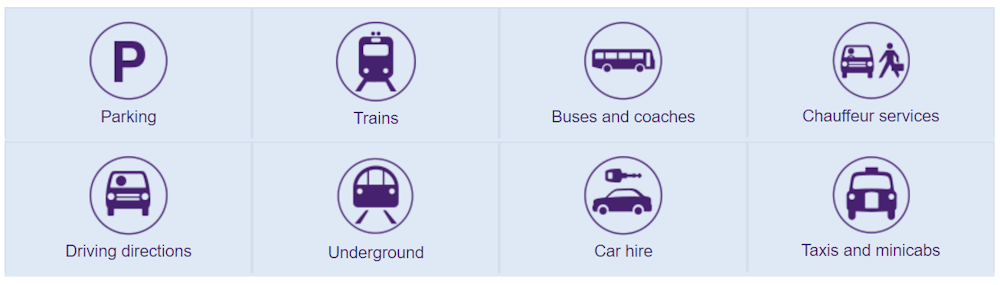 Other busy airports like Heathrow offer a much better choice of transport options than Melbourne does.
Heathrow
Other busy airports like Heathrow offer a much better choice of transport options than Melbourne does.
Heathrow
In terms of passenger demand, Shanghai Pudong and Bangkok Suvarnabhumi were comparable in 2012 with where Melbourne will be in 2019. London and Bangkok have populations of around 8 million, have other airports and have much greater numbers of passengers transferring within them than Melbourne Airport, but the most salient comparison is the means of landslide access.
We’ll look more closely at Heathrow, one of the more comparable airports to Melbourne, later in this article.
The political divide on a rail link
The history of planning for a Melbourne Airport rail link has been dogged by party-political differences focused on the idea of a single railway and the question of its route out to Tullamarine. Traditionally, the Coalition parties have favoured the express proposals, while the Labor Party has preferred alignments that benefit local commuters.
This difference and the impossibility of resolving it with a single line would be one of the reasons we have so far not gone to the bother of actually building anything. It has also distracted attention from more incremental ways to improve landside access to the airport beyond the SkyBus. Its market is similar to the main targets of the express route proponents.
The most recent express proposal is the AirTrain by the highly respected Rail Futures Institute (RFI). It’s part of a bold plan to separate Victorian regional services from the metropolitan commuter network. This would eventually provide statewide fast rail services, including a 15-minute ride between the airport and Southern Cross Station in the city centre.
The benefits of and urgent need for RFI’s AirTrain proposal are clear. But it still won’t solve all of Melbourne Airport’s landside access demands, nor will it have the city-shaping potential in the northwest region between Tullamarine and the CBD that’s driving the ideas for an airport metro service.
Read more: Airport rail link can open up new possibilities for the rest of Melbourne
Prime Minister Malcom Turnbull’s embrace of these ideas is a welcome change from his side of politics, as is Premier Daniel Andrews’ apparent support for RFI’s proposal. These are amusing reversals of political positions on airport access, but the community should not be swayed by the potential for wedging.
We can learn from Heathrow
To understand our predicament of airport access, comparisons with London’s Heathrow are useful. Many Australians know this airport and its landside access demands are far more similar to those of Melbourne Airport than may be imagined.
The Piccadilly Tube line was extended to Heathrow in 1977. That was a decade before it was serving over 30 million passengers comparable to what Melbourne airport was serving in 2013.
In 1998, Heathrow added a 15-minute express rail line to Paddington Station, when its landside access needs were about 40 million. That’s the demand Melbourne Airport is projected to hit in 2019. When London’s Elizabeth line (formerly CrossRail) opens next year, it will connect Heathrow to a major east-west line similar to the Melbourne Metro.
In 2028, Melbourne Airport is projected to hit the same level of landside access demand as Heathrow experienced in 2017. Currently, 40% of passengers using Heathrow do so via public transport – 27% via rail, 13% via bus or coach. And 35% of airport staff use public transport, and this is rising.
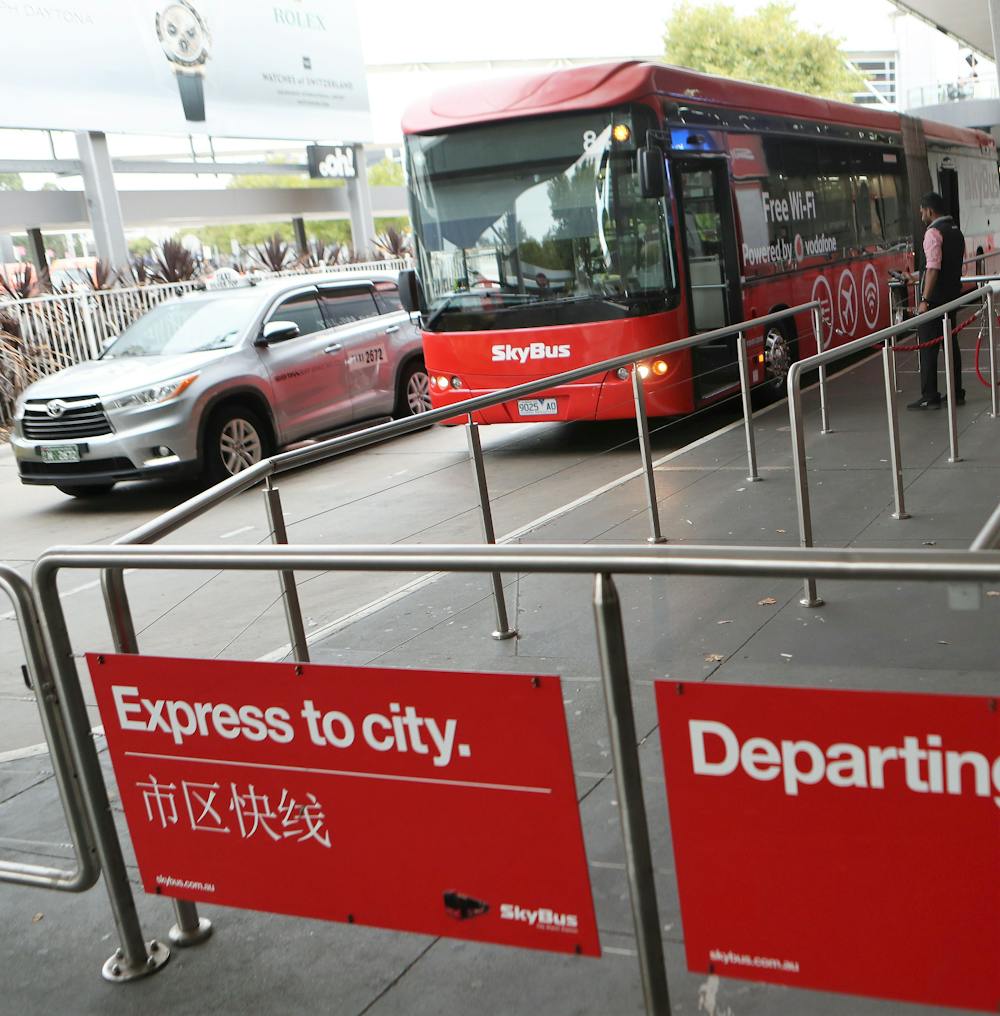 SkyBus would account for most of the 14% bus/coach share of access to Melbourne Airport.
David Crosling/AAP
SkyBus would account for most of the 14% bus/coach share of access to Melbourne Airport.
David Crosling/AAP
Heathrow has 13 public bus lines, 27 coach services and three railway services - the stopping-all-stations commuter service on the Piccadilly line and two levels of express service at premium ticket prices on regional railways (which will be subsumed by CrossRail).
By comparison, even though it is one of the world’s busiest, Melbourne Airport has a mere four public buses, some regional coaches and private express bus services. As a result, 86% of access is by car, including 17% by taxi or limo. SkyBus would take the lion’s share of the 14% bus/coach access.
What do these comparisons tell us?
These comparisons show how much more can be done to improve public transport access to Melbourne Airport, in the short, medium and long term. Melbourne Airport needs express as well as commuter rail access, but it needs more than this.
A wider spread of frequent public buses would be easy to implement. Extending the 59 tram service by 7km from Airport West would also be relatively quick and easy. Light rail lines to the airport from La Trobe University and Deer Park would provide much-needed connections to the main commuter rail system in parts of the metropolitan area where public transport is far worse than average.
A genuine commuter metro to the airport would not try to be an express. It would have stations that connect the major and emerging employment centres, such as Airport West, Essendon Fields, Niddrie, Highpoint, Footscray Hospital and Victoria University, and heavy rail stations at Arden and North Melbourne, before connecting with Southern Cross and then Bourke Street, Parliament Station and on to those eastern suburbs where metro services have long been planned.
Such a line would help with the redevelopment of Commonwealth land in Maribyrnong. In fact, without it, redevelopment would not be viable.
The politics of airport access need to be shifted away from focusing on whether one rail route is better than another to the need for a comprehensive transport plan integrated with land use that shows how we can shape our city and our state for a better future.
Read more: Victoria needs a big-picture transport plan that isn't about winners v losers
Authors: Ian Woodcock, Lecturer, School of Global, Urban & Social Studies, RMIT University