Can the Turnbull government make the election all about tax?
- Written by: Michelle Grattan, Professorial Fellow, University of Canberra
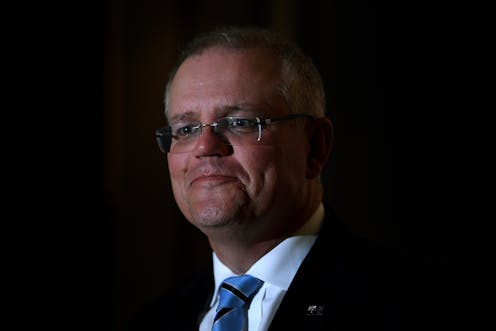
It’s an indication of how politically difficult the terrain is for the Coalition that Scott Morrison has faced a hard time defending the decision to drop a planned tax hike.
Morrison explains abandoning the rise in the Medicare levy – which he insisted only a year ago was vital to fund the National Disability Insurance Scheme - by saying revenue is much better.
It’s relevant, of course, that the levy wasn’t going to get through the Senate in its full form.
Apart from criticism of the speed and suddenness of the backflip, stakeholders fear it means the NDIS’s funding base mightn’t be so secure in the longer term.
Still, most people aren’t going to complain about not having to pay the higher levy.
From the government’s point of view, it is especially important that it has removed a serious contradiction it had faced – on the one hand making income tax cuts a centrepiece of the May 8 budget while on the other proposing to increase the levy on July 1 next year, weeks after the expected time of the election.
The government is pinning its hopes on making this election all about tax – casting itself as champion of lower tax and Labor as signed up to what Morrison dubs the “high tax club”.
It’s shades of John Howard’s 2007 election, when he offered big income tax cuts as the Coalition tried to stave off defeat. Labor matched almost all the cuts. Howard lost the election.
Morrison says the budget will deliver “tax relief to put more money back in the pockets of middle to lower income Australians to deal with their own household and family budget pressures.”
“It is important that when we consider any plan for tax relief, middle to lower income families will come first as part of any broader plan”, he said, in a major pre-budget speech on Thursday, while notably also focusing on how much of the tax burden is borne by higher income earners. “A massive 17% of the A$186 billion collected in personal income tax for 2015-16 was paid by the top 1% of taxpayers,” he said.
Whatever the detail of the government’s income tax package – the Australian Financial Review has reported cuts would be phased in over a decade – Labor has, thanks to revenue choices it has made, the financial capacity to match it.
For the longer term, the ALP also has available money from the company tax cuts for big business. These are not through the Senate at this point but they are in the budget numbers; Bill Shorten says Labor would repeal them (saving multi-billions over time) if they are legislated.
One Labor source says: “We’re not going to let them beat us on income tax cuts. We’re not going to let income tax cuts be a contest”.
Following the government’s move, Labor has dropped its compromise proposal to increase the Medicare levy for those earning more than $87,000. Under its present policy a Labor government would, however, bring back the deficit levy for high income earners. But the “contest” there would be on ground where the ALP doesn’t have so many voters.
In painting Labor as big taxers, the government will home in on multiple fronts including the opposition’s proposed crackdown on negative gearing and the capital gains discount, its planned action on trusts, and its ending (except for pensioners) of cash refunds for franked dividends. Voters are used to the negative gearing policy from the 2016 election. By tweaking its clampdown on refunds, Labor had tried to limit the blowback.
A significant question is how much potency “tax” has in an election these days, especially if the two sides have broadly matching policies on income tax cuts (except at the higher end).
It is relevant to the cost of living issue, but only if one side offers cuts for lower and middle income earners and the other doesn’t.
This week’s Newspoll in The Australian asked voters to name from a list their top priority for the budget. Only 15% nominated cutting income tax rates, well behind reducing debt and deficit (26%) and increasing spending on health (27%).
We should probably apply a discount in interpreting these results – some people might say what they think they should say rather than their actual view.
Nevertheless, it does seem likely that tax cuts are not necessarily the vote-magnet they once might have been. In attracting voters, they can perhaps be described as necessary but not sufficient. People expect them. If they are modest and phased in, they don’t carry great punch. Also, many voters today are often more concerned about services.
While the budget’s focus will be the income tax cuts, the government is still trying to get a favourable Senate vote soon after on its business tax cuts.
How Finance Minister Mathias Cormann must be cursing that he wasn’t able to drag those last couple of crossbenchers across the line before the appalling stories started flowing in the banking royal commission! Cormann is a negotiator par excellence but his task is now tougher.
It may or may not have been encouraging for him that South Australian independent Tim Storer this week said he was looking at the company tax issue separately from what was going on at the royal commission. Storer has raised a wide range of doubts about the legislation.
The evidence at the commission must surely make Derryn Hinch, the other crossbencher who was central to the earlier negotiations, harder to win over. Even before the damning revelations, Hinch called for the banks to be excluded from receiving the cuts. After the government quickly rejected this, Hinch has talked about confining them to companies up to a $500 million annual turnover – another way to skin the bank cat. It’s difficult to see how Hinch can now move.
Cormann has turned his attention to the two Centre Alliance senators (formerly the Nick Xenophon Team). So far they have firmly opposed the cuts for big business. They are waiting to see the budget before coming back to the issue. Meanwhile the indefatigable Cormann deluges them with material. “I’ve never seen text messages as long as he sends!” says Centre Alliance senator Stirling Griff.
Authors: Michelle Grattan, Professorial Fellow, University of Canberra