

We've become used to wearing masks during COVID. But does that mean the habit will stick?
- Written by: Holly Seale, Associate professor, UNSW
Mask mandates are in place in Victoria and New South Wales as these states continue to see COVID cases in the community. And public health experts have argued face masks will continue to be an important measure in our fight against the virus for some time to come.
Evidence shows masks are effective at reducing the spread of COVID-19 in the community.
However, masks won’t always be compulsory, particularly outside outbreak situations. In most Australian states and territories at present, masks are not mandatory but are recommended in certain settings, such as where physical distancing is difficult.
But moving forward — as more people get vaccinated and outbreaks hopefully become fewer and smaller — is mask use likely to stick?
Leaving it up to the public
In recent weeks, we’ve seen announcements from the United Kingdom and Singapore that they’re shifting their approach to COVID-19 restrictions, moving to a new way of “living with the virus”.
In the UK, along with the reopening of all businesses, and lifting of attendance caps at events, social distancing and mask wearing will become matters of personal responsibility.
Select authorities may still require people to wear masks in certain settings, such as in hospitals or on public transport. For example, masks will remain compulsory on London’s public transport network.
But from July 19, the national legal requirement to wear a face covering in shops, on public transport and in other enclosed spaces will end.
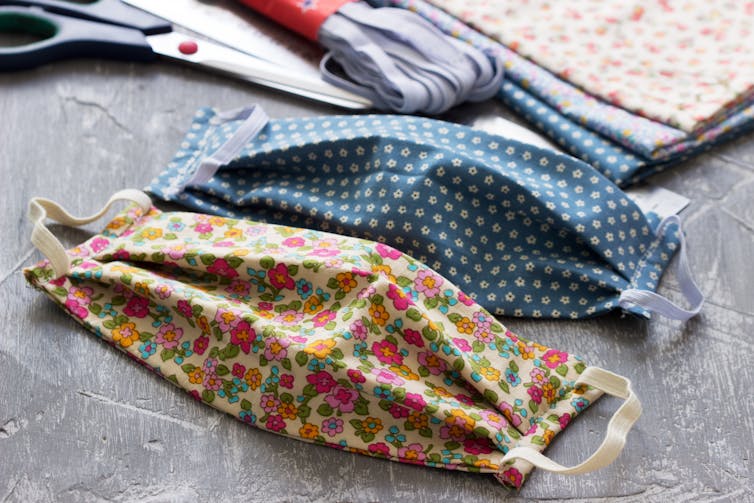 Masks effectively reduce the spread of COVID-19 and other respiratory viruses.
Shutterstock
Masks effectively reduce the spread of COVID-19 and other respiratory viruses.
Shutterstock
In Singapore and the UK, the governments have noted the community’s behaviour will be part of the solution.
Authorities hope that even without mandates, people will continue to wear masks in high-risk situations, such as crowded and enclosed spaces.
Will discretionary mask use work?
While we know mandates increase mask use substantially, the decision to wear a mask is influenced by many factors beyond whether or not there are penalties in place for non-compliance. A person’s age, level of income, where they live and cultural norms can all play a role.
A review on mask use to prevent respiratory infections, conducted before COVID-19, found people are more likely to wear a mask when they feel at increased risk of infection, or when they think the outcome of getting sick is severe.
Wearing a mask is also motivated by a shared sense of responsibility and by perceived social norms (those unwritten rules or beliefs we consider acceptable in our community). We often take cues from people we’re close to, especially in uncertain times.
Our research found perceived pressure from different avenues including employers, mass media, government and family can all play a role in increasing mask use.
Read more: Living with COVID: is now the right time for England to lift all restrictions?
It’s difficult to know whether as countries move away from mandates, and leave it up to individuals, we’re likely to see ongoing mask use in the community.
But it’s worth looking to the Asian experience. Some Asian countries have a longer history of wearing masks, both for protection against pollution and for protection against infection, especially since SARS in 2003.
In Hong Kong after the outbreak, the proportion of people who reported wearing a mask when experiencing flu-like symptoms declined sharply from 74% in June 2003 to 39% in September 2003. But self-reported health-related behaviours, including mask use, were still much greater in the period after SARS compared to before it.
Researchers tracking these trends noted that in the face of SARS, people in Hong Kong came to accept mask use as part of their “civic responsibility”.
One study looking at photographs of settings such as grocery stores and markets in six different countries in early 2020 mapped huge variations in mask use. This ranged from a high of 97% in Phnom Penh, Cambodia (in Asia) through to 4% in Kinshasa, in the Democratic Republic of Congo.
In some of these countries the level of mask use may have been influenced by government recommendations or mandates in place at the time.
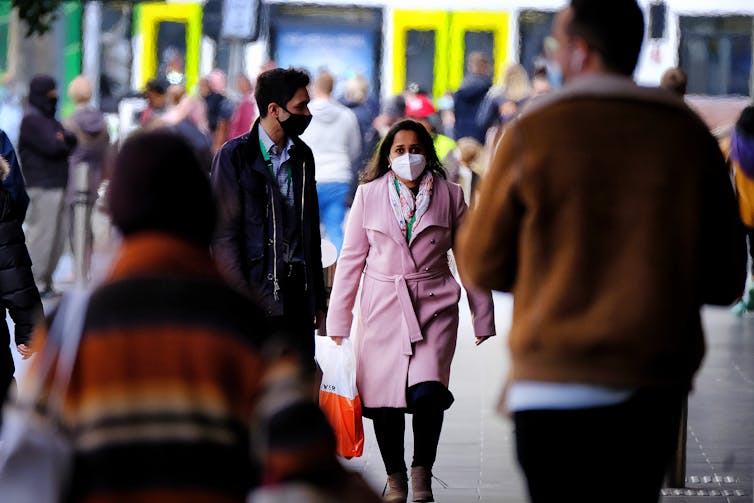 Wearing a mask can be motivated by a shared sense of responsibility and perceived social norms.
Luis Ascui/AAP
Wearing a mask can be motivated by a shared sense of responsibility and perceived social norms.
Luis Ascui/AAP
There is an element of doubt as to whether masks will continue to be used in countries with more individualist cultures such as the US and Australia (“I often do my own thing”), as opposed to collectivist cultures like those found more often in Asia (“My happiness depends very much on the happiness of those around me”).
Vaccination status could also affect mask use in the community. People who are vaccinated against COVID-19 — as a high proportion are in countries like the UK and Singapore — may be less inclined to wear a mask, compared to those who are unvaccinated.
The new normal?
If we’re trying to shift the social norm around masks, and encourage their ongoing use (without mandates), it’s important we evolve our messaging. This includes relevant reminders around times when masks would be most beneficial, such as:
encouraging people to put a mask on straight away if they’re out in public and start to feel unwell
encouraging mask use in higher-risk locations such as on public transport and especially when visiting people in aged care and hospitals.
Continuing to frame the use of masks as a social behaviour is critical. We don’t send our kids to school with peanut butter sandwiches in case there’s someone with an allergy. Likewise, wearing a mask is a simple action we can take to protect those who may be vulnerable.
Read more: From scary pumpkins to bridal bling, how masks are becoming a normal part of our lives in Australia
Authors: Holly Seale, Associate professor, UNSW


















