

How museums could light up and display more of the world's precious objects for longer
- Written by: Emrah Baki Ulas, Senior Lecturer, University of Technology Sydney
The two key objectives of museums — exhibition and preservation — are often in conflict.
Exhibiting an object and exposing it to elements like lighting, fluctuating temperature, humidity and variable air quality can cause damage and degradation.
The very decision to exhibit an item may mean its future is compromised.
In fact, the majority of objects in museum collections are in storage. This is only partly to do with resources and display space. It is largely due to conservation requirements.
I am a researcher at the University of Technology Sydney and a lighting designer at Steensen Varming. With other researchers and designers, I am exploring how museums can improve displays for visitors while also addressing preservation with new advances in lighting technology and applications.
These technological advances need to be put into practice for the sake of viewers today and well into the future.
Lighting the way
The first public museums of the 19th and the early 20th century used daylight to illuminate the collections. But, as our understanding of conservation advanced, the degrading effects of ultraviolet and visible light became a concern.
As electric lighting became increasingly available — and economically viable — museums and galleries were fitted with incandescent light bulbs and fluorescent discharge tubes (commonly referred to as “fluoros”), and daylight was increasingly excluded.
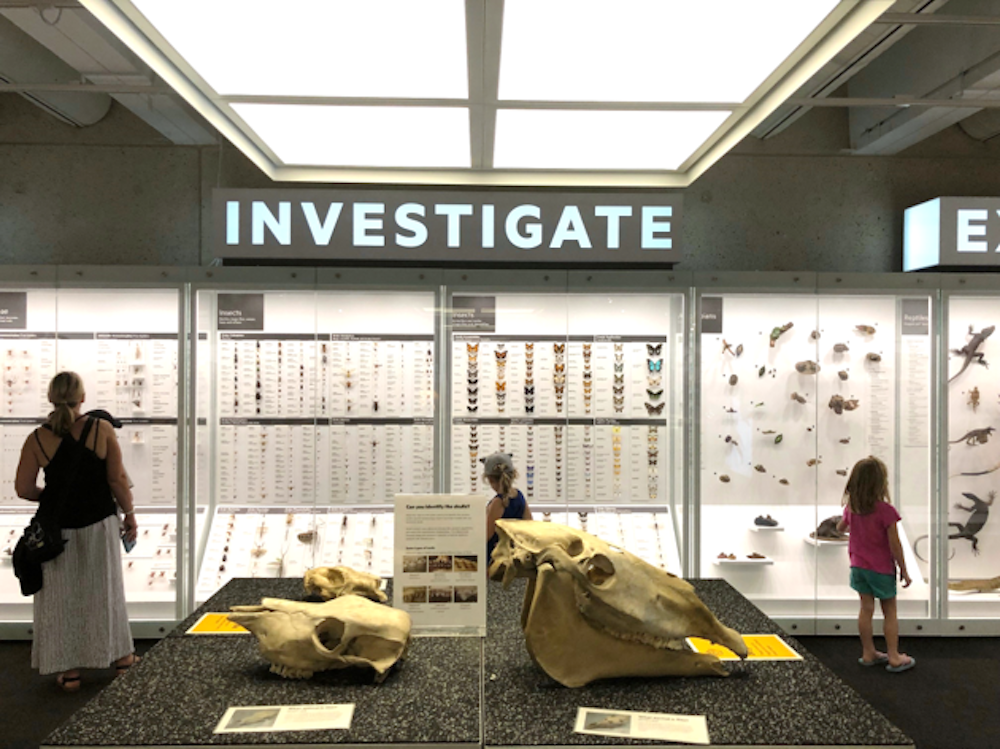 Galleries and museums must be mindful of light exposure.
Queensland Museum Discovery Centre. Photo courtesy Steensen Varming., Author provided (no reuse)
Galleries and museums must be mindful of light exposure.
Queensland Museum Discovery Centre. Photo courtesy Steensen Varming., Author provided (no reuse)
International guidelines — which balanced the needs of viewers and conservation — were developed with these technologies in mind. As all forms of light can cause damage to exhibition materials by fading pigments and affecting structural integrity, lighting must be used delicately and sparsely to protect vulnerable displays.
Read more: I've always wondered: do fluorescent lights emit UV, and can it harm me?
But this century has seen major advances in light-emitting diodes, or LED lighting. White LEDs greatly improved the quality of LED lighting, which is also recognised for economic and environmental benefits.
LEDs have very different attributes to traditional counterparts: their light spectrum is different, they render colours differently, they offer a greater degree of control and have a lower potential for damage.
But even as museums increasingly adopt LEDs, they are still using the old guidelines. A new approach to museum lighting standards is well overdue.
Modernising standards
With LED lighting, we believe the strict exposure limits under the old guidelines can be more specifically tailored.
This means more artefacts can be displayed for longer while incurring less damage.
A key part of our proposed framework is considering the “significance” of objects as a key factor when deciding how much light exposure is adequate.
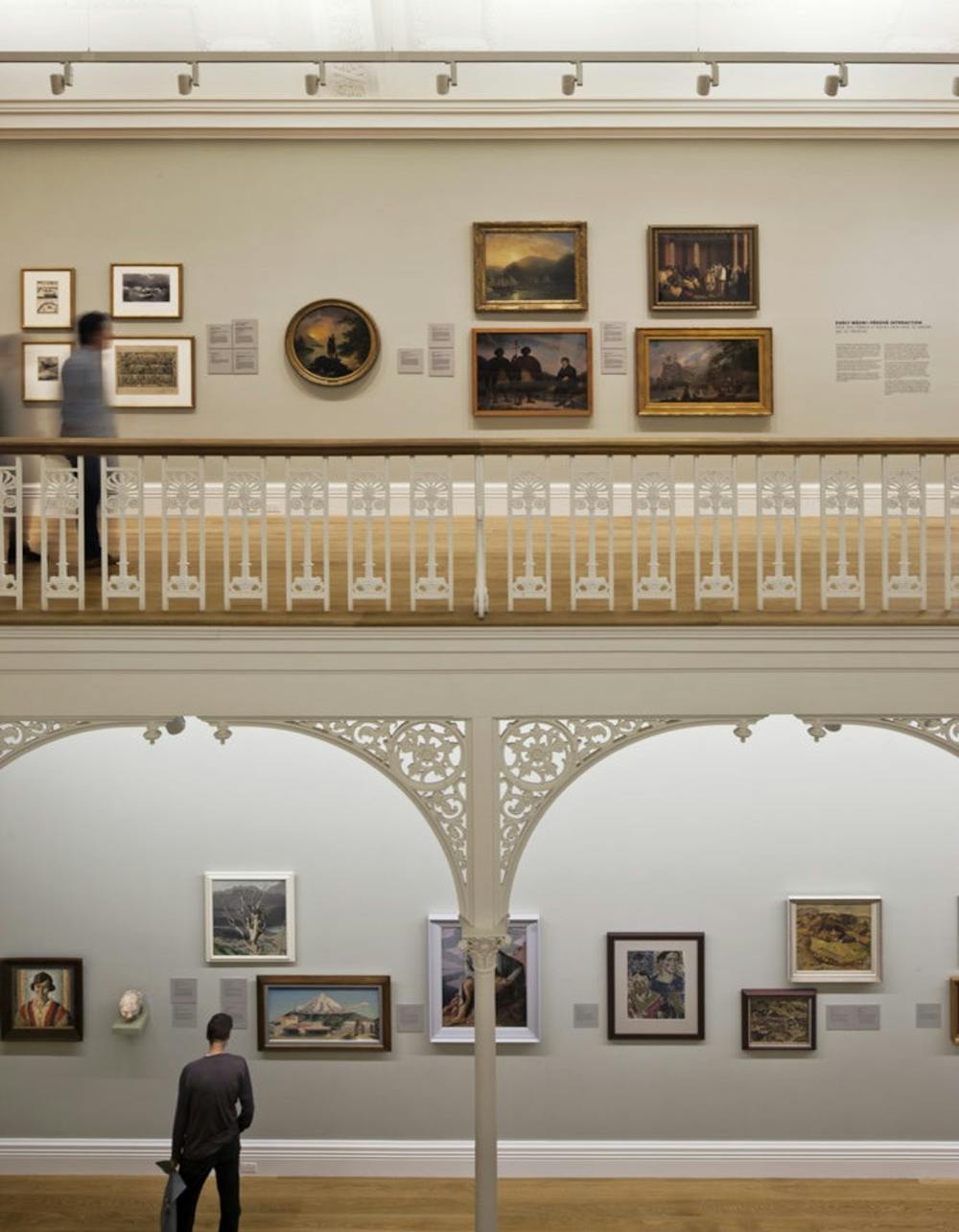 The ‘significance’ of an object must be integrated into display considerations.
Auckland Art Gallery. Photo courtesy Steensen Varming, Author provided (no reuse)
The ‘significance’ of an object must be integrated into display considerations.
Auckland Art Gallery. Photo courtesy Steensen Varming, Author provided (no reuse)
The question of significance is a complex one in its own right, but helps make more informed decisions for display conditions: how important an object is to display, for how long it can be on display, and how much compromise is acceptable.
Our new proposed standards include suggestions on:
expanding the classification of the light-sensitivity of museum objects from the four categories to eight
introducing a three-tier significance scale to consider the importance and relevance of objects, not just the materials they are made of, and
a flexible framework, allowing museum professionals to adjust the duration of exposure versus light levels without compromising objects.
This will not solve all the complex questions around light, conservation and visitor experience, but it will serve as an essential adjustment.
By introducing more specificity and flexibility into lighting guidelines, we hope we can offer freedom to curators, designers and conservators, while also giving museum visitors a better experience.
Read more: How the right lighting could save the Mona Lisa
Lighting technology is developing by the day. With smart controls and sensors, museums will increasingly be able to add thematic, theatrical or dynamic lighting overlays to display objects at their best — perhaps even personalised lighting profiles for each visitor.
We now need to adopt the right guidelines for this to happen.
Authors: Emrah Baki Ulas, Senior Lecturer, University of Technology Sydney


















