

We asked 9,000 Australians about their mental health needs post-COVID — this is what they want
- Written by Karin Hammarberg, Senior Research Fellow, Global and Women's Health, School of Public Health & Preventive Medicine, Monash University
The COVID-19 pandemic has taken an enormous toll on people’s mental health around the world.
Even in Australia, where the numbers of those infected, hospitalised, and dying from COVID-19 have been much lower than in most other countries, our research has shown the mood of the population has been badly affected by lockdowns and restrictions on freedoms.
This in turn can make it harder for people to work and participate in society. That’s why policy makers need to turn their attention to what they can do to support people as they adapt to life in a COVID-normal world.
Findings from our new survey research offer important clues to what people think will help them adjust.
Our research
In 2020 we conducted two anonymous online surveys of Australians over 18 about their experiences of living with COVID 19 and their mental health. The first was launched in April, just after nationwide COVID-19 restrictions began. The second was done in August when restrictions had eased except in Victoria.
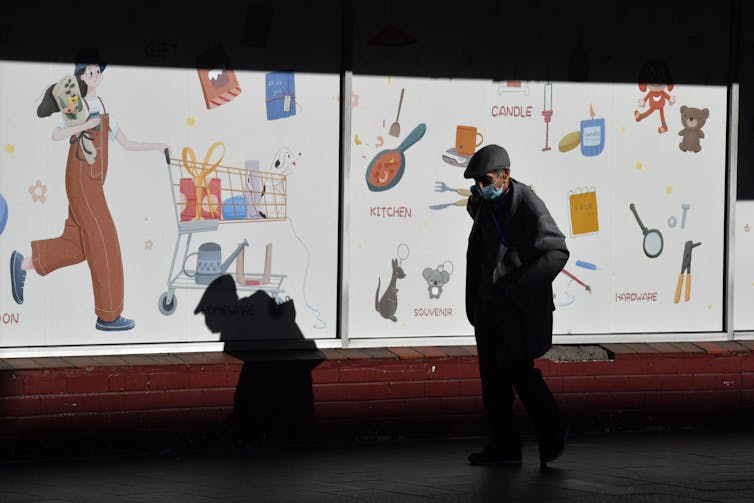 Australians’ mental health has suffered during amid health scares, job losses and lockdowns.
Mick Tsikas/AAP
Australians’ mental health has suffered during amid health scares, job losses and lockdowns.
Mick Tsikas/AAP
In the second survey we included a list of 16 potential policies and asked respondents to tell us which ones would help them recover from the COVID-19 restrictions.
They included policies around mental health, financial support, employment assistance, access to telehealth, support for community organisations, and government management of future pandemics.
What we found
More than 13,000 people completed the first survey.
This showed more than one in four had significant symptoms of depression and more than one in five had significant symptoms of anxiety during the first month of COVID restrictions. This was at least double the rates of non-COVID times.
The second survey was completed by more than 9,000 people. We were surprised to find people who lived in parts of the country where restrictions had eased were not feeling much better than they did at the time of the first survey. Less surprising was people in locked-down Victoria were feeling much worse than people elsewhere.
Of all the potential policy solutions, respondents most strongly backed planning for next time. Almost half (46%) said, “to have a publicly available plan about management of future pandemics” would be “very helpful” for their personal recovery.
This policy option was the most supported across genders, ages, places of residence, and socioeconomic circumstances.
Four other potential policies were rated as “very helpful” by more than 30% of respondents: two related to mental health support, one to individual financial support, and one to support for community organisations.
“Access to face-to-face counselling with a mental health professional” and “a GP asking me about my mental health” as well as “financial support for living expenses” were most strongly supported by respondents who identified as women or non-binary and those in the youngest group. This was probably because they were more likely than men and older people to have lost their job and experience financial hardship as a result of COVID-19 restrictions.
“Additional support for community organisations” (such as Men’s Sheds, community choirs, sports clubs, environmental groups) was rated as “very helpful” by around one third of people of all genders and ages.
Why policymakers need to listen
The findings from our study offer policymakers insights into what people in Australia think would help as we all adjust to the reality that COVID-19 is likely to be part of their lives for the foreseeable future.
The United Nations has already recommended all countries plan a response to the mental health consequences of the pandemic. We argue this planning should be guided by evidence, and as the OECD recommends, the community needs to be involved in working out the details.
 The UN wants all countries to respond to the mental health fallout from COVID-19.
Daniel Pockett/AAP
The UN wants all countries to respond to the mental health fallout from COVID-19.
Daniel Pockett/AAP
The most popular proposed policy among those surveyed was for a publicly available pandemic management plan. This is particularly notable because a key recommendation from the Health Department after the H1N1 pandemic in 2009 was that a comprehensive plan for managing pandemics should be developed for the whole of Australia.
“Effective communications, robust science-based decision making and a flexible public health response system able to respond rapidly to a crisis” were identified as essential components of such a plan.
Had this recommendation been implemented then, it is likely Australia’s response to the COVID-19 pandemic would have been quicker, better coordinated among the commonwealth, state, and territory governments - and so less confusing and more effective.
Read more: Lockdowns make people lonely. Here are 3 steps we can take now to help each other
It supports the argument by international disaster risk reduction experts that governments need to change the mindset from “if” to “when” future pandemics will occur.
And as a weary public works its way through more lockdowns and worrying daily updates, they need to know lessons have been learned. Reassurance Australia is ready for “next time” will be an essential plank of their mental health recovery.
Authors: Karin Hammarberg, Senior Research Fellow, Global and Women's Health, School of Public Health & Preventive Medicine, Monash University

















