

More children are self-harming since the start of the pandemic. Here's what parents and teachers can do to help
- Written by Emily Berger, Lecturer, Monash University
There has been a reported spike in young people attending emergency departments for self-harm and suicide during the pandemic. In New South Wales, presentations to emergency departments for self-harm and suicidal thoughts are reportedly up by 47% since before the pandemic.
In the year to July 29 2021, there were 8,489 presentations to NSW emergency departments for self-harm in people aged up to 17. This was up from 6,489 presentations in the year to July 20 2020.
A study published in December 2020 found children as young as in primary school are harming themselves intentionally.
Services like crisis help lines and emergency departments are not meeting the increased demand for mental health support.
If you are a parent or teacher, there are several things you can do when you learn your child or student has self-harmed.
What is self-harm?
Self-harm, also known as self-injury or non-suicidal self-injury, describes people’s intentional acts to inflict harm on their own body. Self-harm includes cutting skin, burning, self-hitting and scratching skin — or any other behaviours that cause body injury, pain and wounds.
People who intentionally harm themselves do so to relieve stress, anxiety and sadness, to bring their attention to the present moment or to punish themselves because of self-loathing and self-hatred.
Read more: Why do people intentionally injure themselves?
Self-harm may be something a young person does once, twice or repeats over and over. Young people who repeatedly self-harm often have other mental health problems or have experienced significant stress in their life.
As self-harm is often a response to mounting stress and uncertainty, it’s not surprising rates have gone up during the pandemic. Self-harm can be a means to cope and establish control over emotions.
Self-harm and physical pain can provide a sense of relief from emotional pain.
What can you do?
If you know a child who is harming themselves, there are some things you can do.
First, it is essential parents and teachers do not respond with shock, horror, anger or judgement when they identify their child or student has self-harmed. Young people often report feeling shame after they have intentionally harmed themselves which leads them to hide their wounds under clothing and jewellery.
Many may not participate in activities which might reveal their wounds, such as swimming or other sports.
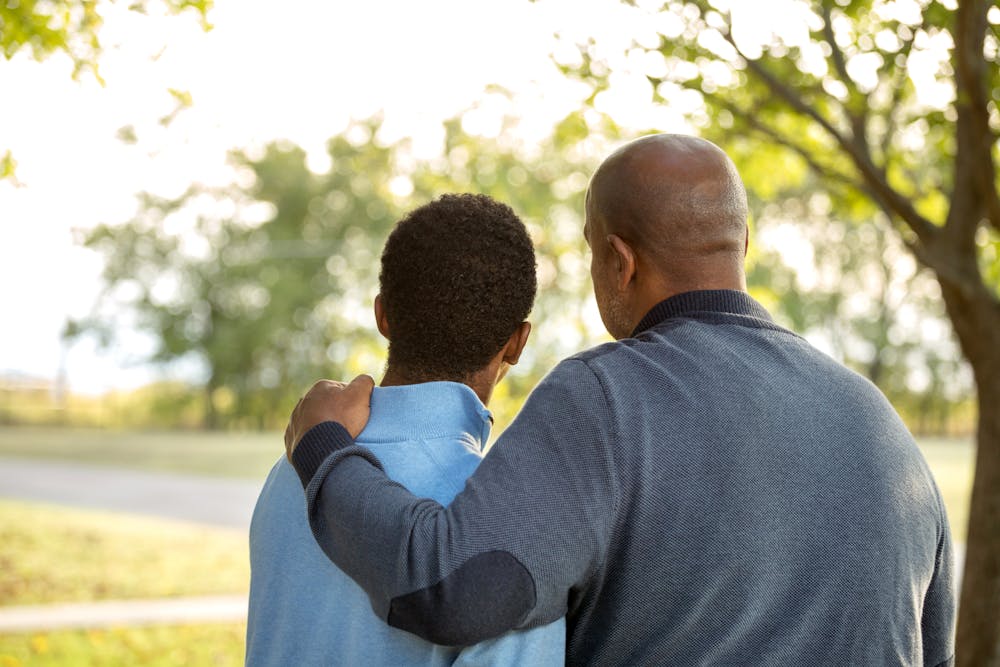 It’s important not to react with judgement if you find out a child has been intentionally harming themselves.
Shutterstock
It’s important not to react with judgement if you find out a child has been intentionally harming themselves.
Shutterstock
The second thing you can do as a parent or teacher is remove objects which may be used to self-harm. The purpose of this should not be to punish or shame the child but to remove a child’s easy access to things that could be used to inflict injuries. And you can remind the child you are not removing these objects to punish, but rather to help them.
When treating young people who self-harm we instruct them to create a delay between the urge to self-harm and the act of self-harm. Removing implements used to self-harm can help to do this too.
Activities to distract young people from self-harm, such as cooking and exercise, is another highly recommended strategy to prevent further injury.
Some recommend so-called “substitution activities” for self-harm such as holding ice or snapping a rubber band on your wrist. But these are controversial as they come from the same self-destructive mindset and are similar behaviours, just in a different wrapper.
How to treat a child’s wounds
It is important parents, a school nurse or school first aid trained staff have an opportunity to inspect and treat a child’s wounds. Parents and school staff should be pragmatic, sensitive and show unconditional positive regard for their child and students during this interaction.
This can include comments like: “Can you tell me a little bit about what happened?”; “Have you ever done this before?”; “Where on your body did you do this?” and “How many times did you do this?”
Finally, parents and school staff should ask, “How do you normally care for the wounds?”
Understanding how young people care for their wounds and teaching them about wound care, as well as the importance of seeking help after self-harm, should be the goal of these interactions.
Parents and school staff can then make decisions about the next stages of action. This can be discussed with their child to allay any fears they may have about seeking further help from medical or mental health services. It may include booking a session with the child’s GP or psychologist.
A mental health professional will be able to help address the underlying feelings that led the young person to self-harm and provide the young person with different ways of coping. They will also be able to determine whether the young person is also having suicidal thoughts.
Read more: Why every teacher needs to know about childhood trauma
A recently published policy for schools has outlined other ways for teachers to respond after a student has self-harmed. All schools should have a self-harm policy to support teachers by telling them what steps to follow if they become aware a student has self-harmed.
A school policy on self-harm should include information about how to support students, how to talk to parents, how to minimise contagion of self-harm between students, and how to support teachers managing the issue of self-harm of students.
If you or anyone you know has self-harmed or thought about it, contact Lifeline on 13 11 14 or Kids Helpline on 1800 55 1800.
Authors: Emily Berger, Lecturer, Monash University

















