

why repeated drought threatens dried fruits and veggies
- Written by Charith Rathnayaka, Lecturer in Mechanical Engineering, University of the Sunshine Coast
Potatoes can become more brittle, apples may be harder to dehydrate, and sultanas might be off the menu altogether — these are possible outcomes of recurring and intensifying droughts under climate change in Australia.
It might sound counter-intuitive, but drier conditions can affect the quality of fruit and vegetables at a cellular level, making them harder to process into dried foods. This has big implications for Australia’s food security and economy.
Dried foods account for a significant portion of our diet, and Australia exports around 70% of its produce, which is valued at close to A$49 billion per year. Dried produce make up an important part of this — for example, the export value of sultanas, currants and raisins alone in 2018-19 was $25.1 million.
If the taste, quality or availability of dried foods declines, we risk losing these lucrative markets. But my ongoing research on advanced drying methods aims to help overcome this challenge by carefully controlling how cells change their shape and structure.
Droughts are set to get worse
The most recent report by the Intergovernmental Panel on Climate Change (IPCC) warned Australia will become more arid as the world warms, bringing more droughts, drier soils, mass tree deaths and more.
The recent droughts across much of eastern Australia have already shown how climate change can wreak havoc on plant produce, as well as society and economy. For example, due to climate change impacts, agricultural profits fell by 23% over the period 2001-2020, or around $29,200 per farm, compared to historical averages.
 Droughts in Australia are expected to become more frequent and intense under climate change.
AAP Image/David Mariuz
Droughts in Australia are expected to become more frequent and intense under climate change.
AAP Image/David Mariuz
Further, the COVID-19 pandemic has shown that uncertain environmental, social and economic conditions can lead to panic buying, highlighting the importance of food security and the stability of food supply.
It’s important to ensure our dried food supply is up to future stockpiling challenges, as chips and dried fruits are a staple of many diets in Australia. In 2019-2020, dried fruit such as sultanas, dried apple and apricots accounted for 12% of total fruit serves in the country.
How drought affects dried foods
Australian produce can be dried either in Australia or overseas, depending on the food type, manufacturer and the associated costs.
During the drying process, the cellular structure of fruit and vegetables go through significant changes. Cells and tissues can change their shape while shrinking into more compact forms.
If the drying process is not carefully controlled, it can lead to undesirable properties affecting the food’s taste and appearance, potentially reducing the market value and nutritional quality.
This is how drought makes things difficult. We know drought leads to water shortages in lakes and rivers, but research suggests it also dries out small plant cells and tissues.
If the absence of water in cells is ongoing — due to repeating droughts — the micro-properties of plants and their produce can change in the long term, whether the plants are grown in a large farm spanning hectares or in a small pot in your backyard.
 The dried food export industry brings millions of dollars into Australia.
Shutterstock, Author provided
The dried food export industry brings millions of dollars into Australia.
Shutterstock, Author provided
Recurring droughts can make fruit and vegetables “fatigued” even before they’re harvested. This means the structure of the plant weakens with every drought, a bit like how bending a metal wire repeatedly eventually causes it to break.
For example, droughts can make plants, such as apples, more brittle and therefore un-processable. Droughts can also directly lead to smaller plants and respective harvests.
If the drought conditions are extreme, the moisture loss in the plants can be severe and the cells can naturally get damaged even without any further processing. In other words, if the recurring drought conditions are here to stay, dried foods such as potato chips, sultanas and dried apple as we know them could change for good.
 With recurring droughts, potatoes can become brittle, making them harder to process.
Shutterstock
With recurring droughts, potatoes can become brittle, making them harder to process.
Shutterstock
Solving this problem with supercomputing
So, we know produce affected by drought is not as easy to process, often tastes different and is sometimes not usable at all. But what can we do about it?
Obviously, if climate change and subsequently recurring droughts could be avoided, the adverse effects on the dried food could also be dodged. First and foremost, global emissions must be rapidly and urgently cut.
Read more: Climate change means Australia may have to abandon much of its farming
But what if we can’t avoid it? In this case, we will need a sound Plan B.
One of the promising questions Australian researchers and engineers like me have asked is: can we modify the drying processes to match the changed properties of drought-affected produce? Doing so might enable the dried food processing industry to maintain the quality, taste, appearance and market value of its products.
But it won’t be easy. First, we need to correctly understand the exact nature of shape and size changes in plant cells, as affected by the lack of water. This is challenging, and requires computer simulations and supercomputing technologies.
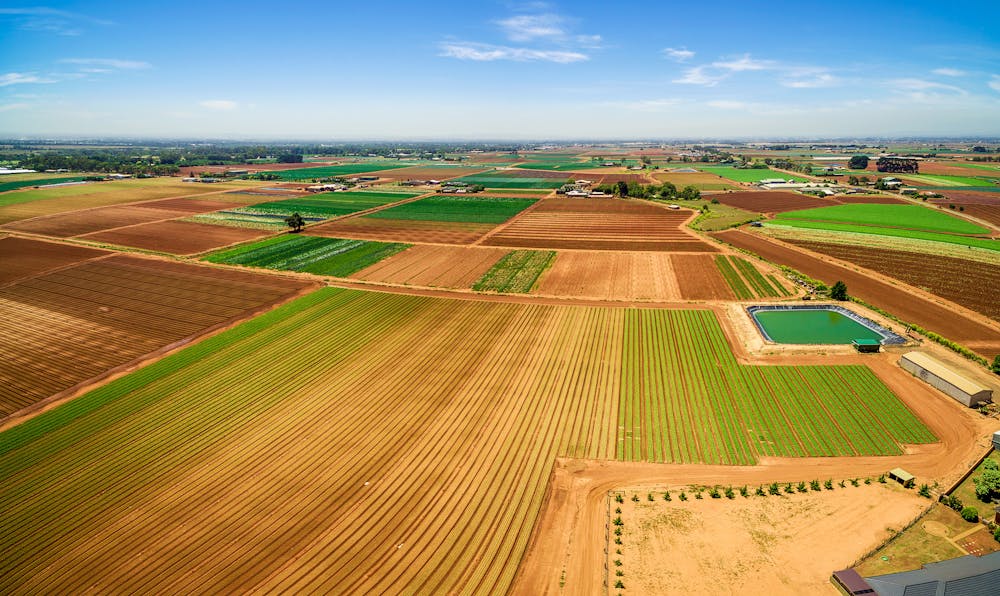 With more research, we can prepare for the impact of drought on dried foods.
Shutterstock
With more research, we can prepare for the impact of drought on dried foods.
Shutterstock
Through these simulations, it’s possible to estimate if the cells are going to be damaged when they go through the drying process. If we find there’ll be serious damage, the simulations can provide information on the ideal drying conditions. This means we can optimise the temperature, pressure, humidity and drying time to minimise the adverse effects.
This approach can lead to significant savings of time, money and energy while leading to increased quality and shelf life of dried food. With more research, extended computer modelling and simulations can lead to advanced drying on an industrial scale, leading to stronger food security and stability.
So, even if we will have to deal with more frequent and more intense droughts in the near future, the taste of your potato chips might be as good as ever, after all.
Authors: Charith Rathnayaka, Lecturer in Mechanical Engineering, University of the Sunshine Coast

















