

Australia's housing laws are changing, but do they go far enough to prevent pet abandonment?
- Written by Emma Power, Senior Research Fellow, Geography and Urban Studies, Western Sydney University
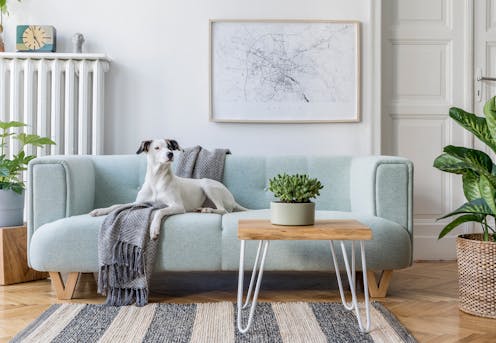
New South Wales recently became the latest state to end blanket bans on pets in apartments, joining Queensland and the ACT.
Other housing regulations on pets are also shifting nationally, with Victoria last year following the ACT with reforms that prevent landlords from unreasonably restricting pets, and the Northern Territory following suit this year.
But while some laws are changing, there is still too much uncertainty across the housing system. As a result, pets are often the victims when people need to relocate and can’t take their dogs or cats with them.
With close to 2.5 million Australians now living in apartments and a third of Australian households renting their homes — and rising — there is an urgent need for consistent, equitable and pet-supportive housing policies across the country.
Read more: Can I have a pet and be housed, too? It all depends...
Pets are ‘part of the family’
Australia is a nation of pet owners, with over 60% of households including a pet. In most of those households, pets are part of the family.
During the COVID-19 pandemic, our pets have become even more important. They have helped us adjust to the stresses of lockdown and been vital companions when we cannot get out and see friends and other family.
The benefits of pets within communities are well established. Dogs, in particular, act as ice breakers, helping neighbours to get to know one another and building a sense of community.
Dogs have also been shown to increase average rates of daily exercise across all age groups.
Despite this, pet bans in apartment buildings and the rental sector have been widespread in Australia until recently. As a result, around half of households that live with pets believe their future housing options are limited, and renters who have pets have reported feeling insecure about their housing.
Read more: Australians love their pets, so why don't more public places welcome them?
Are the new laws fair?
NSW’s reforms relate to strata title — a form of housing in Australia that enables owners to buy an apartment “lot” in a larger complex (or rent from owners). Until recently, many strata titles included a blanket pet ban.
Compared with other states and territories, NSW has traditionally had the most comprehensive, yet complex, regulations regarding pets and strata title. The new reforms provide insights that can help other states and territories follow suit with their own laws. But do the reforms go far enough?
Broadly speaking, the new rules are bringing strata living in line with community expectations. They give apartment owners greater power to make decisions about what they do in their own homes.
With these rights, however, come responsibilities. The NSW government has said owners corporations can still refuse an apartment owner to keep an animal if there is
repeated damage of the common property, menacing behaviour, persistent noise and odour.
Owners corporations will also have the right to set conditions about how pets are kept, such as requiring they are supervised on common property or while entering and exiting an entrance or lift.
The government says these conditions must be “reasonable”, but there are yet to be guidelines on what this might mean.
In the past, apartment by-laws in Australia have been highly variable. While most banned pets outright, others had perverse rules requiring they be carried through common areas regardless of size, or limiting the size of dogs.
The latter restriction sounds sensible, but in reality, such a rule makes it difficult for apartment residents to have larger dogs, many of whom are quiet and well-suited to apartment life.
A report prepared as part of the NSW legislation review suggests these types of requirements would be unreasonable. However, this is not specified in the law that was passed.
Renters — and their pets — are left out
One group is left out of the newly introduced NSW rules. Renters will still require landlord permission to keep pets in strata title apartments — and that can be hard to come by.
These restrictions are exacerbating an animal welfare problem. In our research, we found an unacceptably high number of animals are taken to welfare agencies across Australia every year. And we found that just over half of the households that had to give up pets were renters.
The RSPCA alone reported receiving 112,530 animal relinquishments in 2019–20.
The organisation estimates between 15% and 30% of animal surrenders nationally are from pet owners who could not keep their pets when moving into a new rental property.
A brighter, pet-inclusive future
New strata laws in NSW, Queensland and the ACT show the way toward housing policies that respect the right of households to make their own decisions about how they live – and who they live with.
Yet, these laws are only effective when they are consistent for owners and renters, and across all housing types and every state and territory.
Inconsistent policies are making it difficult for households that include pets to move from one rental home to another or from public housing into the private rental sector. They also make it difficult for households to move between housing types – for instance, from a detached house into an apartment.
Times are changing in Australia. Many people would like to keep pets, but find themselves unable to due to onerous restrictions and out-of-date laws. It is time housing regulations across the country catch up and recognise the benefits and joys that pets can bring to people’s lives.
Authors: Emma Power, Senior Research Fellow, Geography and Urban Studies, Western Sydney University

















