

Most of us will recover our mental health after lockdown. But some will find it harder to bounce back
- Written by Maree Teesson, Professor & Director of The Matilda Centre, University of Sydney
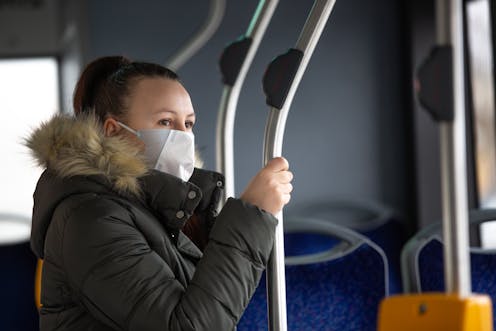
Australians’ mental health has tended to decline during COVID-19 lockdowns. Record-high calls to helplines such as Lifeline suggest many are currently suffering.
Encouragingly, data from 2020 shows many Australians’ mental health improved once outbreaks were contained.
But an evidence review we released today from Australia’s Mental Health Think Tank shows the reality is far more complex for people emerging from lockdowns.
While many will recover, certain Australians who were hit particularly hard by the pandemic will find it more difficult to bounce back.
Finding the pressure points
We synthesised more than 100 Australian studies and reports about COVID-19 and mental health, to explore who experienced poor mental health and why.
We found the pandemic had a greater impact on some Australians, including children and young people, First Nations people, women, and those experiencing mental or physical disabilities, unemployment or financial stress.
In other words, the pandemic magnified existing Australian mental health inequalities.
We also asked more than 2,000 Australians to describe the pandemic’s impact. People’s generous responses provided clues as to why some groups had poorer mental health.
Rather than fear of infection, Australians described how the pandemic “pressurised” personal triggers for poor mental health by worsening financial stress and reducing social support.
Increased unemployment and financial stress
Australians who lost work had poorer mental health during the pandemic. Many reported these experiences were made worse by stigmatising messages about unemployment:
The government does not see that mental impact of being unemployed and getting the distinct feeling you are seen as scum. (woman, late-30s, NSW)
Increased financial stress was a primary reason for poorer pandemic mental health. Financial stress made dealing with lockdown restrictions more difficult, particularly for families:
Bills keep coming in, real estate agent asks for deferred rent to be repaid in full… daughter needs glasses, other daughter has anxiety and becomes depressed. (woman, 50s, Victoria)
For many, good mental health is closely linked to being able to house and provide for family.
Research showed the burden of stressful lockdown care, including homeschooling, fell primarily with women.
On the positive side, receiving the temporary increased JobSeeker payments was associated with improved living standards and lower anxiety.
One person described how,
For the first time in years I was able to pay for essential medical treatment. (woman, 20s, NSW)
However, the removal of this payment was described as “crushing to your mental health” (woman, 20s, Tasmania).
Reduced social connection and support
Our review showed lockdowns and restrictions disrupted Australians’ social relationships and was a leading driver of anxiety and depression for young people in particular.
Restrictions meant they missed out on formative life experiences, such as transitioning to school or university.
Young people with disabilities experienced compromised learning outcomes and loneliness.
Adults noted COVID-19 restrictions and isolation measures led to loneliness, loss and disconnection. Participants experienced this isolation across their various social roles:
Being single, the option of dating was eliminated. As a friend, the opportunity to connect with my nearest and dearest was altered. As an employee, I felt disconnected from my work and my colleagues. (woman, mid-20s, NSW)
A respondent with family interstate experienced “affected mental health”, as restrictions “separated me completely from my family and friends who live in Sydney” (woman, mid-20s, Victoria).
Read more: The shifting sands of COVID and our uncertain future has a name -- liminality
Our review showed increases in racial stigma occurred for First Nations and Asian Australians during the pandemic. Added to the stigma of unemployment described above, social stigma isolated people during the pandemic, likely straining mental health.
National data showed, on average, loneliness reduced once restrictions eased.
However, this wasn’t the case for all. Several people with existing mental health issues described heightened social anxiety in the months after lockdown:
I feel much more emotionally fragile now (and) more socially anxious – being around a lot of people doesn’t feel normal anymore. (man, early-30s, Victoria)
I had a panic attack last week and couldn’t attend when I was supposed to attend my first in person class. (woman, early-20s, Victoria)
What can we do about it?
Our review revealed the pandemic negatively impacted some Australians’ mental health by disrupting their ability to maintain social roles and relationships that had provided a meaningful life structure pre-COVID.
Unemployment meant losing their employed “identity” and prevented them from economically supporting their families.
Read more: It's OK if you have a little cry in lockdown. You're grieving
We need to continue to improve access to quality mental health care. Equally, policy changes outside of traditional “health” domains will also be important to our recovery.
Post-pandemic policies ensuring all Australians have enough income to thrive and are given opportunities to reconnect with meaningful work, education and community (for example, through education scholarships) will protect Australians’ mental health.
These are are essential for our transition into “living with covid”.
Authors: Maree Teesson, Professor & Director of The Matilda Centre, University of Sydney

















