

The NSW government needs to stop prosecuting Aboriginal fishers if it really wants to Close the Gap
- Written by Janet Hunt, Honorary Associate Professor, CAEPR, Australian National University
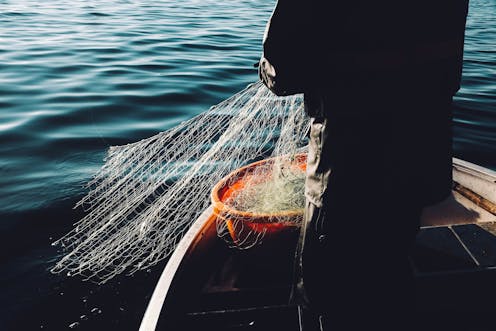
There is a contradiction between the New South Wales government’s plan for Closing the Gap and its persecution of Aboriginal people on the New South Wales south coast who want to maintain their saltwater culture.
The government needs to rethink what it is doing if it is to achieve the Closing the Gap outcomes it wants to see there.
In the early years of colonisation, Aboriginal people played crucial roles in the establishment of fishing industries on the NSW south coast, but are now almost entirely excluded from them.
Following colonisation, Aboriginal people continued to fish as a source of food, with some bartering and small-scale trading, called “cultural-commercial fishing”. South coast Aboriginal people are proud of their saltwater culture, but tired of being stigmatised as “poachers” who plunder the ocean.
Closing the Gap targets
The New South Wales government signed the 2020 National Agreement on Closing the Gap which includes targets for “strong, supported and flourishing” cultures and languages, and for Aboriginal adults and young people to no longer be overrepresented in the criminal justice system. Other targets focus on health and increasing employment and economic participation.
However Indigenous people are overrepresented among those jailed or convicted in New South Wales for offences related to abalone fishing. Rather than supporting a flourishing culture, the continued prosecution of south coast Aboriginal people won’t reduce Aboriginal incarceration, contribute to their employment or improve their health.
Many people have been charged with abalone diving here, including Aboriginal grandfather, Kevin Mason.
Once Aboriginal people have a criminal conviction, their chances of gaining employment plummet. And while fishing provides people with healthy food and exercise, prosecuting them for this act instead causes stress. This is not conducive to a long healthy life.
Exclusion and poverty
There are high rates of poverty and unemployment among Aboriginal people on the south coast; both Eurobodalla and Bega shires reflect this. Poorer education outcomes and longstanding racism have been factors in this.
Harvested seafood has been part of south coast Indigenous peoples’ diets since before colonisation. The sea has always been their supermarket, as an Australian Institute of Aboriginal and Torres Strait Islander Studies (AIATSIS) study recognised:
As saltwater people, all of the knowledge and practices related to marine foods are central to their culture, and part of what makes it unique. This means that fishing and gathering other seafood is one of the main ways people practice their culture. It’s also about getting out on country, and feeling connected to country and ancestors by fishing and gathering the way they did.
The ability of older people to take young people out fishing and diving is essential to being able to pass on their knowledge of the marine environment. The AIATSIS study also found:
[…]taking children fishing is necessary for their cultural education. Through fishing they learn cultural knowledge of local fauna and flora, different fishing techniques and practices, knowledge of their country and the right places to get different species – as well as the stories of those places. They also learn the cultural laws that govern fishing.
Furthermore, no review of Aboriginal cultural fishing or any fishery in NSW has identified this practice as having a negative impact on marine resources. As such, it is not clear why this persecution persists.
It can’t be to protect the fish stocks, as most total allowable catch assessments (TACs) for the New South Wales coast, designed to manage stocks at sustainable levels, don’t even collect data on Aboriginal peoples’ catches.
While some illegal fishing of abalone is acknowledged in the Abalone TAC, overall, fishing for abalone in the state remains sustainable.
As AIATSIS found:
Many participants felt that cultural fishers were needlessly overregulated. To them it seemed hypocritical for Fisheries [NSW] to focus on the compliance of the small number of cultural fishers, and for them to be characterised as threats to the marine environment, when their total take pales in comparison to that of the commercial fisheries.
Read more: To enable healing, there's a more effective way to Close the Gap in employment in remote Australia
Caught in a bind
The NSW government says its vision is for Aboriginal and Torres Strait Islander people to determine their own futures. A clear message coming from NSW Aboriginal people is that maintenance of their culture is central to their vision of the future.
Ironically, south coast Aboriginal people are being asked to prove they continue to practise this fishing culture in the assessment of their current native title claim.
While the Commonwealth government’s Native Title Act requires them to demonstrate continuance of their cultural practices to gain their native title rights, the state government pursues and criminalises them if they do so. It’s a no-win situation.
The NSW government needs to stop the harassment and prosecutions of Indigenous people for maintaining their cultural practices if the state really wants to Close the Gap on incarceration, health and employment for Aboriginal communities.
Authors: Janet Hunt, Honorary Associate Professor, CAEPR, Australian National University

















