

Many e-cigarette vaping liquids contain toxic chemicals: new Australian research
- Written by Alexander Larcombe, Associate Professor and Head of Respiratory Environmental Health, Telethon Kids Institute
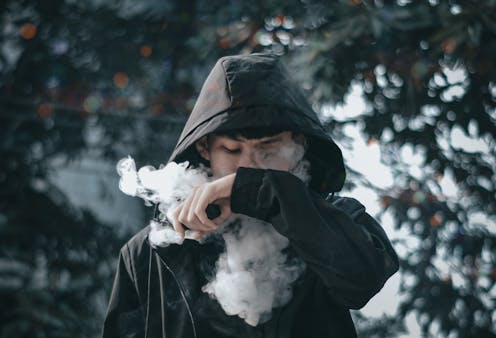
From October 1, it’s been illegal to buy e-liquids containing nicotine without a prescription from a doctor everywhere in Australia, except South Australia.
But vaping with nicotine-free e-liquids is not illegal in Australia (though in some jurisdictions the e-cigarette devices themselves are illegal).
Vaping is increasing in popularity in Australia, particularly among young people.
I co-led a research team that wanted to find out what’s in the nicotine free e-liquids that vapers inhale, and their potential health effects.
Our study, published this week in The Medical Journal of Australia, found most e-liquids contained chemicals known to cause respiratory issues and lung damage when inhaled. Most contained ingredients that have since been banned by Australia’s drug regulator, the Therapeutic Goods Administration (TGA).
We also found all e-liquids contained substances for which the health effects of inhalation exposure are unknown.
It’s clear vaping isn’t safe, and e-cigarettes haven’t been approved as smoking cessation devices.
Read more: Vaping: As an imaging scientist I fear the deadly impact on people’s lungs
What did we study?
A few years ago, we conducted a small study which involved chemically analysing ten e-liquids purchased in Australia. All of them were labelled “nicotine free”.
Our research, published in The Medical Journal of Australia in 2019, was surprising and concerning. We found 60% of the liquids contained nicotine. In some instances, this was at levels high enough not to be just trace contamination.
We also found all ten e-liquids contained a chemical called “2-chlorophenol”, which is often used in pesticides and disinfectants and is a known irritant to the skin and lungs.
Most of the e-liquids also contained “2-aminooctanoic acid, which is an amino acid found in the biological products of mammals, including faeces, urine and blood. Its presence was potentially a result of contamination with one of these substances during the manufacturing or packaging processes.
Our findings prompted us to expand on our previous study.
This time we analysed 65 Australian e-liquids, including using a method aimed at better understanding how heating the e-liquids for vaping might change their chemical components.
This was the most expansive analysis of Australian e-liquids to date, and was led by Curtin University and the Wal-yan Respiratory Research Centre, in conjunction with Lung Foundation Australia, the Minderoo Foundation, and Cancer Council Western Australia.
All of the e-liquids we studied were purchased online or from brick-and-mortar stores across Australia. All were advertised as being "best-sellers”, Australian made, and nicotine free, so it’s likely they’re representative of what many Australian vapers might be using.
None of the e-liquids were labelled with a comprehensive ingredient list, so it’s impossible for users to know what chemicals they’re inhaling. It also means all the e-liquids we tested wouldn’t be compliant with European Union labelling regulations.
Read more: Vaping is glamourised on social media, putting youth in harm's way
What else did we find?
Many of the flavouring chemicals we detected are “generally regarded as safe” by the United States Food and Drug Administration (FDA) when used in foods and drinks. But there’s a big difference between a chemical that’s safe to ingest and one which is safe to inhale long-term.
We also detected nicotine in some e-liquids, however, it was found much less frequently and at much lower concentrations than in our previous study. This may be indicative of a cleaner manufacturing process.
We only tested for “freebase” nicotine, which is typically used in both conventional cigarettes and nicotine replacement therapies. So, the e-liquids may have contained a different type of nicotine, called nicotine salts, which are much more commonly used now than they were a few years ago.
We also found 2-chlorophenol again, although it was only in about half of the e-liquids tested. Regardless, the contamination of e-liquids with this known toxic chemical, which has no valid reason for being present, remains a significant problem.
A range of other chemicals of concern were commonly detected, including benzaldehyde, trans-cinnamaldehyde and menthol. These chemicals are added for their almond, cinnamon and mint flavours, respectively.
Benzaldehyde was found in every e-liquid except four, while menthol and trans-cinnamaldehyde were found in about three-quarters of the e-liquids. The presence of these chemical flavourings was concerning for a number of reasons.
Firstly, they’re all known to alter the effects of nicotine. Menthol makes nicotine more addictive.
Benzaldehyde and trans-cinnamaldehyde are known to inhibit an enzyme called “CYP2A6”. CYP2A6 is responsible for metabolising and detoxifying many drugs humans are exposed to, including nicotine.
When its function is impaired by these flavouring chemicals, it means a vaper using e-liquids containing nicotine is going to have nicotine in their body for a longer period of time before it’s processed by the body.
Benzaldehyde is also a respiratory irritant and can reduce a person’s ability to fight off lung infections. Trans-cinnamaldehyde has even more severe effects on the immune cells in the lung.
Both of these chemicals are now included on the TGA’s list of prohibited e-liquid ingredients, meaning they’re banned in Australian e-liquids. Menthol isn’t banned by the TGA, but it’s prohibited in tobacco cigarettes in some countries. In this study, the e-liquids were analysed before the ban came into force.
This research clearly shows Australian e-liquids contain a range of chemicals that are either known to negatively impact health, or for which the potential health impacts of inhalation exposure are unknown.
A lot more research is needed in this space before informed decisions on both nicotine free and nicotine e-cigarette usage can be made, and to better understand how vaping impacts our health.
The author would like to acknowledge Professor Ben Mullins and Dr Sebastien Allard, of Curtin University, who were co-leads on this research project.
Authors: Alexander Larcombe, Associate Professor and Head of Respiratory Environmental Health, Telethon Kids Institute

















