

Modern Australian
Men's Weekly

.

Facebook wants AI to find your keys and understand your conversations

  • Written by Jumana Abu-Khalaf, Research Fellow in Computing and Security, Edith Cowan University
Facebook wants AI to find your keys and understand your conversations

Facebook has announced a research project that aims to push the “frontier of first-person perception”, and in the process help you remember where your left your keys.

The Ego4D project provides a huge collection of first-person video and related data, plus a set of challenges for researchers to teach computers to understand the data and gather useful information from it.

In September, the social media giant launched a line of “smart glasses” called Ray-Ban Stories, which carry a digital camera and other features. Much like the Google Glass project, which met mixed reviews in 2013, this one has prompted complaints of privacy invasion.

The Ego4D project aims to develop software that will make smart glasses far more useful, but may in the process enable far greater breaches of privacy.

Read more: Ray-Ban Stories let you wear Facebook on your face. But why would you want to?

What is Ego4D?

Facebook describes the heart of the project as

a massive-scale, egocentric dataset and benchmark suite collected across 74 worldwide locations and nine countries, with over 3,025 hours of daily-life activity video.

Ego4D: Teaching AI to perceive the world through your eyes.

The “Ego” in Ego4D means egocentric (or “first-person” video), while “4D” stands for the three dimensions of space plus one more: time. In essence, Ego4D seeks to combine photos, video, geographical information and other data to build a model of the user’s world.

There are two components: a large dataset of first-person photos and videos, and a “benchmark suite” consisting of five challenging tasks that can be used to compare different AI models or algorithms with each other. These benchmarks involve analysing first-person video to remember past events, create diary entries, understand interactions with objects and people, and forecast future events.

The dataset includes more than 3,000 hours of first-person video from 855 participants going about everyday tasks, captured with a variety of devices including GoPro cameras and augmented reality (AR) glasses. The videos cover activities at home, in the workplace, and hundreds of social settings.

What is in the data set?

Although this is not the first such video dataset to be introduced to the research community, it is 20 times larger than publicly available datasets. It includes video, audio, 3D mesh scans of the environment, eye gaze, stereo, and synchronized multi-camera views of the same event.

Most of the recorded footage is unscripted or “in the wild”. The data is also quite diverse as it was collected from 74 locations across nine countries, and those capturing the data have various backgrounds, ages and genders.

What can we do with it?

Commonly, computer vision models are trained and tested on annotated images and videos for a specific task. Facebook argues that current AI datasets and models represent a third-person or a “spectator” view, resulting in limited visual perception. Understanding first-person video will help design robots that better engage with their surroundings.

Future robotic agents will benefit from a better understanding of their environment
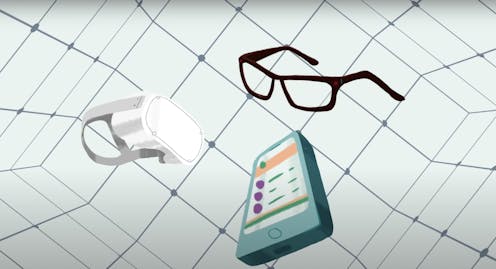
Wikimedia: Future robotic agents will benefit from a better understanding of their environment Furthermore, Facebook argues egocentric vision can potentially transform how we use virtual and augmented reality devices such as glasses and headsets. If we can develop AI models that understand the world from a first-person viewpoint, just like humans do, VR and AR devices may become as valuable as our smartphones. Can AI make our lives better? Facebook has also developed five benchmark challenges as part of the Ego4D project. The challenges aim to build better understanding of video materials to develop useful AI assistants. The benchmarks focus on understanding first person perception. The benchmarks are described as follows: Episodic memory (what happened when?): for example, figuring out from first-person video where you left your keys Hand-object manipulation (what am I doing and how?): this aims to better understand and teach human actions, such as giving instructions on how to play the drums Audio-visual conversation (who said what and when?): this includes keeping track of and summarising conversations, meetings or classes Social interactions (who is interacting with whom?): this is about identifying people and their actions, with a goal of doing things like helping you hear a person better if they’re talking to you Forecasting activities (what am I likely to do next?): this aims to anticipate your intentions and offer advice, like pointing out you’ve already added salt to a recipe if you look like you’re about to add some more. What about privacy? Obviously there are significant concerns regarding privacy. If this technology is paired with smart glasses constantly recording and analysing the environment, the result could be constant tracking and logging (via facial recognition) of people moving around in public. Read more: Face masks and facial recognition will both be common in the future. How will they co-exist? While the above may sound dramatic, similar technology has already been trialled in China, and the potential dangers have been explored by journalists. Facebook says it will maintain high ethical and privacy standards for the data gathered for the project, including consent of participants, independent reviews, and de-identifying data where possible. As such, Facebook says the data was captured in a “controlled environment with informed consent”, and in public spaces “faces and other PII [personally identifing information] are blurred”. But despite these reassurances (and noting this is only a trial), there are concerns over the future of smart-glasses technology coupled with the power of a social media giant whose intentions have not always been aligned to their users. Read more: Artificial intelligence in Australia needs to get ethical, so we have a plan The future? The ImageNet dataset, a huge collection of tagged images, has helped computers learn to analyse and describe images over the past decade or more. Will Ego4D do the same for first-person video? We may get an idea next year. Facebook has invited the research community to participate in the Ego4D competition in June 2022, and pit their algorithms against the benchmark challenges to see if we can find those keys at last.

Authors: Jumana Abu-Khalaf, Research Fellow in Computing and Security, Edith Cowan University

Read more https://theconversation.com/facebook-wants-ai-to-find-your-keys-and-understand-your-conversations-170092

The Most Common Conveyor System Issues in Manufacturing

In modern manufacturing, conveyor systems play a central role in keeping production lines efficient, consistent, and cost-effective. When they operate...

How to Secure a Long-Term Rental in a Competitive Market

The rental market can be unpredictable and may present challenges if you’re not prepared. Initially, you might submit numerous applications and stil...

What Smart Investors Know About Real Estate

Many people think investing in property is just about buying a house and waiting for it to get expensive. While that can happen, the people who actual...

The Benefits of Seeking Help for Anxiety and Stress

Anxiety and stress have become common experiences in today’s fast-paced world, affecting people across all ages and lifestyles. From work pressures ...

How to Make the Most of Fashion Wholesale Options for Your Brand

If you want to grow a fashion brand without constantly reinventing the wheel, wholesale can be one of the smartest ways to scale. The key is knowing h...

How to Add Value to Your Home Before Selling

Selling a home is not just about putting up a sign and waiting for offers. It is about presenting a property that buyers instantly connect with and ar...

How Outdoor Play Enhances Learning and Wellbeing

You don’t need to be an expert to conclude that play is an essential part of growing up. When children aren’t restricted and kept indoors, they de...

How to Build Passive Income Through Real Estate

Building passive income is one of the most effective ways to create long-term financial security. While there are many investment opportunities availa...

DIY Guide to Replacing Small Parts in Your Laundry Machine

Finding a puddle or a broken washer is frustrating, but you don’t always need a professional. Many common issues are caused by tiny parts that are c...

Best Practices for Managing Your Warehouse Partner Relationships

Your warehouse partner is an important part of your business. They sit in the middle of your promises to customers. Yet, when they deliver what’s pr...

Benefits of Solar-Based Water Circulation Systems

Imagine your water system running all day without touching your electricity bill. No noise, no heavy cables, no stress when prices go up. Fantastic, r...

Benefits of Using an Outrigger Crane for Complex Lifts

Complex lifts aren’t the kind of jobs you improvise. You’re dealing with awkward shapes, serious weight, and sites that never seem designed for wh...

A Beginner's Guide to Website Ranking

If you have a website, you probably want people to find it. But building a website alone does not guarantee visitors. Millions of websites compete for...

How to Prepare Your Home for Holiday Guests

Welcoming holiday guests into your home is one of life’s great pleasures. Whether it’s Christmas lunch, a long weekend reunion, or interstate re...

Colour Palettes That Work Beautifully for Christmas

Christmas styling has evolved well beyond the traditional red-and-green formula. While classic tones will always have their place, today’s festive...

Interior Decorating Mistakes to Avoid

Interior decorating has the power to completely transform how a home feels, functions and flows. Done well, it elevates everyday living and creates ...

How Chiropractic Can Help with Sciatica Treatment

Sciatica can be one of the most frustrating and disruptive forms of back pain. Characterised by pain that radiates from the lower back through the h...

Common Vulnerabilities Found During Australian Pen Tests

Penetration testing has become a critical component of modern cyber security strategy across Australia. From fast-growing SaaS startups to establish...
















