

Modern Australian
The Times

How can Australia get cracking on emissions? The know-how we need is in our universities

  • Written by Kim Rasmussen, Deputy Dean and Associate Dean, Research, Faculty of Engineering, University of Sydney
How can Australia get cracking on emissions? The know-how we need is in our universities

Australia has been slow to join the global shift towards decarbonisation and lower emissions. Now, ready or not, the world is on the verge of a climate action crescendo. Australia can choose what to do next: act meaningfully and with determination; dither and have its hand forced; or, at worst, face punishing measures such as tariffs.

Despite our lumbering start, we are in a fortunate position. We do not need to start from scratch to green our economy and participate wholly in the decarbonisation revolution. While Australia debates “where to from here” as world leaders come together for COP26 in Glasgow, university researchers have long been heads down developing the very research, talent and technology we’ll need for this transformation.

Read more: Scott Morrison is hiding behind future technologies, when we should just deploy what already exists

With the right mix of industry and government support, these university-developed resources will allow us to pivot to a decarbonised economy. Australia can emerge as a green export and research and development leader.

Across engineering and science, we’re witnessing a research and technology explosion. The once unimaginable is being made possible. We are seeing advances in many fields, including:

  • renewable and low-emission technologies

  • energy generation, utilisation and storage

  • electrification and network hybridisation

  • power fuels, including hydrogen.

With our abundant natural and mineral resources and agricultural industry, these are all areas in which Australia can and should lead to become a research and development exporter. Aside from helping to transition our economy and lower emissions, this would attract further overseas talent and investment.

Australia has an untapped opportunity to switch from being an exporter of carbon fuels to an exporter of green fuels. We can do this by converting solar and wind energy to stored energy like hydrogen. For domestic consumption, there is a wider range of energy-storage options including batteries and Snowy 2.0.


Infographic showing renewables-powered production of hydrogen as an export fuel
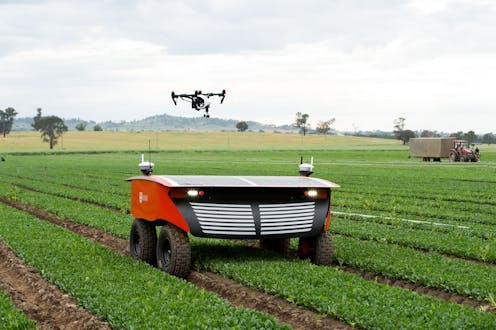
ARENA, CC BY Read more: Australia's clean hydrogen revolution is a path to prosperity – but it must be powered by renewable energy Federal support for developing a green fuel export industry is growing slowly. However, industry and financial consortia have been investing rapidly in green technologies and plants. Scale of challenge demands collaboration Tackling climate change requires a collective approach. That’s because it affects every sector and part of society. Universities were once considered somewhat siloed. Now they are working more closely with other institutions. Formerly disparate areas of expertise are being connected to develop research and technology to tackle and adapt to climate change. Examples of collaboration range from historians and engineers working together to better understand how climate change led to the demise of Angkor through to using data analytics to better understand the impacts of the resource sector on the environment. Increased collaboration between disciplines and institutes makes universities an attractive resource and “one-stop shop” for companies looking to decarbonise or expand their offerings to compete in the green economy. Read more: How universities and professions are preparing to meet the climate challenge Campuses too are being transformed into high-impact, industrial research hubs. They are gearing up for greater industry collaboration, testing and rapid prototyping. These campus facilities include state-of-the-art infrastructure, ranging from nano technology and foundries to advanced manufacturing and microanalysis. They are helping to develop scalable and translatable research for both large existing companies and start-ups. Research is already paying off Universities are also increasingly commercialising their research and technology. In the process, they are developing companies with the potential to rewrite Australia’s climate change fate. One such company is agri-robotics start-up Agerris. It’s commercialising technology developed over the past 15 years from the University of Sydney’s Australian Centre for Field Robotics, a source of several successful start-ups. Agerris’s robotics solutions to optimise farming have the potential to control emissions in agriculture and related areas including forestation and oceanography. Another example is zinc-bromide battery developer Gelion. This spin-off from the University of Sydney Nano Institute is disrupting the solar energy industry with its safe, cost-effective products. Researchers at work in Gelion's laboratory where a zinc-bromine battery is being developed. Gelion’s zinc-bromine battery is an example of how R&D can pave the way for manufacturing jobs to be created in the transition to a low-emissions economy. Gelion/University of Sydney Snowy Mountains Hydro, while one of the most ambitious feats of engineering ever achieved, should not remain our nation’s industrial magnum opus. It’s vital Australia embarks on an ambitious plan to lower emissions and decarbonise our economy. If we want the next big thing, we can bet universities are already developing the thinking and technology behind it. Read more: Climate change is the most important mission for universities of the 21st century All academics know that often the best students are the ones who work diligently and consistently over a long period. Others may wait until the last minute, with some bright, creative minds somehow always pulling through with distinction. We are now at the 11th hour. Let’s hope Australia is that precocious student who can pull it all off in the nick of time. Authors: Kim Rasmussen, Deputy Dean and Associate Dean, Research, Faculty of Engineering, University of Sydney

Read more https://theconversation.com/how-can-australia-get-cracking-on-emissions-the-know-how-we-need-is-in-our-universities-170374

Sunshine Coast Baby Classes Prove Big Hit Among First-Time Mums

There's a movement gaining traction on the Sunshine Coast, providing a village of support, socialisation and relief for first-time mothers and babie...

Father's Day Gift Ideas for Men Who Are Hard to Buy For

Some dads are easy to buy for. Others do not want anything, already have everything, or give you the classic "don't worry about me" answer every yea...

Top 5 Mistakes That Wear Out Your Brakes Faster

Brakes don't need frequent replacements like oil changes do.   But a lot of the wear happens quietly, over months, because of habits most drivers...

Plantation Shutters vs Curtains: Which Is Better for Your New Home?

Moving into a new home is an exciting opportunity to personalise your space and make it your own. While many homeowners focus on furniture, flooring...

Celebration of Life vs Traditional Funeral: What's the Difference?

When saying goodbye to someone you love, there is no single way to honour their life. Every family has different traditions, beliefs, and preference...

Building Approval for Roofing Projects: What Homeowners Need to Know

Roofing projects are an important part of maintaining and protecting your home. Whether you're repairing storm damage, replacing an ageing roof, or ...

Chatswood Tutoring And Its Role In Academic Achievement

Academic success often requires more than classroom attendance alone. Students face increasing expectations as they progress through school, particu...

Why Laser Hair Removal Treatments Continue Growing In Popularity

Managing unwanted hair can become time-consuming and frustrating for many people, especially when shaving, waxing, and other temporary methods requi...

Choosing the Right Devices for a Flexible Workplace

For IT leaders managing large fleets, the device layer is where workforce productivity and security policy meet. The shift towards flexible and hybrid...

How Business Advisory Services Help Companies Achieve Sustainable Growth

Every business owner aims to build a profitable and sustainable organisation. While dedication, innovation, and hard work are important, achieving l...

Why Body Contouring Has Become A Popular Cosmetic Treatment

Many people maintain healthy lifestyles through regular exercise and balanced eating habits but still struggle with stubborn areas of fat that are d...

How to Choose the Right POS Hardware for Your Business in Australia

A lot of Australian business owners spend weeks researching POS software but buy hardware almost as an afterthought. That's a mistake. The wrong har...

Why Material Handling Hose Is Critical for Industrial Efficiency

A high-performance material handling hose is an essential component in industries that transport abrasive, dry, or bulk materials on a daily basis...

How to Choose the Right Lawyer in Melbourne for Your Situation

Choosing legal support can feel difficult, especially when the stakes are personal or business-related. The right lawyer in Melbourne should underst...

Hoteliers Look to Clever Value Adds to Increase Revenue

The Australian hospitality industry is still in recovery mode after a notoriously rough patch in recent years. While there has been a post-COVID tra...

Moving to Queensland? Here’s How to Prep Your Car for the Big Move North

There’s no sign of the northern migration slowing down, with thousands of southerners fleeing from chaotic lifestyles and cooler climates for a brig...

Diesel Shortage to Impact Trades and Contractors

Strait of Hormuz blockage affecting all major parts of trades and construction Trades and construction across residential, commercial and industria...

Why Holiday Home Owners Turn to Rental Management Agents

The Allure — and the Reality — of Renting Out Your Property Owning a holiday home is a dream for many Australians. Whether it's a beachside sha...
















