

5 ways climate change boosts tsunami threat, from collapsing ice shelves to sea level rise
- Written by Jane Cunneen, Adjunct Research Fellow, Curtin University
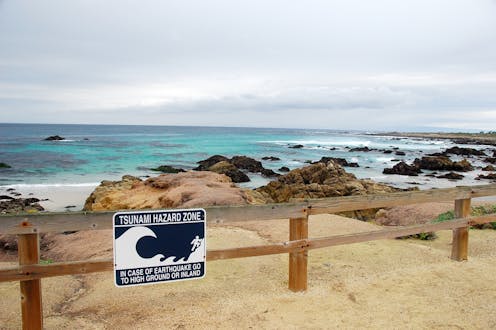
The enormous eruption of the underwater volcano in Tonga, Hunga Tonga-Hunga Ha'apai, triggered a tsunami that reached countries all around the Pacific rim, even causing a disastrous oil spill along 21 beaches in Peru.
In Tonga, waves about 2 metres high were recorded before the sea level gauge failed, and waves of up to 15m hit the west coasts of Tongatapu Islands, ‘Eua, and Ha’apai Islands. Volcanic activity could continue for weeks or months, but it’s hard to predict if or when there’ll be another such powerful eruption.
Most tsunamis are caused by earthquakes, but a significant percentage (about 15%) are caused by landslides or volcanoes. Some of these may be interlinked – for example, landslide tsunamis are often triggered by earthquakes or volcanic eruptions.
But does climate change also play a role? As the planet warms, we’re seeing more frequent and intense storms and cyclones, the melting of glaciers and ice caps, and sea levels rising. Climate change, however, doesn’t just affect the atmosphere and oceans, it affects the Earth’s crust as well.
Climate-linked geological changes can increase the incidence of earthquakes and volcanic eruptions which, in turn, can exacerbate the threat of tsunamis. Here are five ways this can happen.
1. Sea level rise
If greenhouse gas emissions remain at high rates, the average global sea level is projected to rise between 60 centimetres and 1.1m. Almost two thirds of the world’s cities with populations over five million are at risk.
Rising sea levels not only make coastal communities more vulnerable to flooding from storms, but also tsunamis. Even modest rises in sea level will dramatically increase the frequency and intensity of flooding when a tsunami occurs, as the tsunami can travel further inland.
For example, a 2018 study showed only a 50 centimetre rise would double the frequency of tsunami-induced flooding in Macau, China. This means in future, smaller tsunamis could have the same impact as larger tsunamis would today.
2. Landslides
A warming climate can increase the risk of both submarine (underwater) and aerial (above ground) landslides, thereby increasing the risk of local tsunamis.
The melting of permafrost (frozen soil) at high latitudes decreases soil stability, making it more susceptible to erosion and landslides. More intense rainfall can trigger landslides, too, as storms become more frequent under climate change.
Tsunamis can be generated on impact as a landslide enters the water, or as water is moved by a rapid underwater landslide.
In general, tsunami waves generated from landslides or rock falls dissipate quickly and don’t travel as far as tsunamis generated from earthquakes, but they can still lead to huge waves locally.
In Alaska, US, glacial retreat and melting permafrost has exposed unstable slopes. In 2015, this melting caused a landslide that sent 180 million tonnes of rock into a narrow fjord, generating a tsunami reaching 193m high – one of the highest ever recorded worldwide.
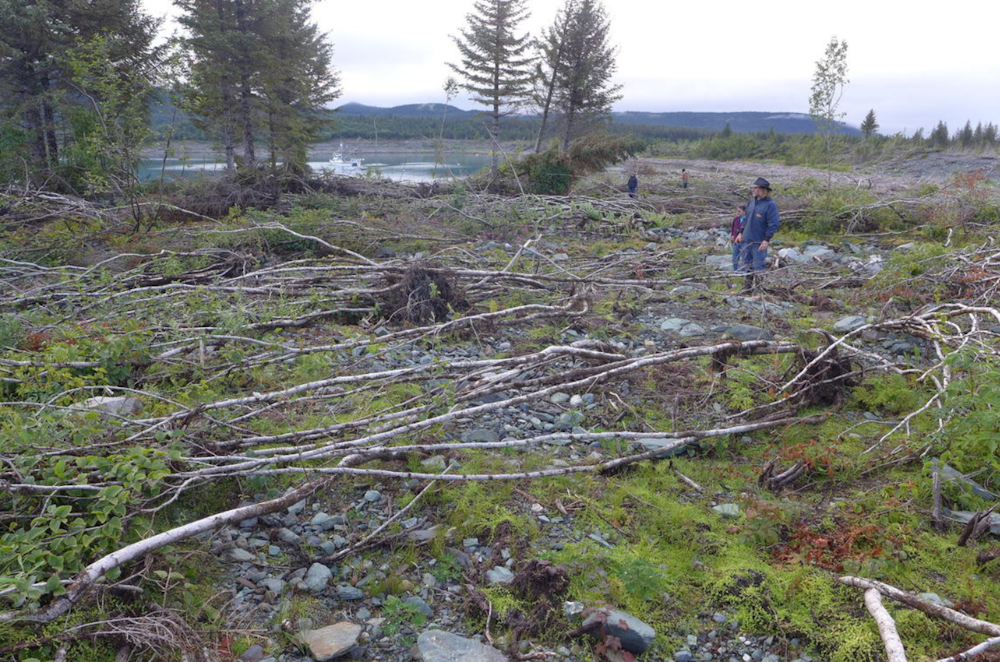
Other areas at risk include northwest British Columbia in Canada, and the Barry Arm in Alaska, where an unstable mountain slope at the toe of the Barry Glacier has the potential to fail and generate a severe tsunami in the next 20 years.
3. Iceberg calving and collapsing ice shelves
Global warming is accelerating the rate of iceberg calving – when chunks of ice fall into the ocean.
Studies predict large ice shelves, such as the Thwaites Glacier in Antarctica, will likely collapse in the next five to ten years. Likewise, the Greenland ice sheet is thinning and retreating at an alarming rate.
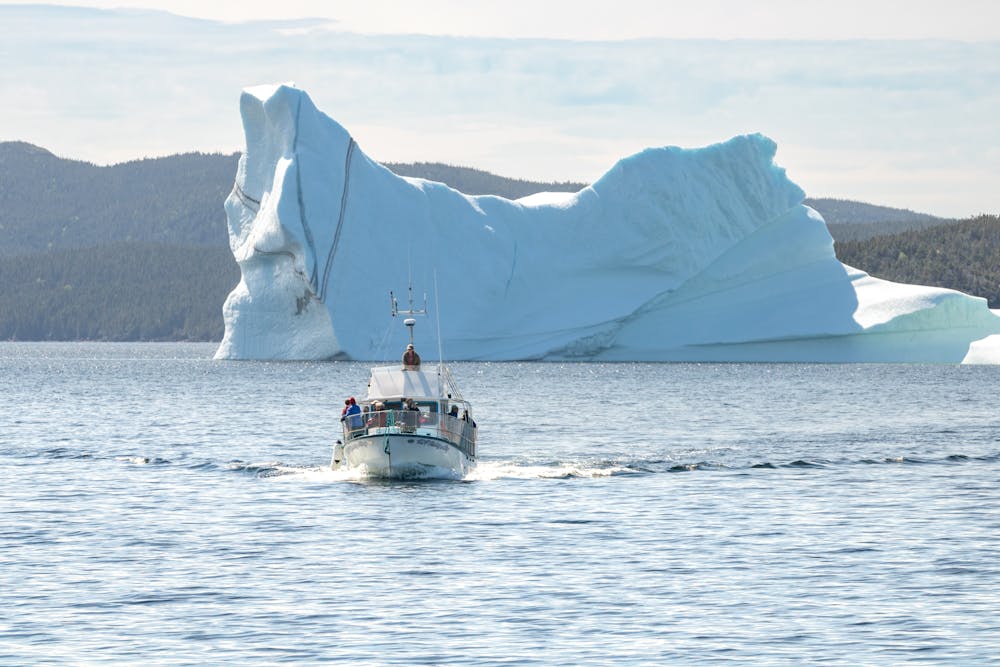 Icebergs colliding with the seafloor can trigger underwater landslides.
Shutterstock
Icebergs colliding with the seafloor can trigger underwater landslides.
Shutterstock
While much of the current research focus is on the sea level risk associated with melting and collapse of glaciers and ice sheets, there’s also a tsunami risk from the calving and breakup process.
Wandering icebergs can trigger submarine landslides and tsunamis thousands of kilometres from the iceberg’s original source, as they hit unstable sediments on the seafloor.
4. Volcanic activity from ice melting
About 12,000 years ago, the last glacial period (“ice age”) ended and the melting ice triggered a dramatic increase in volcanic activity.
The correlation between climate warming and more volcanic eruptions isn’t yet well constrained or understood. But it may be related to changes in stress to the Earth’s crust as the weight of ice is removed, and a phenomenon called “isostatic rebound” – the long-term uplift of land in response to the removal of ice sheets.
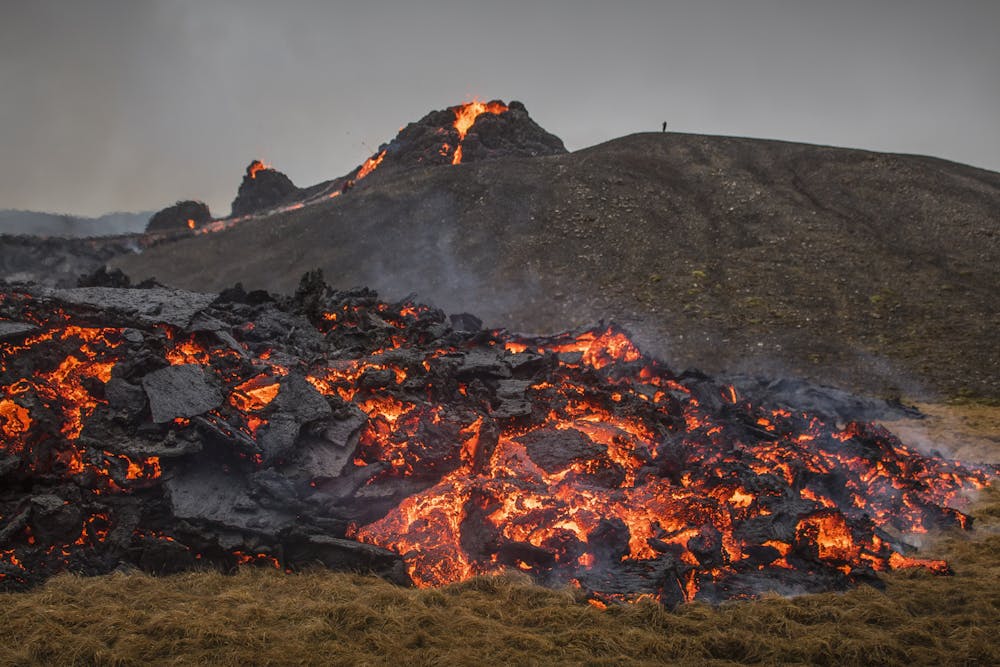 The end of the last ice age saw a huge increase in volcanic activity as ice melted. Whether the same could happen from climate change today remains to be seen.
AP Photo/Marco Di Marco
The end of the last ice age saw a huge increase in volcanic activity as ice melted. Whether the same could happen from climate change today remains to be seen.
AP Photo/Marco Di Marco
If this correlation holds for the current period of climate warming and melting of ice in high latitudes, there’ll be an increased risk of volcanic eruptions and associated hazards, including tsunamis.
5. Increased earthquakes
There are a number ways climate change can increase the frequency of earthquakes, and so increase tsunami risk.
First, the weight of ice sheets may be suppressing fault movement and earthquakes. When the ice melts, the isostatic rebound (land uplift) is accompanied by an increase in earthquakes and fault movement as the crust adjusts to the loss of weight.
We may have seen this already in Alaska, where melting glaciers reduced the stability of faults, inducing many small earthquakes and possibly the magnitude 7.2 St Elias earthquake in 1979.
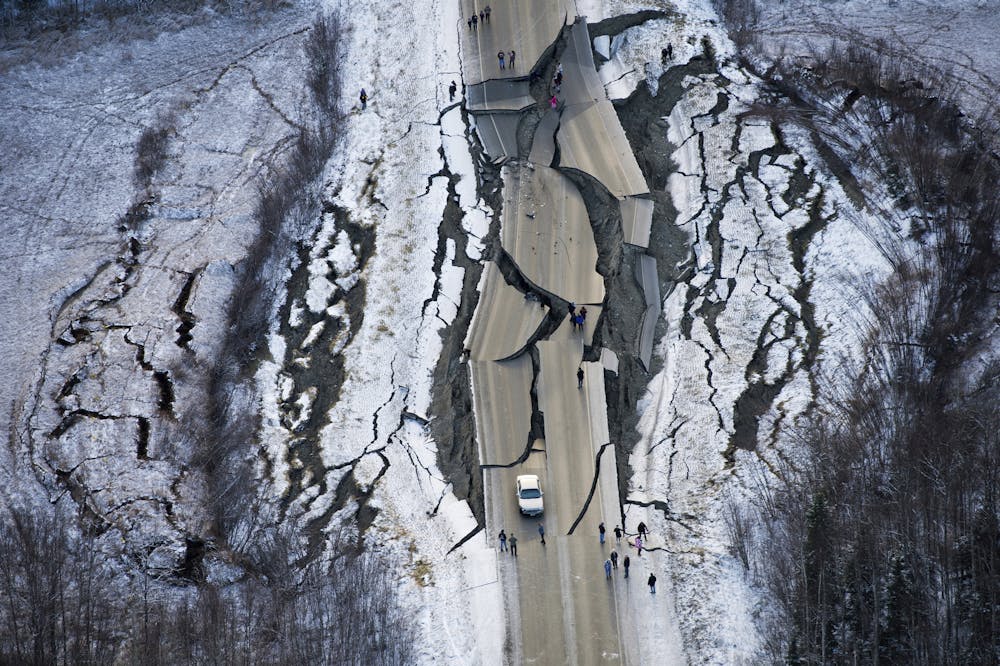 In 2018, back-to-back earthquakes shattered highways and rocked buildings in Alaska, briefly triggering a tsunami warning for islands and coastal areas south of the city.
Marc Lester/Anchorage Daily News via AP
In 2018, back-to-back earthquakes shattered highways and rocked buildings in Alaska, briefly triggering a tsunami warning for islands and coastal areas south of the city.
Marc Lester/Anchorage Daily News via AP
Another factor is low air pressure associated with storms and typhoons, which studies have also shown can trigger earthquakes in areas where the Earth’s crust is already under stress. Even relatively small changes in air pressure can trigger fault movements, as an analysis of earthquakes between 2002 and 2007 in eastern Taiwan identified.
So how can we prepare?
Many mitigation strategies for climate change should also include elements to improve tsunami preparedness.
This could include incorporating projected sea level rise into tsunami prediction models, and in building codes for infrastructure along vulnerable coastlines.
Researchers can also ensure scientific models of climate impacts include the projected increase in earthquakes, landslides and volcanic activity, and the increased tsunami risk this will bring.
Read more: What causes a tsunami? An ocean scientist explains the physics of these destructive waves
Authors: Jane Cunneen, Adjunct Research Fellow, Curtin University

















