

Modern Australian
The Times

We asked hundreds of Aussies whether they'd eat insects, and most said yes – so what's holding people back?

  • Written by Jessica Danaher, Lecturer in Nutrition, RMIT University
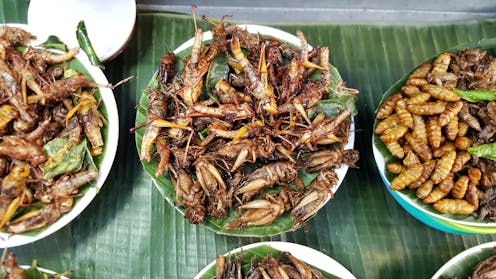
We asked hundreds of Aussies whether they'd eat insects, and most said yes – so what's holding people back?

Insects are sustainable, nutritious and delicious. They’re eaten by more than two billion people worldwide, mostly in the tropics, and have been a staple in Indigenous Australians’ diets for tens of thousands of years.

Yet eating insects isn’t mainstream in Australia. Why?

We surveyed 601 Australians on their experience with, and attitude towards, edible insects. Our findings offer insight into which factors might convince people to add edible insects to their diet.

Importantly, we found Australians are not deterred by the “ick” factor of eating insects, and would be willing to try them as a protein alternative if not for a “lack of opportunity”.

Of the adults we surveyed, 56.2% reported they would be “likely” to eat insects in the future (a much more promising result than that from a recent European Union survey) – and this figure increased to 82.2% among those who had already tried them.

Missed opportunities

Although insects don’t commonly feature on Aussie menus, there are 60 insect species which have been recorded as a traditional food source for Indigenous Australians, including witjuti grubs, bogong moths and honey pot ants.

The ancient Romans and Greeks ate insects, too. It’s thought Westernised countries may have lost their taste for edible insects during the shift from the hunter-gatherer lifestyle to agriculture and urbanisation.

Insects went from fulfilling the role of a staple food to being pests that destroy crops, and this may have prompted a shift in our attitudes towards eating them.

Research conducted with older Australians has revealed a tendency to view the practise as disgusting and incompatible with their personal beliefs, raising concern there may be reluctance for edible insects to return to being a normalised and viable protein alternative.
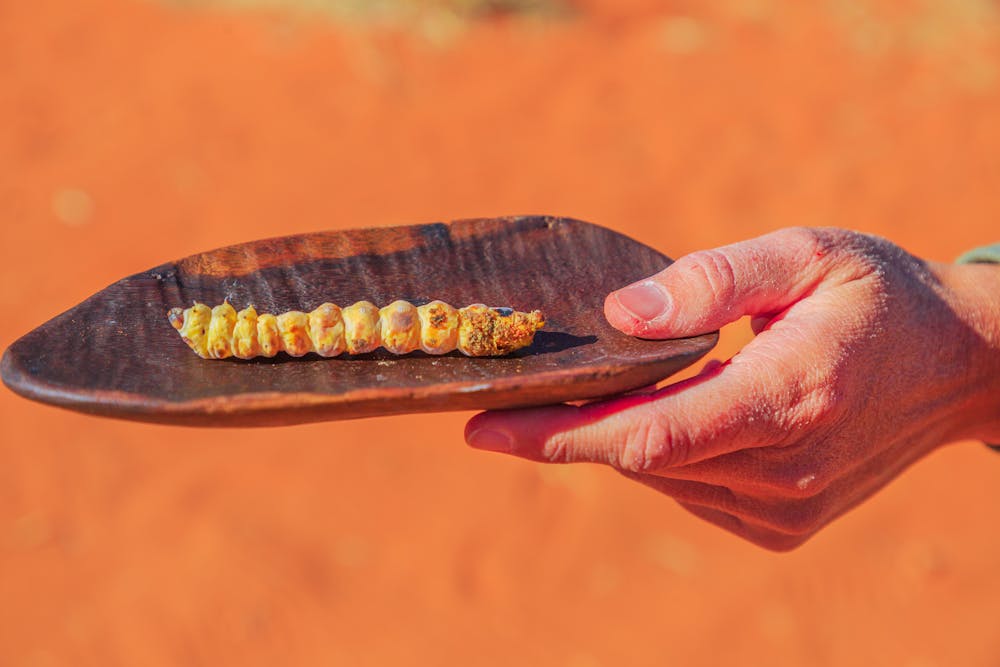
The edible witjuti grub is the larva of the large cossid wood moth (Endoxyla leucomochla), native to Australia. Shutterstock

As it turns out, most people aren’t that squeamish

But our research (mainly with participants aged 25 to 44 years) shows Aussies have begun to adopt a more positive outlook towards insect-based foods.

Of those surveyed, 35% had previously tried insects, most commonly crickets and grasshoppers. And people who had already tried them were also more open to eating them again, which suggests a “taste” for bugs can be developed. Of those who hadn’t tried insects, only 16% reported “disgust” was holding them back.

This paradigm shift may be linked to people expressing more concern for the environmental cost of their food, and a greater interest in adopting healthy dietary habits.

Participants also reported they would be willing to eat insect-based products if it was easier to find out how such foods are beneficial, both from a nutrition and sustainability standpoint.

They said endorsements from governing bodies, as well as more prominence of edible insects in mainstream media, would boost their interest in eating insects – as well as “try before you buy” promotions.

For those willing to give insects a go, insect-based flours (such as bread and biscuits), chocolate-coated ants and crickets were the top choices. Not all species were received the same way, however, with moths and fly larvae not generating such a buzz.

Still, the shift towards a willingness to try insects is promising for Australia’s growing edible insect market.

Embracing future foods

With the global population still growing, we will need alternative sources of protein to sustainably meet future food production requirements.

The demand for protein is on the rise and, according to the UN Food and Agriculture Organisation, will have to increase by 76% by 2050. But production is restricted due to Earth’s finite resources.

Edible insects have potential as an important future food, offering a nutritious protein source that’s more sustainable to produce – using less land, energy and water.

Authors: Jessica Danaher, Lecturer in Nutrition, RMIT University

Read more https://theconversation.com/we-asked-hundreds-of-aussies-whether-theyd-eat-insects-and-most-said-yes-so-whats-holding-people-back-173595

Your Baby's First Year: A Local Guide to Feeding, Sleep, and When to Get Extra Support

Ask ten parents in a Brisbane mothers' group how their baby is feeding or sleeping, and expect ten different answers.  Someone's baby sleeps throu...

Kitchen and Laundry Makeover Ideas That Don't Require a Full Renovation

Full kitchen renos are expensive — and most people don't actually need one.  They need the kitchen to stop looking like it's stuck in 2009, or t...

How Technology Is Reshaping the Modern Australian Commercial Kitchen

The commercial kitchen has always been shaped by technology. Refrigeration changed how ingredients could be stored, modern ventilation transformed k...

The Number on a Roller Blind Fabric That Nobody Explains

Somewhere in the fabric book, next to the colour name, there is a percentage. Three per cent. Five per cent. Ten per cent. Nobody explains it, most c...

What’s Trending in Men’s Jewellery This Father’s Day!

Finding a Father’s Day gift that feels personal, stylish and genuinely wearable is not always easy. While socks and novelty mugs have traditionall...

Road Signs: Understanding Their Role in Clear and Effective Signage

Effective signage and display hardware can help businesses communicate information, promote products and organise customer or visitor movement. Road...

Bottle Label Printing: Key Factors to Consider Before Your Next Packaging Run

Effective packaging begins with understanding the product, bottle material, artwork and production requirements when planning bottle label printing. H...

Planning a Long-Distance Move With Interstate Movers Melbourne

Moving between states involves more planning than a typical local relocation. Along with packing and transporting household belongings, you need to...

Understanding the Role of an I/O Controller in Industrial Automation

Modern industrial systems depend on accurate communication between sensors, machines and control systems. An I/O controller can help manage this commu...

How the Right Mining Hose Supports Demanding Operations

Mining environments place considerable demands on equipment used for material transfer, water management and processing. Hoses operating in these co...

Simple Ideas for Making Social Gatherings More Memorable

We have all been to those parties where everyone just stands around the kitchen island, staring at their phones, waiting for someone else to make a mo...

Outdoor Wall Lights: Improving Exterior Lighting Around Your Home

Lighting can influence how a room looks, feels and functions, so the right fitting should be selected according to both appearance and practical req...

Commercial Office Cleaning: Combining Routine Office Cleaning With Melbourne Service

Keeping a workplace clean requires a service that can accommodate everyday tasks as well as the particular needs of the business. Professional comme...

Caravan Sales in Queensland: How to Find the Right Caravan for Sale QLD

Caravan ownership is about more than having somewhere to sleep while travelling. For many Queenslanders, it is one of the best ways to explore regio...

What Sir Walter Buffalo Turf Actually Costs in 2026 (And Why Quotes Vary So Much)

Two quotes landed on a Hills District homeowner's kitchen table last spring for the exact same 80-square-metre backyard. One said $12 a metre. The o...

Nearly 1,300 NSW Hospital Beds Are Occupied By People Who Are Ready To Go Home

1,276 people in NSW hospitals have been medically cleared for discharge but remain in hospital because they're still waiting for NDIS or aged care sup...

National Survey Launched to Measure Operational Impacts of Federal NDIS Policy Reforms

The effects of recent NDIS reforms are beginning to move beyond policy papers and into day to day service delivery. A new national survey is asking ...

Beyond the Nappy Cake: Baby Shower Gifts That Get Used

What new Australian parents unwrap, keep, and quietly thank you for months later. Six weeks after my daughter was born, I did an audit of the baby sh...















