

The ancient, intimate relationship between trees and fungi, from fairy toadstools to technicolour mushrooms
- Written by Gregory Moore, Doctor of Botany, The University of Melbourne
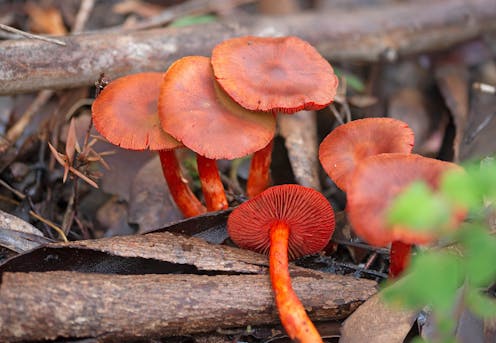
Environmental scientists see flora, fauna and phenomena the rest of us rarely do. In this series, we’ve invited them to share their unique photos from the field.
You may be familiar with the red toadstool with white spots, which are often the homes of fairies in children’s stories. These toadstools are also a small part of grander magical story: they are striking examples of mycorrhizas.
Mycorrhizas (pronounced my-cor-rye-zas) is the name for fungi associated with the root systems of many plants including trees, shrubs, groundcovers and grasses. These relationships are mutually symbiotic, which means both members benefit.
Fungi have a deeply ancient evolutionary origin, and colonised land with the first plants around 500 million years ago to form these partnerships. We humans often underestimate their importance to the ecosystems that have shaped life on earth.
So let’s take a closer look at how this relationship works and why it’s so important for Australian ecosystems.
An intimate relationship
Fungi come in a beautiful diversity of shapes, sizes and colours. The following photos by my co-author Mark Brundrett are just a few examples of those growing in southwest Australia.
Mycorrhizas are not to be confused with fungi that decompose dead plant matter (saprophytes) or those that cause disease (pathogens).
Read more: The glowing ghost mushroom looks like it comes from a fungal netherworld
Saprophytes are fungi that recycle nutrients, and these can also be large and impressive. They can create tree hollows, which provide shelter for nesting birds and other animals such as possums.
The ethereal ghost fungus, for example, is a saprophyte. It famously glows green in the dark, and recycles nutrients in ecosystems by breaking down dead wood.

The primary role of mycorrhizas, on the other hand, is to provide resources such as phosphorus and nitrogen to flowering plants. They also effectively increase the absorptive surface area of the plant’s root system, allowing plants to take up much-needed water and nutrients so they grow better and more quickly.
In return, the plants provide carbohydrates, a product of photosynthesis, which mycorrhizas require to grow.
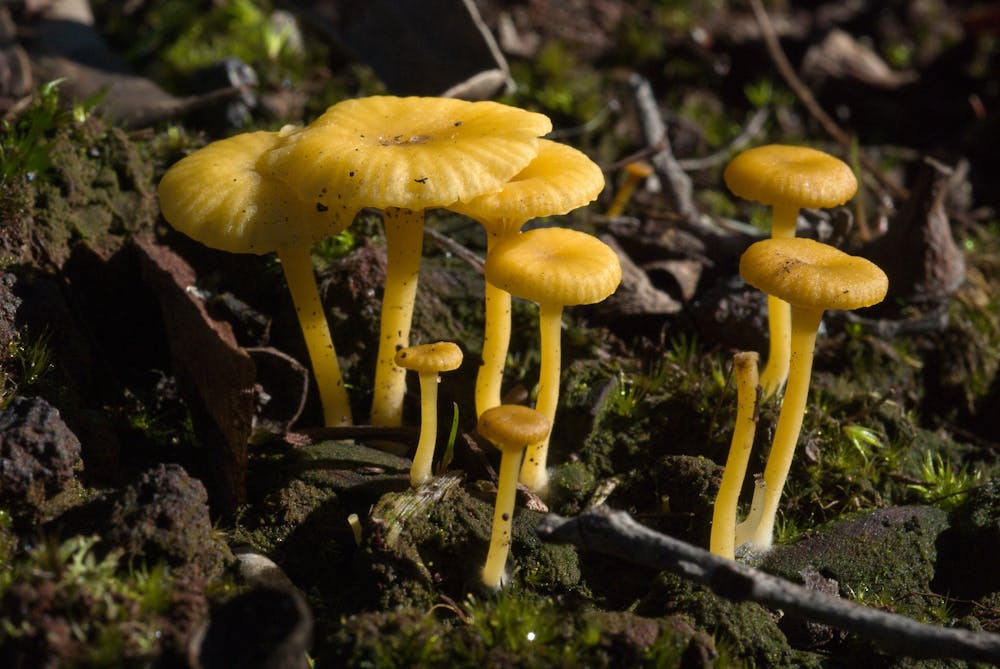 The yellow navel fungus Lichenomphalia chromacea forms a protective crust on soils in association with lichen fungi and algae.
Mark Brundrett, Author provided
The yellow navel fungus Lichenomphalia chromacea forms a protective crust on soils in association with lichen fungi and algae.
Mark Brundrett, Author provided
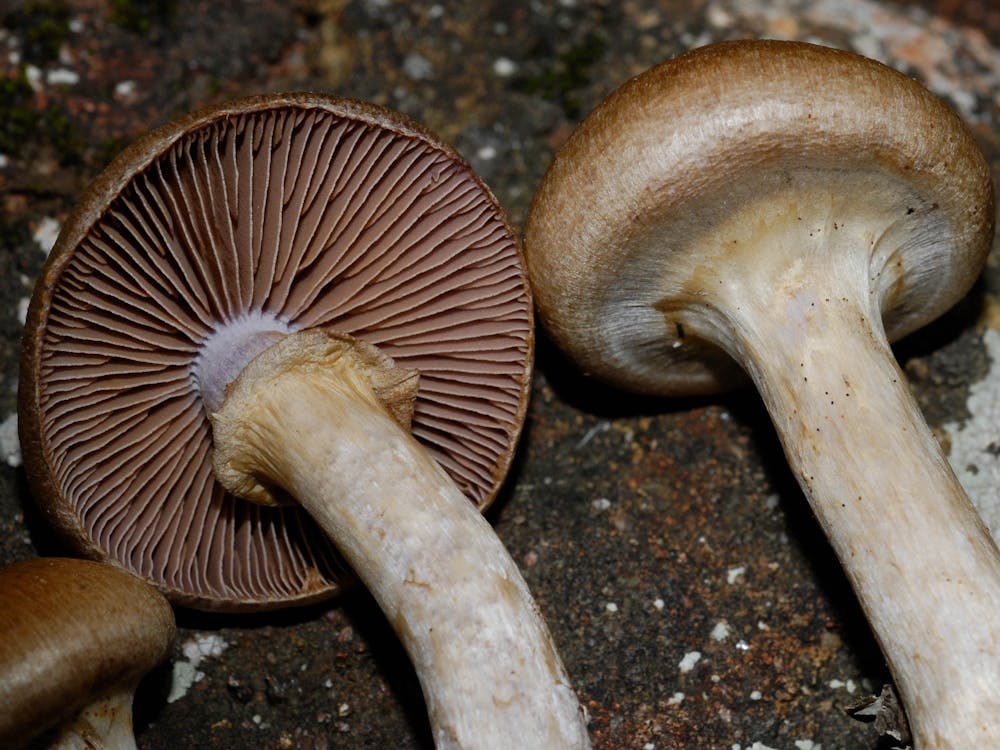 Cortinarius vinaceolamellatus is a beautiful fungus that supports the growth of of tall eucalyptus forests.
Mark Brundrett, Author provided
Cortinarius vinaceolamellatus is a beautiful fungus that supports the growth of of tall eucalyptus forests.
Mark Brundrett, Author provided
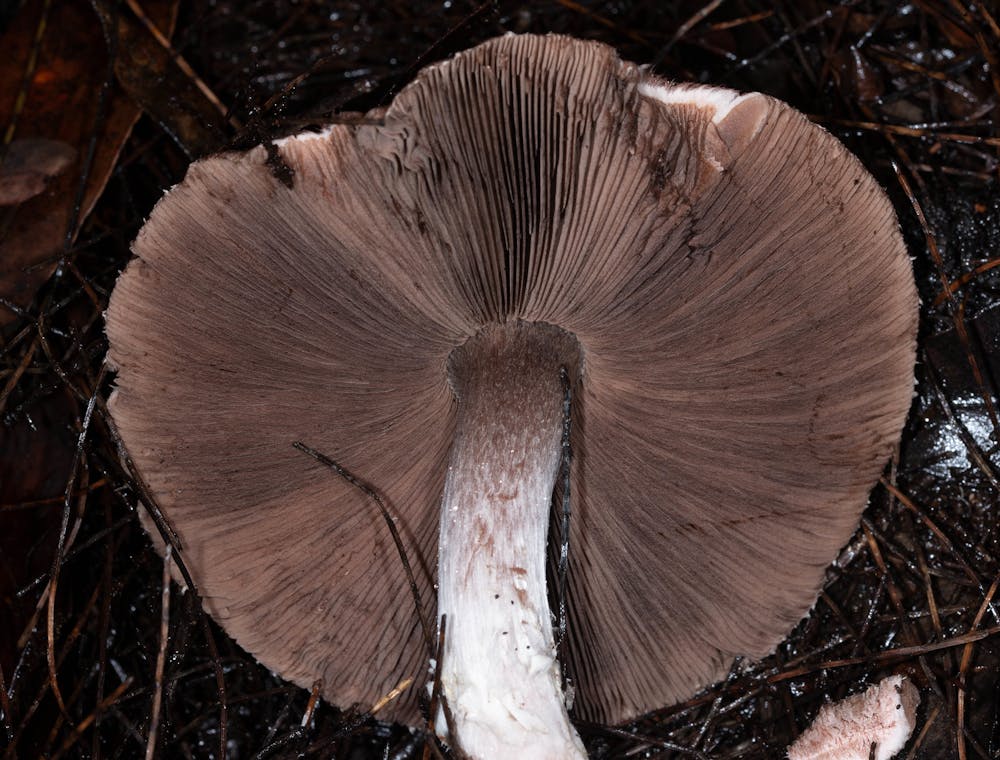 This saprophyte is a relative of the common mushroom sold in shops (a species of Agaricus). Australian fungi can be toxic so leave them where they grow.
Mark Brundrett, Author provided
This saprophyte is a relative of the common mushroom sold in shops (a species of Agaricus). Australian fungi can be toxic so leave them where they grow.
Mark Brundrett, Author provided
There are five different types of mycorrhizas, and two of these are particularly important in Australian ecosystems. One type is called “ectomycorrhiza”, where fungi wrap their hyphae (long, very fine hair-like structures that contact the soil) around the plant roots underground but don’t penetrate the root cells.
The other, called “endomycorrhiza”, is where fungi grow into the plant root, penetrating and branching within the root cells to form what look like little, microscopic trees. This is about as intimate a relationship between different types of organisms as you can get!
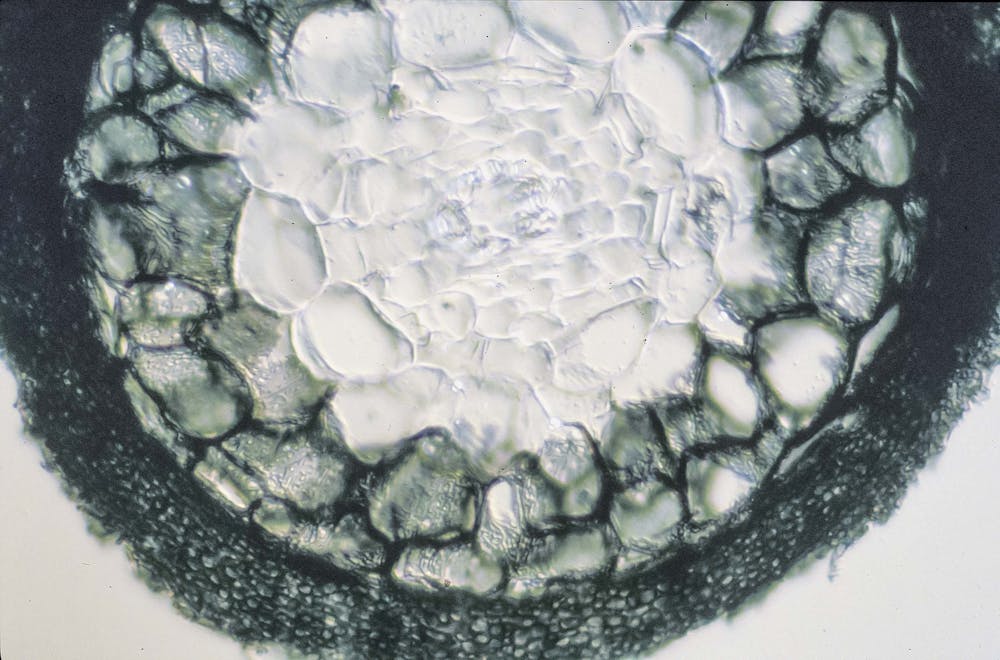 Microscopic cross-sectional view of an ectomycorrhizal pine tree root about 0.5 millimetres wide. This revels a labyrinth of black stained fungus hyphae surrounding root cells to form a nutrient exchange zone.
Mark Brundrett, Author provided
Microscopic cross-sectional view of an ectomycorrhizal pine tree root about 0.5 millimetres wide. This revels a labyrinth of black stained fungus hyphae surrounding root cells to form a nutrient exchange zone.
Mark Brundrett, Author provided
 Arbuscular mycorrhizas are tiny tree-like growths inside the root cell where materials are exchanged with the host plant.
Mark Brundrett, Author provided
Arbuscular mycorrhizas are tiny tree-like growths inside the root cell where materials are exchanged with the host plant.
Mark Brundrett, Author provided
Mushrooms as big as dinner plates
We often become aware of the presence of mycorrhizas only when conditions for reproduction are right, and a mushroom or toadstool emerges from the ground. Such conditions may only occur every five to ten years. For some species, there may be centuries between reproductive events.
For many of us, our experience with mycorrhizal fungi begins in very early childhood when we first catch sight of those spotty red and white toadstools, called the fly agaric or Amanita muscaria.
These fungi are often depicted in children’s book illustrations, such as Little Red Riding Hood, Jack and the Beanstalk, and a number of Enid Blyton’s tales. I recall conifers, such as pine trees, often growing nearby in the background of these pictures. This was no coincidence, Amanita muscaria forms mycorrhizal associations with many conifers, as well as oaks.
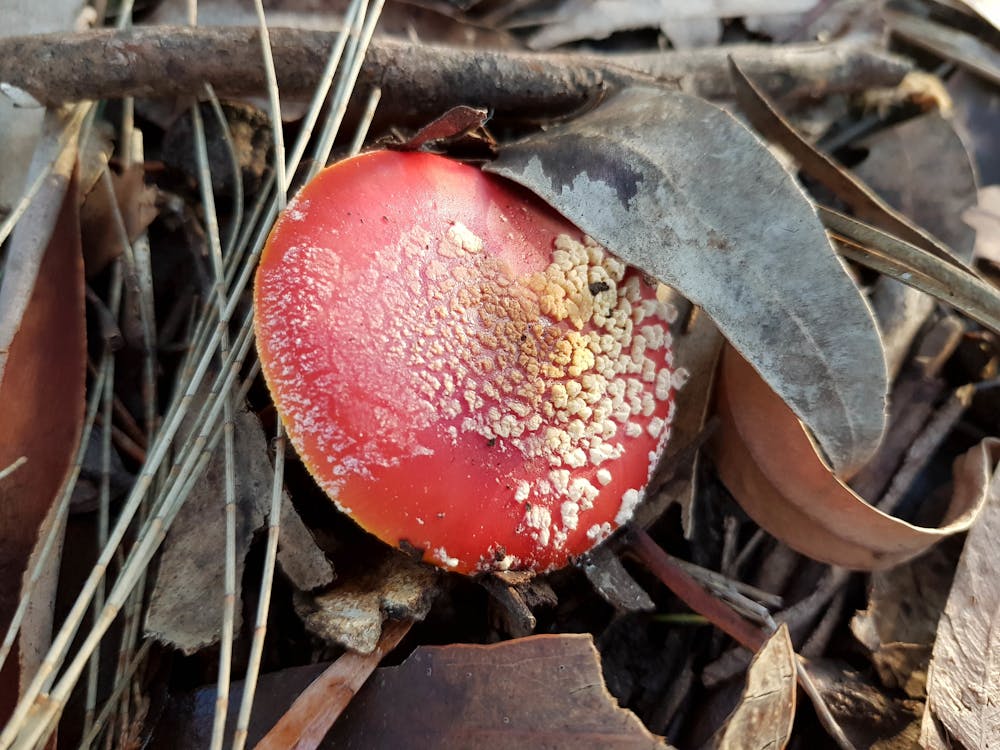 The fly agaric or Amanita muscaria is a striking fungus often seen in children’s books.
Mark Brundrett, Author provided
The fly agaric or Amanita muscaria is a striking fungus often seen in children’s books.
Mark Brundrett, Author provided
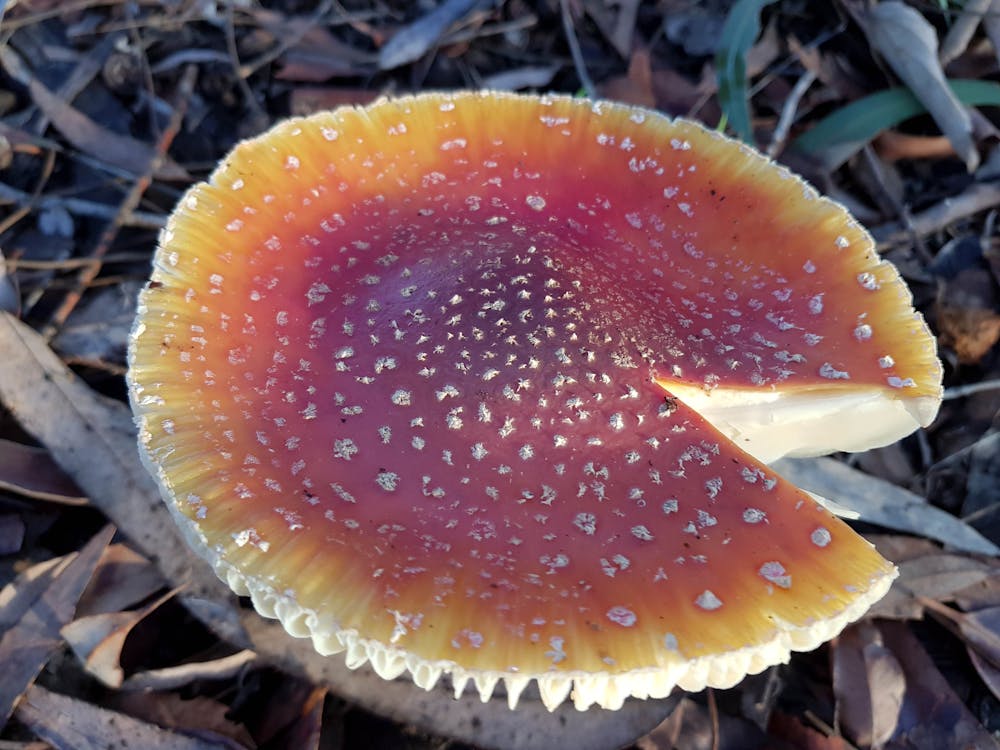 The fame of Amanita muscaria also arises from the hallucinogenic properties it sometimes has, but this fungus is most likely to have toxic consequences for those who eat it. It was also used as a natural insect killer.
Mark Brundrett, Author provided
The fame of Amanita muscaria also arises from the hallucinogenic properties it sometimes has, but this fungus is most likely to have toxic consequences for those who eat it. It was also used as a natural insect killer.
Mark Brundrett, Author provided
The mycorrhizal fungi associated with eucalypts can be less showy, with many being 75-100 millimetres across and a creamy, light tan in colour. They quite often pop up in home gardens, frequently in lawns, where they’re very obvious and usually within 4 to 5 metres of a tree trunk.
Others are spectacular, including the bright purple, orange or green Cortinarius species shown in the photos below. In fact, the beauty and diversity of our fungi now supports a new ecotourism industry in Australia, particularly in Tasmania.
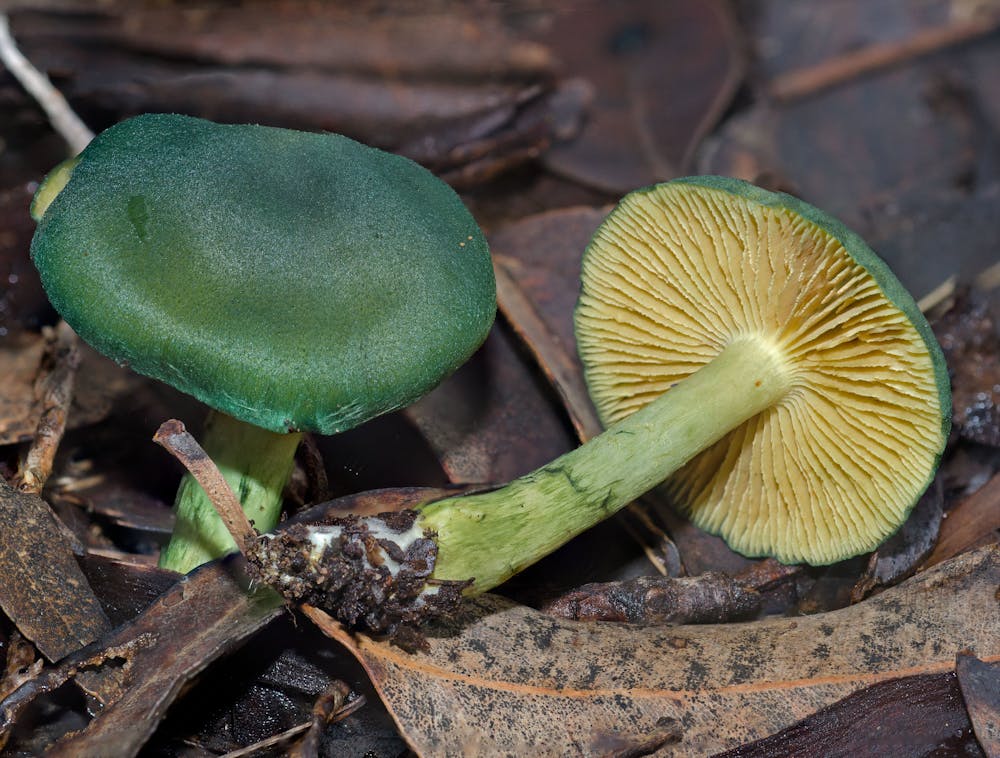 The bright green mushroom Cortinarius austroveneta is found in tall eucalypt forests.
Mark Brundrett, Author provided
The bright green mushroom Cortinarius austroveneta is found in tall eucalypt forests.
Mark Brundrett, Author provided
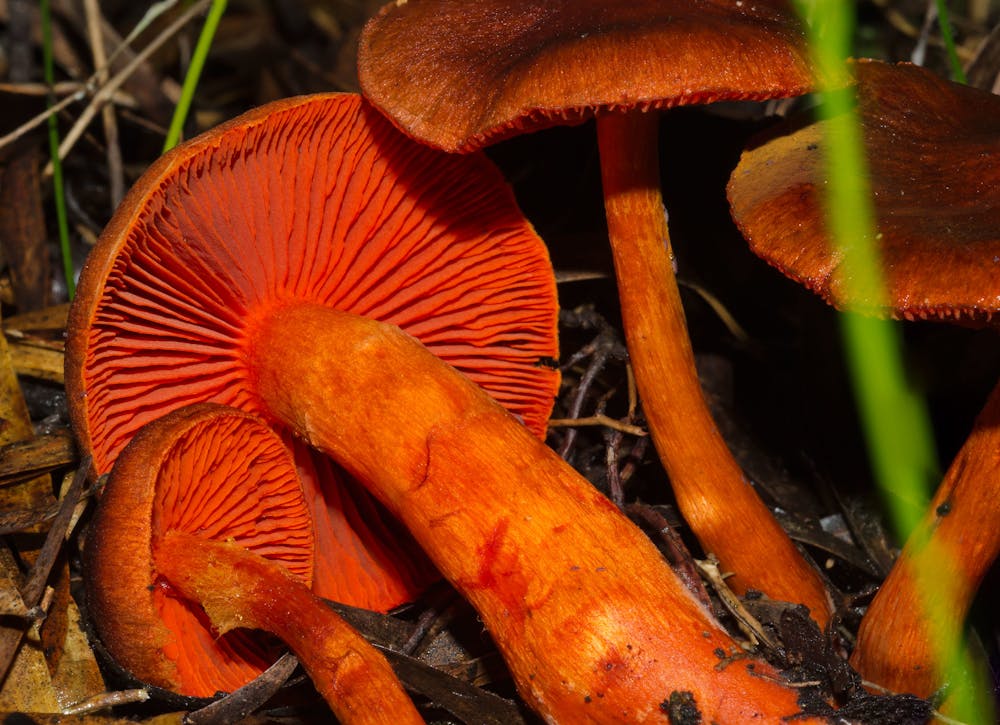 Cortinarius erythrocephalus is another brilliantly coloured mycorrhizal forest mushroom.
Mark Brundrett, Author provided
Cortinarius erythrocephalus is another brilliantly coloured mycorrhizal forest mushroom.
Mark Brundrett, Author provided
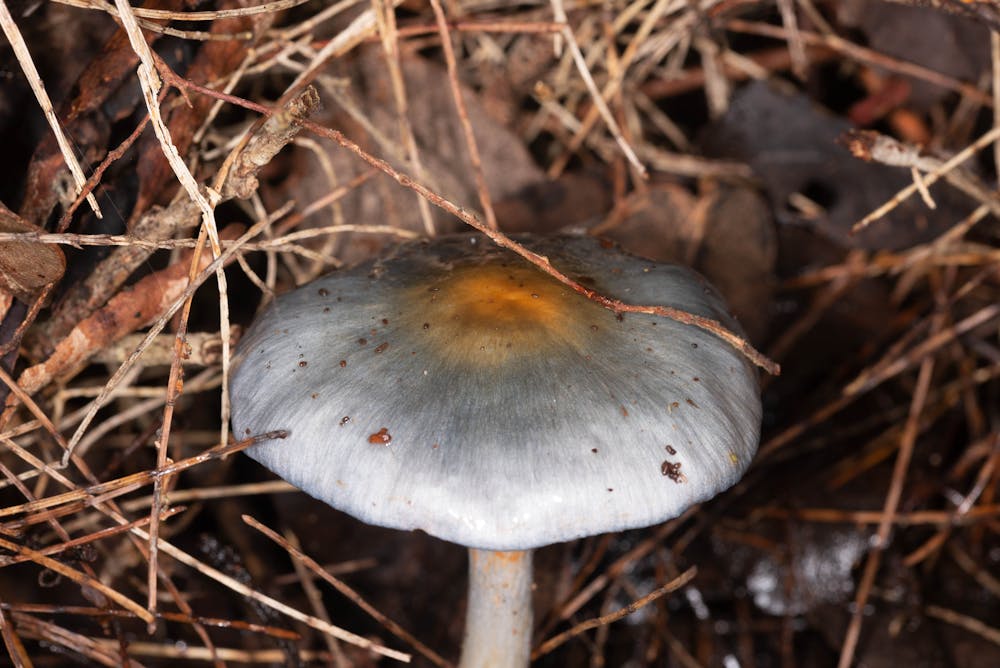 Cortinarius rotundisporus, also known as the elegant blue webcap, can be found in southern Australia.
Mark Brundrett, Author provided
Cortinarius rotundisporus, also known as the elegant blue webcap, can be found in southern Australia.
Mark Brundrett, Author provided
Some fungi are most impressive in the spring following bushfires, such as the abundant orange cup fungus shown below that stabilises ash beds.
Read more: How fungi's knack for networking boosts ecological recovery after bushfires
 The orange cup fungus Anthrocobya muelleri is found briefly after severe fires.
Mark Brundrett, Author provided
The orange cup fungus Anthrocobya muelleri is found briefly after severe fires.
Mark Brundrett, Author provided
Indeed, most plants form mycorrhizal associations. Those that don’t include plants from the common vegetable families brassicaceae (think broccoli, cauliflower, kale) and chenopodiaceae (spinach, beetroot, and quinoa). Neither do members of the proteaceae family, such as native banksias and grevilleas. These plants invest in very complex roots rather than fungal associations.
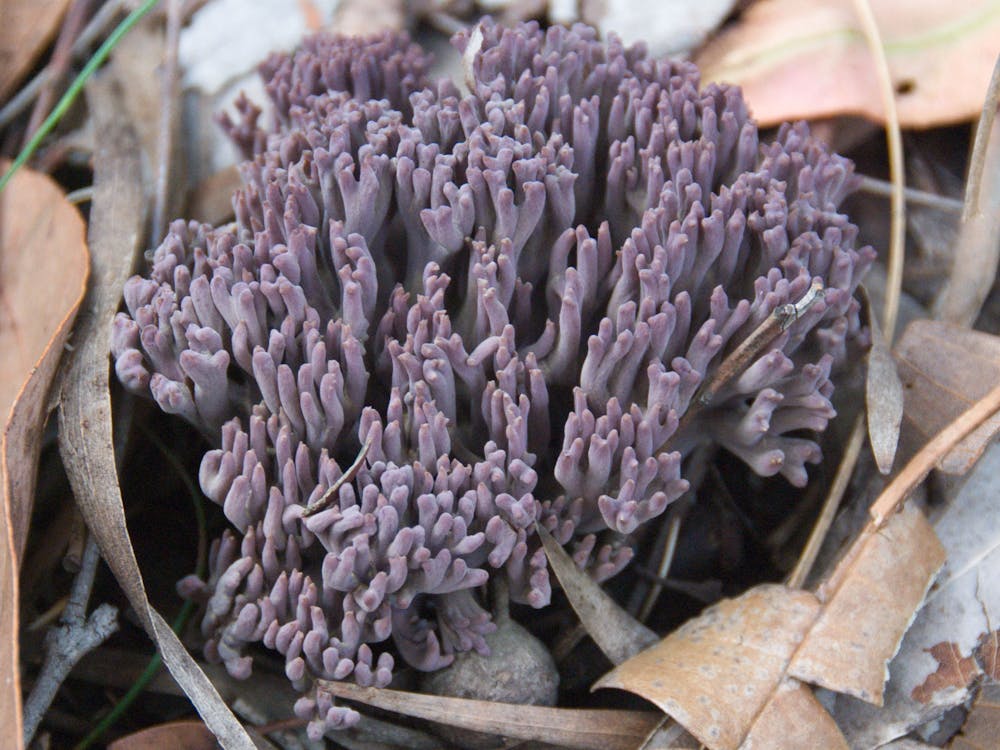 This is a species of Ramaria, a mycorrhizal genus comprising approximately 200 species of coral fungi.
Mark Brundrett
This is a species of Ramaria, a mycorrhizal genus comprising approximately 200 species of coral fungi.
Mark Brundrett
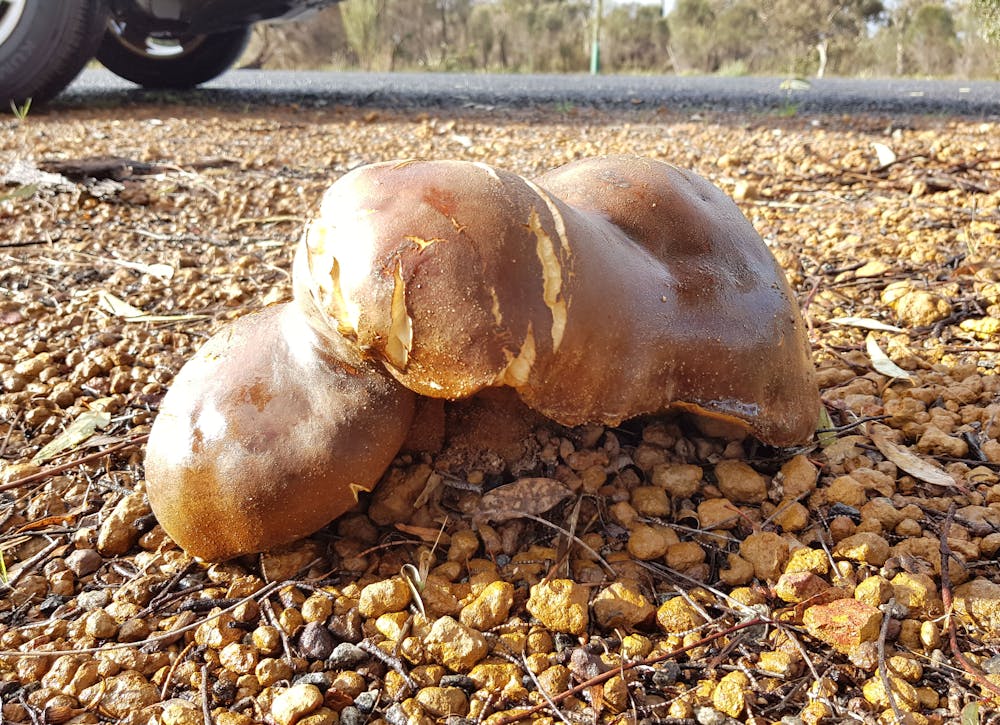 Phlebopus marginatus is possibly Australia’s largest terrestrial mushroom, with one found in Victoria weighing in at 29 kilograms.
Mark Brundrett, Author provided
Phlebopus marginatus is possibly Australia’s largest terrestrial mushroom, with one found in Victoria weighing in at 29 kilograms.
Mark Brundrett, Author provided
Who’s really in control?
Because we are so familiar with many of the plants in our environment, we are inclined to think it’s them that control their relationship with mycorrhizal fungi.
But it is possible mycorrhizal fungi exercise much more control. Or perhaps, the relationship is a perfect mutualistic symbiosis where partners share everything, including control, equally. We just don’t know yet.
Read more: 5 ways fungi could change the world, from cleaning water to breaking down plastics
Members of the fungus kingdom work in synchrony with the plant kingdom to support all terrestrial life, including animals such as ourselves. We may not think about fungi very often, but we cannot survive without them.
One of the surprise elements of Douglas Adam’s Hitchhiker’s Guide to the Galaxy, was that the Earth and its inhabitants existed as part of an experiment designed and controlled by white laboratory mice.
I sometimes wonder if the fate of the Earth’s terrestrial ecosystems rests on mycorrhizal fungi. If so, perhaps we need to show them greater respect.
Authors: Gregory Moore, Doctor of Botany, The University of Melbourne

















