

Queensland has an important network of private conservation areas, but they're dangerously exposed to mining
- Written by Rebecca Louise Nelson, Associate Professor in Law, The University of Melbourne
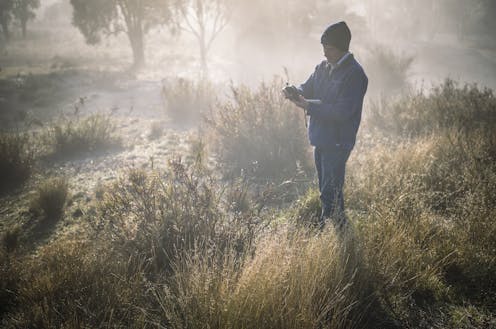
Australia has the world’s largest network of privately owned conservation areas that protect a range of rare wildlife, from bilbies to endangered fish.
There are some 6,000 non-government conservation areas across the continent, which are owned by Aboriginal and Torres Strait Islander groups, individuals and NGOs. They build a more comprehensive protected area network than public protected areas can achieve alone, ensuring more species have a fighting chance against the changing climate.
These lands cover more area in Queensland than any other state. But our new research finds Queensland’s laws fail to protect them from the hidden impacts of mining on the groundwater sustaining them.
This is because private investments in conservation land aren’t legally protected in the same way as commercial assets or capital, nor like national parks. To safeguard these crucial habitats and ecosystems against the threats of mining, we need legal reform in Queensland and an urgent exploration of these vulnerabilities across Australia.
Beyond national parks
Governments rightly encourage growth in Australia’s privately protected areas. Conservation landholders invest in restoring degraded land, re-introduce ecologically and culturally important species, and carefully design innovative habitat protection measures.
For example, the Olkola Aboriginal Corporation of Cape York has developed a successful carbon abatement project and a long-term plan to save the totemic endangered Alwal (golden-shouldered parrot), and defend it from mining.
Likewise, a non-profit organisation owns the Mount Rothwell reserve. After successfully reintroducing the mainland eastern barred bandicoot in 2004, the reserve now protects over 80% of the species’ population in the largest feral predator-free ecosystem in Victoria.
Read more: Here's a good news conservation story: farmers are helping endangered ecosystems
Privately protected areas also safeguard some of Australia’s most threatened and under-protected habitat types. This includes critically endangered grassy box woodlands in New South Wales, and the Fitz Stirling biodiversity hotspot in Western Australia.
Investing in privately protected areas also makes economic sense. A 2020 Ernst & Young report shows investing in privately protected areas can provide significant stimulus to support Australia’s recovery from COVID.
Why private conservation land is vulnerable
But Australia’s environment laws leave privately protected areas exposed to resource development projects, both within and outside the boundaries of the land.
Unlike national parks, mining projects are allowed to be developed within privately owned nature refuges against the land owner’s wishes. This has been a longstanding concern of conservationists worldwide.
Only very small areas of environmentally valuable private land in Queensland are protected from mining under legal arrangements that are very rarely applied. This includes a single declared Special Wildlife Reserve (a recent legal upgrade from nature refuge arrangements), and parts of Queensland’s strategic environmental areas.
Both privately protected land and national parks are also at risk from development projects operating outside their boundaries. One of the biggest threats is the impact of mining on groundwater, the focus of our research.
Groundwater is natural life support for arid Australia, with ecosystems and landscapes – such as desert springs, wetlands, rivers and forests – dependent on it. Alongside the potential for water contamination, a major threat mining and gas developments pose on groundwater is over-extraction.
Mines and gas developments can require billions of litres of fresh water each year to operate, competing with water that ecosystems need to survive. These impacts can last for hundreds or even thousands of years, though the details aren’t always fully disclosed.
We untangled the complex web of environmental, mining and water laws regulating mining and gas developments in Queensland, and found three key biases that leave nature refuges vulnerable.
1. Land title boundaries can act like legal blinkers on risk
Even if there are scientific studies predicting long-range impacts, there are no requirements for miners or governments to tell conservation landholders that a mine will likely affect them, unless their land is next door.
If a conservation landholder isn’t aware of an impact to their land, then they can’t object to a project or appeal a decision to approve it, and might make futile ecological investments. They also can’t protect infrastructure like bores, which miners’ assessment processes have overlooked in the past.
2. Policies focus on damage to built and commercial infrastructure
This includes damaged roads and fences, or dead livestock. Laws and policies don’t consider or require compensation for damage to ecological investments in conservation areas. This is despite governments claiming progress in private conservation land towards international conservation targets.
3. Cumulative impacts can be ignored
Queensland’s environmental laws don’t require a government decision-maker deciding on whether to approve a mining project to consider cumulative effects. The damage from one project might seem tolerable on its own, but not when it’s considered alongside others in the region. Some policies briefly mention this, but they aren’t detailed or legally binding.
Queensland’s water laws are better, but still only require companies and governments to predict impacts to springs, and suggest strategies to respond. This means preventing and mitigating impacts – such as shrinking or drying spring-fed wetlands – is legally optional and they can ignore other groundwater-dependent ecosystems and climate change.
What needs to change?
Removing these legal blinkers requires law reform:
all landholdings scientifically predicted to experience changes due to a mine should be notified
any protection, mitigation and compensation provisions should recognise investments in conserving and restoring native species and ecosystems, not just houses, fences and livestock
risks to nature refuges must be understood as cumulative to avoid a death by a thousand cuts.
In the meantime, conservation landholders can take steps to protect themselves. For example, sector leaders could aggregate public information about resource development applications and alert conservation landholders who might miss them.
Landholders should document how they rely on bores and how they invest in conserving and restoring ecological assets. They could apply for licences to use groundwater for ecological or wildlife purposes to better defend their water resources.
Our complex laws haven’t kept up with Australia’s increasing reliance on private investment in wildlife conservation. Securing permanent environmental benefits from private land means protecting it from the compounding, long-term effects of extractive industries.
Authors: Rebecca Louise Nelson, Associate Professor in Law, The University of Melbourne

















