

Japan wants to burn ammonia for clean energy – but it may be a pyrrhic victory for the climate
- Written by Llewelyn Hughes, Associate Professor of Public Policy, Crawford School of Public Policy, Australian National University
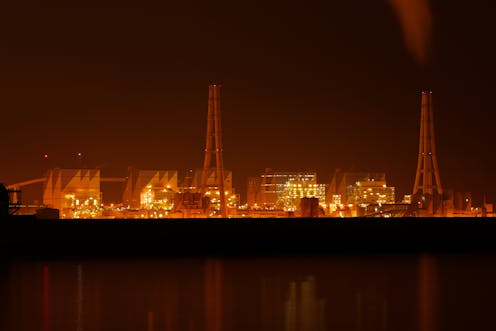
Coal is at the centre of Australia and Japan’s long partnership in energy trade. But as Japan seeks to slash its emissions in coming decades, this relationship will change.
Japan is aiming to reach net-zero greenhouse gas emissions by 2050. One way Japan plans to achieve this is to combust ammonia alongside coal in its coal-fired power plants.
Ammonia is made by combining hydrogen and nitrogen. When ammonia is burned for energy, the process does not produce carbon dioxide (CO₂), and so offers potential for Japan to reduce greenhouse gas emissions.
Australia is well placed to become a key global supplier of ammonia. But the climate gains from Japan’s shift will depend on how the ammonia is produced in Australia.
A new way for coal plants?
The value of Australia’s thermal coal exports to Japan reached about A$7 billion in 2020 – 40% of the total value of our thermal coal exports that year.
Japan is aiming to reach net-zero greenhouse gas emissions by 2050. To meet this goal, it has pledged to reduce emissions by 46% by 2030 compared to 2013.
The energy sector makes up by far the largest share of Japan’s emissions. In the 2020 financial year, thermal coal provided about 31% of Japan’s electricity.
To reduce energy emissions, Japan is seeking to phase out inefficient coal plants. In addition, it’s moving to burn ammonia alongside coal in remaining plants.
Large pilot trials in Japan have demonstrated the feasibility of a coal combustion mix with 20% ammonia. Japan’s biggest power plant operator, JERA, is now investing in a project to demonstrate the feasibility of a 50% ammonia mix. The Japanese government is helping fund the project.
It matters how ammonia is made
Whether using ammonia helps tackle climate change depends on how it’s made.
Currently, ammonia is produced on an industrial scale by combining hydrogen and nitrogen using the so-called “Haber Bosch” process. Today, the hydrogen used in this process is typically produced from gas using a method that releases a lot of CO₂.
Hydrogen can also be produced with electrolysis powered by renewable electricity – creating what’s known as “green” hydrogen. This process is currently more expensive than the gas method.
If renewable energy is used to power the processes that extract nitrogen from the air and combine it with hydrogen, then ammonia made with green hydrogen can be produced with near-zero emissions intensity.
Australia’s abundant energy resources, and existing trade relationships, mean it could become a major supplier of ammonia to countries decarbonising their energy sources.
In Australia, ammonia is predominantly made from fossil fuels. This resulted in 2 million tonnes of greenhouse gas emissions in 2019.
However, there are projects underway to inject green hydrogen into existing facilities, and others seeking to produce green ammonia at scale.
Projects to make ammonia from gas, where carbon emissions are captured and stored, are also being developed.
Read more: Asia's energy pivot is a warning to Australia: clinging to coal is bad for the economy
Will Japan’s plan help the climate?
By burning ammonia in its coal plants, Japan will reduce its national emissions. We calculate that replacing 20% of the coal burned in Japan’s expected 2030 coal fleet with ammonia would avoid emitting 40 million tonnes of CO₂ a year.
But what if Japan burns ammonia made in Australia from fossil-fuel based hydrogen? In that case, the emissions savings made in Japan will be wiped out by the emissions released in Australia when the ammonia was produced. Emissions would simply be transferred between nations, at no gain to the planet.
Some emissions produced in Australia could be avoided using carbon capture and storage (CCS). However, the feasibility of this technology is in real doubt. And significant CO₂ would still be released to the atmosphere in Australia due to fugitive emissions – those that escape during the production process – and because CCS doesn’t capture all CO₂.
So clearly, only ammonia production powered by renewable energy will reduce CO₂ emissions in both Japan and Australia.
It’s worth noting that under the scenario outlined above, the reduction in our thermal coal exports to Japan would lead to a fall in fugitive emissions from coal mining in Australia.
We estimate a reduction in fugitive emissions of between 1 and 10 million tonnes each year by 2030, assuming a one-to-one reduction in coal exports to Japan. This fall would offset emissions created by installing the renewable energy needed to power clean ammonia production in Australia.
Read more: Japan is closing its old, dirty power plants – and that's bad news for Australia's coal exports
What to do
Under the current global system of national emissions reporting, there is no incentive for Japan to buy more expensive, zero-emissions ammonia from Australia or elsewhere.
So if the international trade in ammonia grows, national governments must introduce policies to reduce emissions along the ammonia supply chain.
In Australia, that could mean a tougher national emissions target – and a detailed roadmap laying out how to get there – to make it harder for businesses to invest in new polluting ammonia production.
But this won’t stop Japan’s power plant operators from buying emissions-intensive ammonia from other countries if it’s cheaper. So clearly, some form of international cooperation is required.
This could come in the form of certification, similar to that currently being developed for hydrogen. In the case of ammonia, certification would tell consumers how much greenhouse gas was emitted during the production phase.
And incentives must also be in place to ensure buyers choose low-emissions ammonia. This may involve transferring emission reductions from one country’s greenhouse gas ledger to another – a mechanism discussed at the recent COP26 climate conference in Glasgow.
Japan may succeed in using ammonia to cut the environmental burden of its coal power fleet. But unless that ammonia is produced with little or no emissions, the victory will be pyrrhic.
Read more: Australia is at a crossroads in the global hydrogen race – and one path looks risky
Authors: Llewelyn Hughes, Associate Professor of Public Policy, Crawford School of Public Policy, Australian National University

















