

4 key lessons from Fiji after the devastation of Cyclone Winston
- Written by Suzanne Wilkinson, Professor of Construction Management, Massey University
While news from Tonga is still disrupted following the massive undersea eruption and tsunami on January 15, it’s clear the island nation has suffered significant damage to housing stock and infrastructure.
Once initial clean-up work is done, the focus then turns to rebuilding – specifically, how to rebuild in a way that makes that housing and infrastructure stronger, safer and more resilient than before the disaster.
This is where the United Nations’ Sendai Framework for Disaster Risk Reduction comes into the picture. It advocates for:
The substantial reduction of disaster risk and losses in lives, livelihoods and health and in the economic, physical, social, cultural and environmental assets of persons, businesses, communities and countries.
Beyond the framework, however, we have the lessons learned from previous disasters and recovery efforts in the same region – notably what happened in Fiji after Cyclone Winston in 2016. These lessons can be applied to the Tonga rebuild.
Lessons from Cyclone Winston
Winston was a category 5 cyclone, one of the most powerful storms ever recorded in the South Pacfic. When it approached Fiji’s largest and most populated island, Viti Levu, winds reached 230 kilometres per hour, with gusts peaking at 325km/h.
Over 60% of the Fijian population was affected, with around 131,000 people left homeless. The cyclone destroyed, significantly damaged or partially damaged around 30,000 homes, or 22% of households, representing the greatest loss to Fiji’s housing stock from a single event.
Read more: Rebuilding after disasters: 5 essential reads
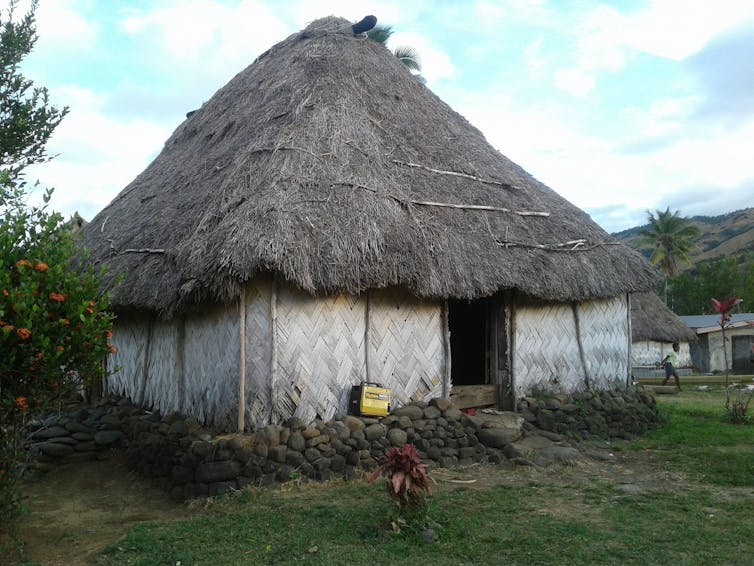
Notably, some models of the traditional Fijian bure survived the cyclone with minor or no damage.
Our research team from New Zealand followed and recorded the housing recovery. What we found could benefit Tonga as it faces reconstruction of so much housing stock.
As in Tonga, power, infrastructure and communication systems in Fiji were extensively damaged. Given that “building back better” involves applying higher structural standards than existed previously, we looked for evidence that Fiji was rebuilding in a more resilient and sustainable way.
Read more: Why the volcanic eruption in Tonga was so violent, and what to expect next
Fiji carefully recorded and analysed data, employing systematic reconnaissance surveys and damage assessments to identify building performance, structural vulnerabilities and failure mechanisms, as well as community needs. These assessments were done well, to international standards.
Understandably, Fijians were also aware of the need to reduce risks to housing from future cyclones. After the immediate post-cyclone humanitarian response, housing was their main concern. This became a key focus for government agencies as a way of demonstrating the recovery was under way and that communities were at the heart of the process.
Problems with rebuilding
We studied two main initiatives: a government-funded rebuilding program for houses (the “Help For Homes Initiative”) and the rebuilding programs led by various international and local NGOs.
Help For Homes provided credit for construction materials to people who had lost homes, assuming recipients met certain criteria related to household income, damage and location.
Read more: New cyclone forecasts: why impacts should be the focus of hazardous weather warnings
Communities were free to choose the basic type of dwelling, its interior design, external features and materials. Information and instructions about building best practices and standards were provided, but technical or practical support was limited.
Overall, the initiative had mixed reviews. On the one hand, people had autonomy over their future homes; if things went to plan, they liked the outcome. On the other, lack of building skills led to some poor-quality construction, and limited resources (mainly materials) pushed costs up.
A lack of suitable alternative building material also created problems. Material choice, material substitution, resource costs, low community technical expertise and low building standard knowledge are all issues Tonga might also face.
Some homeowners were left without the material they needed, and in some cases with only a partially rebuilt home.
The NGO rebuilding programs, by contrast, usually employed their skilled workers to build and supervise construction activities, often with the help of community labour. But again, reviews were mixed, especially when the communities didn’t have sufficient input into the rebuilding process.
While housing design was largely standardised for quick construction, the NGO houses tended to be technically strong and more resilient to future hazard events.
The best of both worlds
The main lesson was that high levels of community involvement and strong technical support were key to building resilient, future-proofed houses. For Tonga, the Fijian experience offers the opportunity to apply that lesson in four principal ways:
ensure the initial assessment process is thorough and up to international standards
recognise that housing stock overall needs to improve, and commit to higher construction standards
analyse local architecture and building practices for disaster-resistant features
combine the best of government-led and NGO building systems to maximise community involvement while ensuring good technical support and building expertise.
Overall, to have the best chance of rebuilding with the resilience to withstand future shocks, Tonga will benefit greatly from a three-way partnership between the government, NGOs and local communities.
As advocated by the authors in their book Resilient Post-Disaster Recovery through Building Back Better, co-ordination of such partnerships should be government-led and include trusted local community leaders and a consortium of NGOs.
The authors acknowledge the collaboration of Diocel Harold Aquino (Associate Professor of Civil Engineering, University of the Philippines) and Sateesh Kumar Pisini (Principal Lecturer in Civil Engineering, Fiji National University) in the preparation of this article.
Authors: Suzanne Wilkinson, Professor of Construction Management, Massey University

















