

The stunning recovery of a heavily polluted river in the heart of the Blue Mountains World Heritage area
- Written by Ian Wright, Senior Lecturer in Environmental Science, Western Sydney University
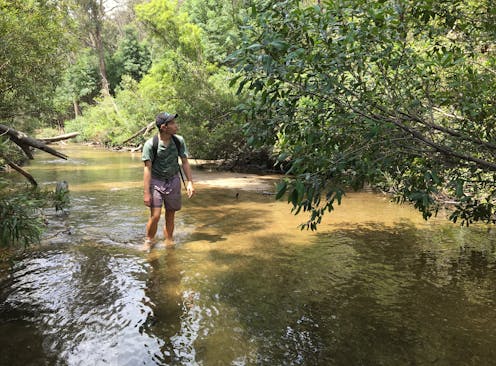
For more than 40 years, an underground coal mine discharged poorly treated wastewater directly into the Wollangambe River, which flows through the heart of the Blue Mountains World Heritage area.
Much of this spectacular wild river was chronically polluted, with dangerously high levels of zinc and nickel. Few animals were able to survive there.
My colleagues and I had been calling for tougher regulations to clean-up the wastewater flow since 2014, after we first sampled the river for our research. Finally, with the Blue Mountains community rallying behind us, the New South Wales Environment Protection Agency (EPA) enforced stronger regulations in 2020.
Our latest research paper documents the Wollangambe River’s recovery since. Already we’ve seen a massive improvement to the water quality, with wildlife returning to formerly polluted sites in stunning numbers.
In fact, the long fight for the restoration of this globally significant river is the focus of a new documentary, Mining the Blue Mountains, released this week (and online in coming days).
Trailer for Mining the Blue Mountains.But while the recovery so far is promising, it remains incomplete. Much more action is needed to return the river to its former health.
How bad was the river?
When the federal government nominated the Blue Mountains to be inscribed on the World Heritage list in 1998, it claimed “some coal mining operations occur nearby, but do not affect the water catchments that drain to the area”.
Our research has shown this not to be true, and the pollution of this river has generated international concern. In 2020, the International Union for Conservation of Nature – an official advisor to UNESCO – identified the coal mine as a major threat to the conservation values of the Greater Blue Mountains World Heritage area.
Read more: The Blue Mountains World Heritage site has been downgraded, but it's not too late to save it
So, how bad was the pollution? Our previous survey conducted nine years ago investigated both water quality and river invertebrates – mostly aquatic insects.
Wastewater from the underground coal mine Clarence Colliery entered the Wollangambe River about 1.5 kilometres upstream of the World Heritage area boundary. The nature of the pollution was complex, but of most serious concern was the increased concentrations of nickel and zinc in the river.
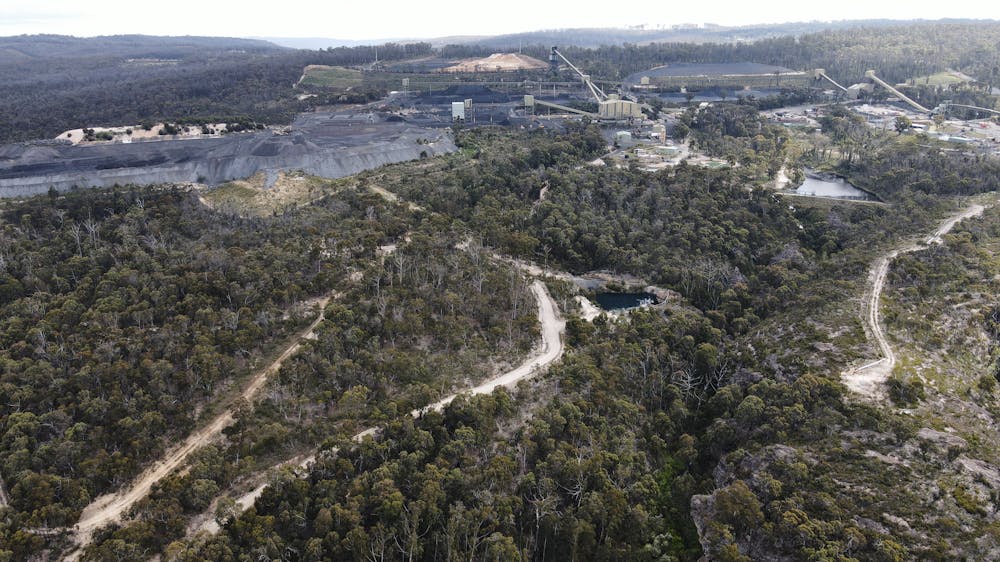
These metals were unusually enriched for coal wastewater, with both at concentrations more than 10 times known safe levels. The pollution remained dangerous for more than 20km downstream, deep within the World Heritage area.
Compared to upstream and unaffected reference streams, we found the abundance of invertebrates in the Wollangambe fell by 90%, with the diversity of invertebrate families 65% lower below the mine waste outfall.
There was also a build-up of contaminants into the surrounding foodchain. For example, one of our studies detected metals accumulated in plants growing on the river bank. Another found a build-up in the tissue of aquatic beetles below the mine outfall.
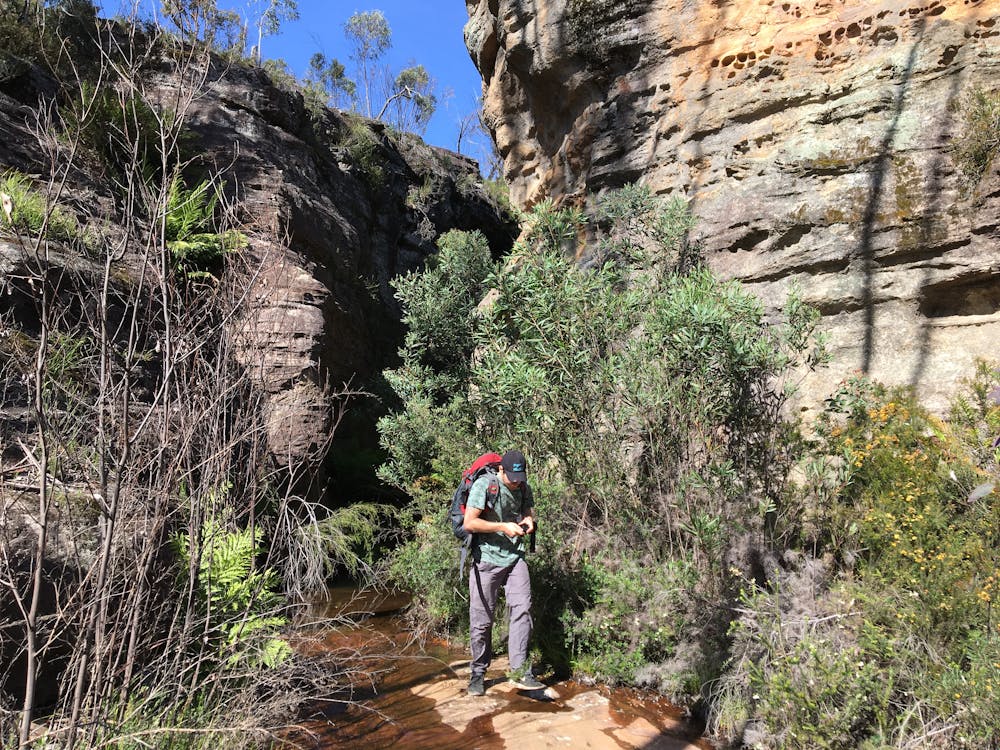 Water scientist Callum Fleming in the headwaters of the Wollangambe River, upstream of the colliery outfall.
Ian Wright, Author provided
Water scientist Callum Fleming in the headwaters of the Wollangambe River, upstream of the colliery outfall.
Ian Wright, Author provided
Life returns to the river
In 2014 we not only shared our published research findings with the NSW EPA, but also with the Blue Mountains community. This triggered a letter writing campaign from the Blue Mountains Conservation Society urging the EPA to take action.
Read more: How our research is helping clean up coal-mining pollution in a World Heritage-listed river
After five long years, the EPA finally issued stringent regulations requiring Clarence Colliery to make enormous reductions in the release of pollutants, particularly zinc and nickel, in the colliery waste discharge.
And it worked! We collected samples 22km downstream of the river, and were very surprised at the speed and extent of ecological recovery. Not only has water quality improved, but animals are coming back, too.
 The Wollangambe River 22km downstream of the mine waste outfall. This photo was taken in December 2020, when river pollution was falling and invertebrate life was starting to flourish.
Ian Wright, Author provided
The Wollangambe River 22km downstream of the mine waste outfall. This photo was taken in December 2020, when river pollution was falling and invertebrate life was starting to flourish.
Ian Wright, Author provided
The improved treatment resulted in a very significant reduction of zinc and nickel concentrations in the mine’s wastewater, which continues to be closely monitored and publicly reported by the colliery.
The most pollution-sensitive groups of invertebrates – mayflies, stoneflies and caddisflies – had a steep increase (256%) in their abundance compared to when we conducted our earlier research in 2012 and 2013.
This could have positive implications for the surrounding plants and animals, as river invertebrates are a major food source for water birds, lizards, fish and platypus.
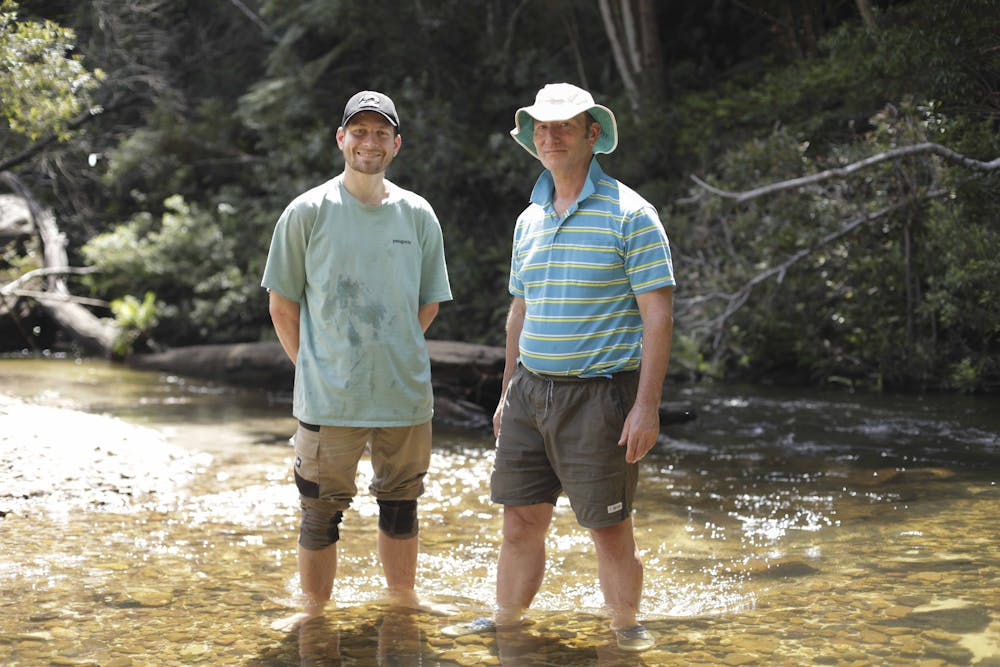 Western Sydney University water science researchers Callum Fleming (l) and Ian Wright (r) cooling their feet in the Wollangambe River.
James Patrick Photography, Author provided
Western Sydney University water science researchers Callum Fleming (l) and Ian Wright (r) cooling their feet in the Wollangambe River.
James Patrick Photography, Author provided
However, the road to recovery is a long one. River sediments remain contaminated by the build-up of four decades of zinc and nickel enrichment, up to 2km downstream of the mine outfall.
To help speed up the river’s recovery, contaminated sediment should be removed from the river below the mine outfall, similar to a 12-month clean-up operation conducted after a major spill from the mine in 2015.
Pollution doesn’t often end when mines do
Sadly, there are closed mines in the Blue Mountains that continue to release damaging pollution, such as Canyon Colliery and several in the Sunny Corner gold mine area, as the documentary explores.
Canyon Colliery closed in 1997, and contaminated groundwater continues to be discharged from its drainage shafts into the Grose River, which is part of the Blue Mountains World Heritage Area.
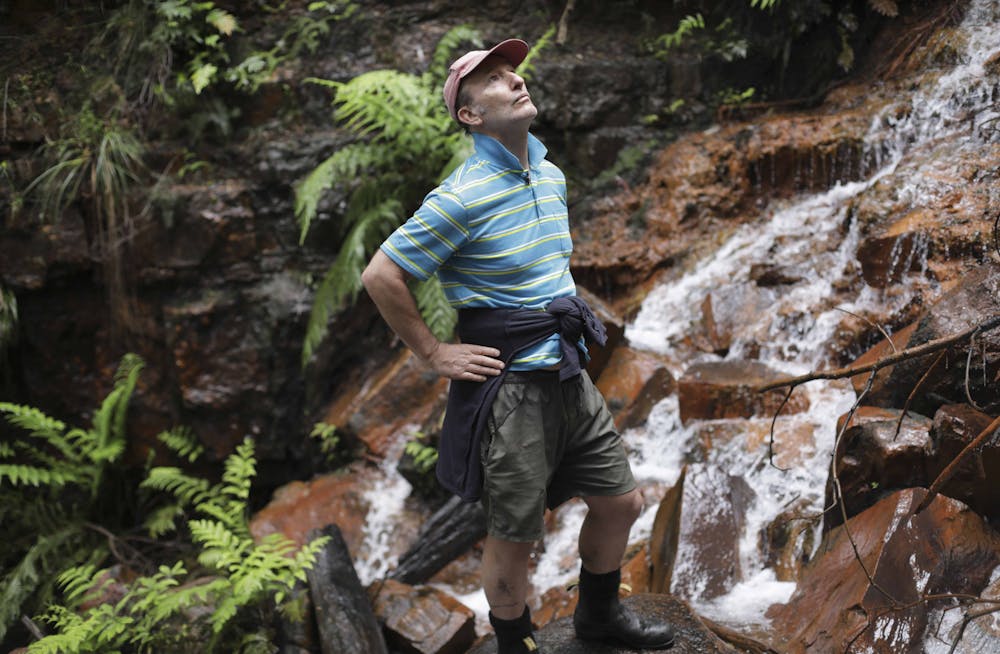 Author Ian Wright looking at the polluted drainage from Canyon mine flowing towards the Grose River.
James Patrick Photography, Author provided
Author Ian Wright looking at the polluted drainage from Canyon mine flowing towards the Grose River.
James Patrick Photography, Author provided
Likewise, most Sunny Corner mines closed over a century ago, and yet severe pollution still seeps from the mines into waterways.
The pollution here is at extreme concentrations and includes arsenic, copper, lead and zinc. It’s dangerous to life in waterways, surrounding soil and contact with this pollution is hazardous to human health.
 Sunny Corner is a silver and gold mining area that closed a century ago yet still releases highly contaminated mine drainage.
James Patrick Photography, Author provided
Sunny Corner is a silver and gold mining area that closed a century ago yet still releases highly contaminated mine drainage.
James Patrick Photography, Author provided
What can we learn from this?
Rehabilitating these closed mines are expensive, and often with limited success. But the Wollangambe River case study is an encouraging sign that clean-up is possible for even the most polluted environments.
Solid independent scientific research and community involvement are critical for these efforts. The community is the eyes and ears of the environment, and has an important role holding industry and government regulators to account.
The environmental regulators, such as NSW EPA, have enormous power to address pollution and trigger positive change. It’s important researchers and the community engages with them – and it helps to be patient as action can take years to happen.
And finally, we congratulate Centennial Coal, the owners of the Clarence Colliery, for making enormous improvements to their operation and complying with tough new environmental regulations.
Authors: Ian Wright, Senior Lecturer in Environmental Science, Western Sydney University

















