

a quarter of young Australians are pessimistic about having kids
- Written by: Lucas Walsh, Professor and Director of the Centre for Youth Policy and Education Practice, Monash University
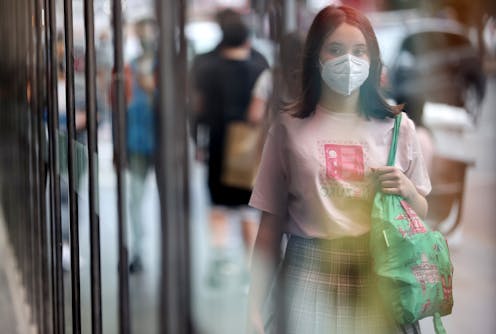
Young people today are coming of age in the middle of a global pandemic, soaring house prices, an unpromising job market and the shadow of climate change.
As part of the 2021 Australian Youth Barometer, we asked young people what they think about their futures. Some of the responses were bleak. As one 24-year-old observed:
I feel like, as a young person specifically, we get the raw deal out of almost everything at the moment.
What is this doing to young people’s aspirations? In particular, what impact might it have on their plans to have children?
The Australian Youth Barometer
In the Australian Youth Barometer, we surveyed more than 500 Australians aged 18 to 24 from diverse backgrounds. We also conducted interviews with 30 more young people. We asked them about their health, education, employment, money, housing, food, safety, and community involvement and participation.
We found 24% of respondents are pessimistic about having children in the future. The reasons for this are complex. Some have yet to make a firm decision. Some appear to be choosing not to have children at all.
Unsurprisingly, young people see a stable home and financial independence as prerequisites for having a family – both of which seem increasingly unattainable for many in the current employment and housing market.
Indeed, this figure increases significantly for those living in uncertain housing and precarious financial circumstances, as well as for non-binary and gender diverse young people.
For example, 65% of those who are very pessimistic about their housing prospects are also very pessimistic about having children, while only 9% are very optimistic about having children. Here, one 24-year-old interviewee sets out their concerns:
[the] rising cost of living, owning a home, having enough to sort of be able to have a home and have a family in the future, but also not to have to use up all of my money.
Another 20-year-old similarly explained their hesitancy:
I think in the future, it’s probably just about being able to provide enough for my family […] If I have a family in the future.
On the flip-side, those who are optimistic about having children tend to be optimistic about their futures in relation to financial security and access to supportive social networks. They are also more optimistic about living in a world in which environmental issues are effectively addressed. But having enough money is significant:
I want to reach a point in my life where I can have a good number of years to enjoy the money […] that I’ve earned, without having to worry about making repayments or things like that. If it’s uni for my [future] kids or something like that, then I’m more than happy, but I don’t want to have to pay my own debts.
Our survey found no large differences in optimism or pessimism about having children between men and women. Young men were a little more pessimistic about the prospect of having a child in the future (17.8%) than young women (12.8%).
Climate change and babies
Climate change also appears to be influencing young people’s views about children. Nearly a third (31%) of respondents were pessimistic or very pessimistic about environmental issues being addressed effectively.
One 19-year-old told us that a big concern is:
Definitely climate change. Our age group, is going to be most affected by it […] Like everyone’s affected by it, but it’s our future. It’s not some 90-year-old woman’s future.
Read more: Yes, young people are concerned about climate change. But it can drive them to take action
Recent media reports have described significant numbers of young people wanting to skip having kids to put less strain on the planet. As the Guardian’s Sian Cain wrote:
The climate crisis has presented an opportunity to rebrand being child-free, once the greatest taboo, into the ultimate altruistic act.
Meanwhile, other data suggests young people simply don’t see having kids as inevitable or essential. The ABC’s Australia Talks! Survey conducted in 2019 found almost three in four Australians thought having children was not necessary to have a fulfilling life. In their study, women particularly thought having children would not necessarily make them happier.
The pandemic has also featured constant reports about how mothers are bearing the brunt of work and care responsibilities.
What does this mean for Australia?
The mix of housing affordability, the persistent norm that women assume the majority of household labour while raising children, and climate change are hard to ignore.
However, young people’s views about having children is about more than personal choice. It is about how all of us prepare for the changes in population in Australia and around the globe.
The fertility rate in Australia has been declining for some time. Australian Bureau of Statistics data suggests in the next decade, the number of couples without children will outnumber those with children.
As policy makers confront how Australia’s economy, environment and population needs to look in the coming decades, they should not forget how their decisions affect not only young people today, but future generations.
Read more: Half of women over 35 who want a child don't end up having one, or have fewer than they planned
Authors: Lucas Walsh, Professor and Director of the Centre for Youth Policy and Education Practice, Monash University


















