

Climate change is warping our fresh water cycle – and much faster than we thought
- Written by: Taimoor Sohail, Postdoctoral research associate, UNSW Sydney
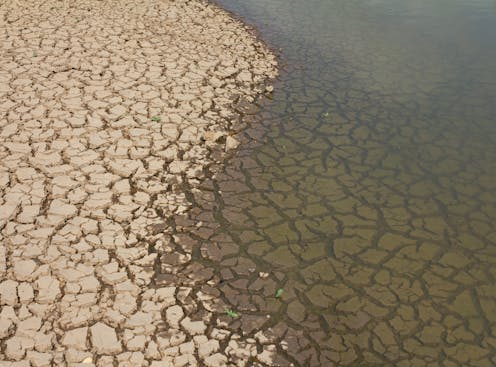
Fresh water cycles from ocean to air to clouds to rivers and back to the oceans. This constant shuttling can give us the illusion of certainty. Fresh water will always come from the tap. Won’t it?
Unfortunately, that’s not guaranteed. Climate change is shifting where the water cycle deposits water on land, with drier areas becoming drier still, and wet areas becoming even wetter.
Our research published today in Nature has found the water cycle is changing faster than we had thought, based on changes in our oceans.
This concerning finding underlines the ever more pressing need to end the emissions of gases warming the atmosphere before the water cycle changes beyond recognition.
If this sounds serious, it is. Our ability to harness fresh water makes possible modern society.

The water cycle has already changed
As the Earth warms up, the water cycle has begun to intensify in a “wet-gets-wetter-dry-gets-drier” pattern.
This means more and more freshwater is leaving dry regions of the planet and ending up in wet regions.
What might this look like? Weather, intensified. In relatively dry areas, more intense droughts, more often. In relative wet areas, more extreme storms and flooding.
Think of the megadrought afflicting America’s west, of the unprecedented floods in Germany, or of the increase in severe rainfall seen in cities like Mumbai.
This shift is already happening. In its landmark 2021 report, the UN’s Intergovernmental Panel on Climate Change (IPCC) drew on this growing body of research to conclude climate change was already causing long-term changes to the water cycle.
The changes we’re seeing are just the start. Over the next few decades, this water cycle intensification could make it much harder for people to get reliable supplies of fresh water across large areas of the planet.
Troublingly, while we know the water cycle is intensifying, we don’t fully know how much and how fast. That’s where the ocean comes into play.
How to use the ocean as a rain gauge
The main reason it’s hard to directly measure changes to the water cycle is that we don’t have enough measurements of rainfall and evaporation over our planet.
On a practical level, it’s very hard to set up permanent rain gauges or evaporation pans on the 70% of our planet’s surface covered in water. Plus, when we assess change over the long term, we need measurements from decades ago.
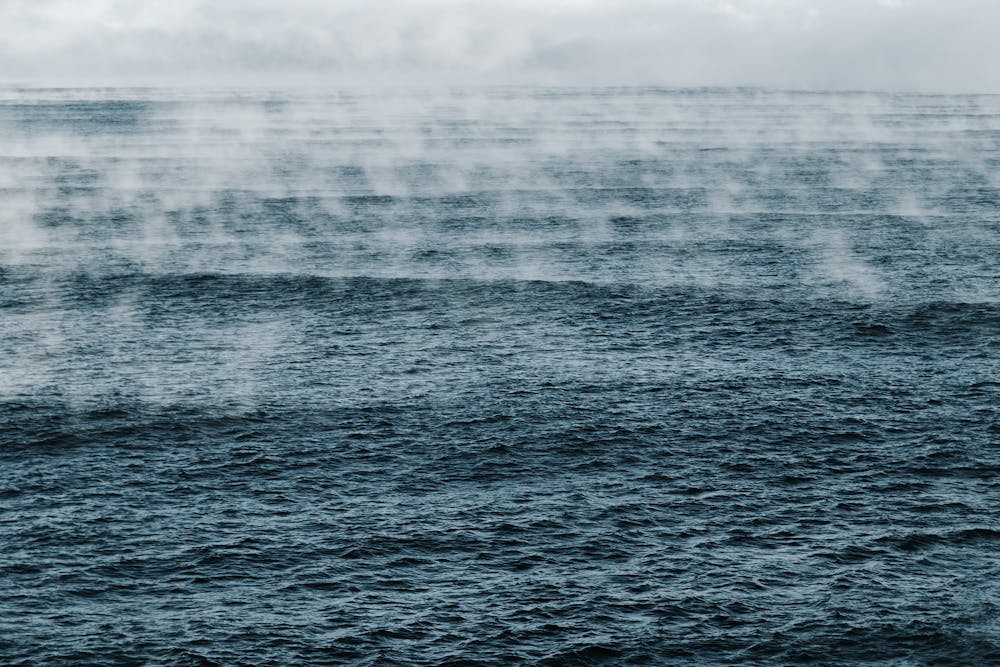 Evaporation over the Barents Sea, which has been warming rapidly.
Shutterstock
Evaporation over the Barents Sea, which has been warming rapidly.
Shutterstock
The solution scientists have landed on is to use the ocean. Many may not realise the ocean can be less or more salty depending on the region. For instance, the Atlantic is saltier than the Pacific on average.
Why? Rain. When fresh water falls as rain on the ocean, it dilutes the sea water and makes it less salty. When water evaporates from the surface, the salt is left behind, increasing the salinity. This means we can use the better-recorded changes in the ocean’s salinity as a kind of rain gauge to detect water cycle changes.
Earlier research used this method to track changes to the salinity at the ocean’s surface. This research suggested the water cycle is intensifying dramatically.
Unfortunately, the ocean does not stay still like a conventional rain gauge. Currents, waves and circular eddy currents keep the ocean’s waters in constant motion. This uncertainty has left a question mark over how exact the link between salinity and water cycle change actually is.
Read more: Predicting droughts and floods: why we're studying 19th-century ocean records
In response, we have developed new methods enabling us to precisely link changes in the ocean’s salinity to changes in the part of the water cycle moving fresh water from warmer to colder regions. Our estimates indicate how the broader water cycle is changing in the atmosphere, over land and through our oceans.
What did we find in our new study? The fresh water equivalent of 123 times the waters of Sydney Harbour have shifted from the tropics to the cooler areas since 1970. That’s an estimated 46,000 to 77,000 cubic kilometres of water.
This is consistent with an intensification of the water cycle of up to 7%. That means up to 7% more rain in wetter areas and 7% less rain (or more evaporation) in dryer areas.
This is at the upper end of estimates established by several previous studies, which suggested an intensification closer to 2-4%.
Unfortunately, these findings suggest potentially disastrous changes to the water cycle may be approaching faster than previously thought.
What would the future be like with an altered water cycle?
If our water cycle is getting more intense at a faster rate, that means stronger and more frequent extreme droughts and rainfall events.
Even if the world’s governments meet their target and keep global warming to a ceiling of 2℃, the IPCC predicts we would still endure extreme events an average of 14% stronger relative to a baseline period of 1850-1900.
Some people and ecosystems will be hit harder than others, as the IPCC report last year made clear. For example, Mediterranean nations, south-west and south-east Australia, and central America will all become drier, while monsoon regions and the poles will become wetter (or snowier).
In dry areas hit by these water cycle changes, we can expect to see real threats to the viability of cities unless alternatives such as desalination are put in place.
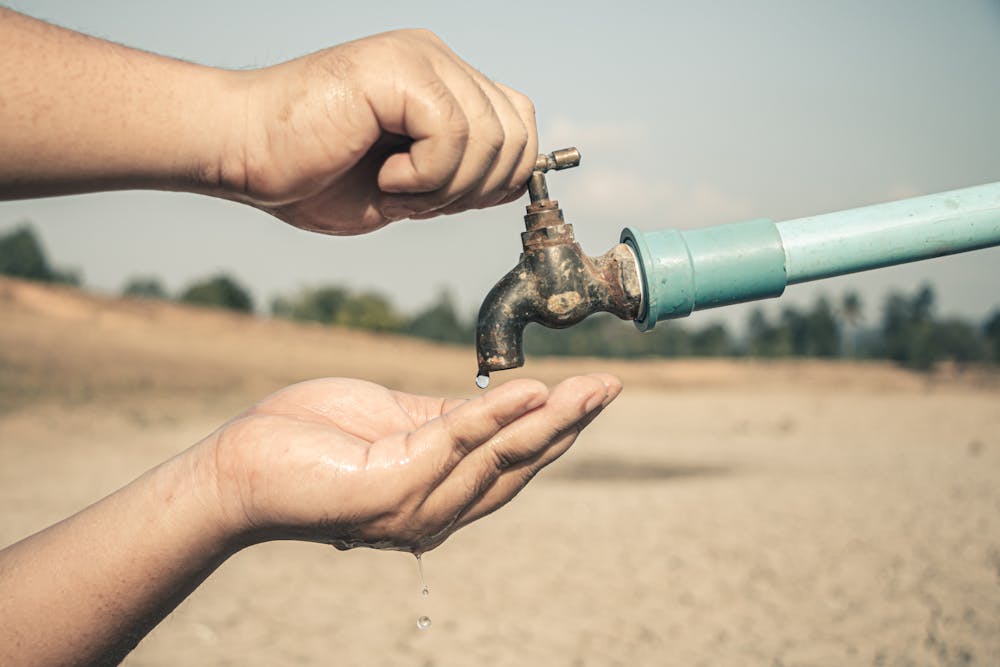 Droughts are likely to be more severe and more common in dry parts of the world.
Shutterstock
Droughts are likely to be more severe and more common in dry parts of the world.
Shutterstock
What should we do? You already know the answer.
Decades of scientific research have shown the extremely clear relationship between greenhouse gas emissions and rising global temperatures, which in turn drives water cycle intensification.
This is yet another reason why we must move as quickly as humanly possible towards net-zero emissions to reduce the damage from climate change.
The changes to the water cycle we observed were largely due to older emissions, from the mid 20th century and earlier. We have increased our emissions dramatically since then.
What comes next is entirely up to us.
Authors: Taimoor Sohail, Postdoctoral research associate, UNSW Sydney


















