

To protect children during Aotearoa's Omicron outbreak, we need to consider their families, not just schools
- Written by: Amanda Kvalsvig, Senior Research Fellow, Department of Public Health, University of Otago
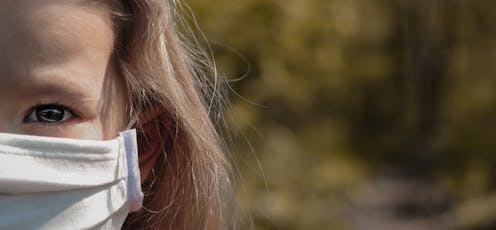
As New Zealand’s Omicron outbreak accelerates, with new community infections doubling every few days, the rising number of child cases is a reminder of the challenge to protect the health and well-being of children during a public health emergency.
COVID-19 affects children directly and indirectly, through impacts on children themselves, or their families and communities. Although children generally have a mild illness of COVID-19, there can be rare but serious outcomes and research is underway to understand potential longer-term effects on children.
Children can also be bereaved by COVID-19 and experience distress when they pass the infection on to a family member. The pandemic also widens inequities. International and local evidence shows that without urgent action, the impacts of the Omicron outbreak in New Zealand will be hardest on those with the least resources.
But not all impacts are directly from the virus. During an active outbreak the loss of in-person school time and the well-being protections schools provide can have a significant impact. This simultaneous negative impact on health, well-being and education is what we can expect to see as the outbreak progresses.
We need to minimise these harms by taking a proactive approach centred on children and their whānau, rather than on the school system. A whānau-centred system aims to keep children connected and safe during a public health emergency, whether they are at school or at home.
Read more: Despite Omicron arriving, keeping schools open as safely as possible should be the goal
Schools and the Omicron outbreak
Current policy for the Omicron outbreak is that closing schools is the last resort. However, this policy creates dilemmas for families with health concerns and may put paediatric services under high pressure because each layer of COVID-19 protection available to adults has significant gaps for children.
Since the start of the vaccine rollout to 5-11-year-olds on January 17, 48% of all children in this age group have received one vaccine dose. But the rollout remains highly unequal: 71% of Māori and 60% of Pasifika children have not yet received their first dose.
Furthermore, 12-17-year-olds are not eligible for boosters, and children under five are not eligible for any COVID-19 vaccines.
Although good progress has been made, it will be some months before a healthy standard of ventilation, air filtration and carbon dioxide (CO₂) monitoring can be available in all classrooms, particularly as the weather gets cooler.
Highly effective face masks (KF94) are not readily available in child sizes in New Zealand and masks are not required at all for students in Years 1-3 and the staff supporting them.
The capacity to stay home is not equitably distributed, and can be particularly difficult for low-income families and essential workers.
In New Zealand, loss of face-to-face school time can have multiple adverse impacts on children because so much responsibility for children’s well-being is devolved to schools, including a caretaker function for working parents.
This dependence on face-to-face school time has meant families are making difficult decisions between protecting children’s education and their and other family members’ health, particularly when they have underlying health conditions.
We propose a pivot to a whānau-centred — not school-centred — approach to protect the well-being of children in this outbreak. Protections need to be accessible to all children wherever they are, allowing them to move seamlessly between school and home, depending on health and family circumstances and the local evolution of the outbreak.
A whānau-centred pandemic response
Māori and iwi organisations mobilised quickly and effectively to support their communities during the pandemic and earlier public health emergencies such as the Canterbury earthquakes.
The depth of experience and expertise available in communities can deliver the type of response that will identify available resources (and gaps) and connect children and their families to these protections. Enhanced actions at a national and community level should include :
ensuring equitable access to protection from infection, including vaccines, high-grade masks, ventilation and filtration in school buildings, and paid sick leave for caregivers
resourcing community organisations to build networks of social and practical support to enable children to stay home safely, including ensuring food security, support for mental distress, access to routine vaccinations, and providing neighbourhood outdoor activities to maintain children’s social contacts
prioritising equipment and support for schools in areas with high proportions of low-income families and essential workers where children may need to remain at school through the outbreak
recognising that children are not an isolated population and need to be protected through a national COVID-19 mitigation strategy that aims to reduce inequities of infection in all age groups
developing and implementing an integrated infectious diseases strategy for winter 2022 to control COVID-19 and other infections expected to return with open borders and currently reduced uptake of routine childhood vaccinations.
From evidence to action
The government has a duty of care under the United Nations Convention on the Rights of the Child. New Zealand ratified this convention in 1993 and is due to be examined on its progress on children’s rights later in 2022.
Centring child rights is essential to safeguard resources to protect all tamariki, particularly those with existing acute or chronic health conditions and disabilities.
To assess progress and guide action we need a national data framework so that we can monitor an array of direct and indirect impacts on children and identify what is working well and what could be improved. The framework must include the voices of children and whānau so that the system captures what is important for well-being, not just what is easy to measure.
Data sovereignty is an important aspect of child data and must be considered in terms of use and access, particularly for Indigenous communities. For both government and community “end-users” of child data there needs to be a clear pathway from information to action.
Finally, we need to embed these changes to protect children beyond the Omicron outbreak, during future variant outbreaks, epidemics and other disruptive population health emergencies. Policies and communities that keep children safe in all settings should be a lasting legacy of the pandemic.
I would like to acknowledge the input from the following colleagues: Nick Wilson, Carmen Timu-Parata, Belinda Tuari-Toma, Jennifer Summers, Cheryl Davies, Constanza Jackson, Julie Bennett and Michael Baker.
Authors: Amanda Kvalsvig, Senior Research Fellow, Department of Public Health, University of Otago


















