

Google AI


Modern Australian

NZ's confirmed COVID case numbers are rising fast, but total infections are likely much higher – here's why

  • Written by: Dion O'Neale, Project Lead - COVID Modeling Aotearoa; Senior Lecturer - Department of Physics, University of Auckland; Principal Investigator - Te Pūnaha Matatini, University of Auckland
NZ's confirmed COVID case numbers are rising fast, but total infections are likely much higher – here's why

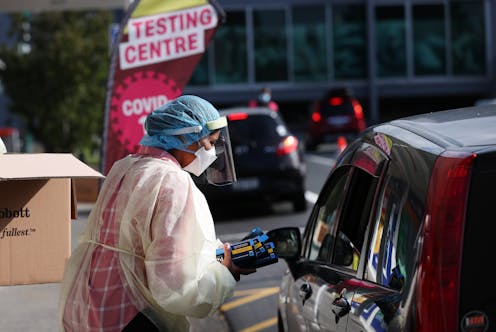
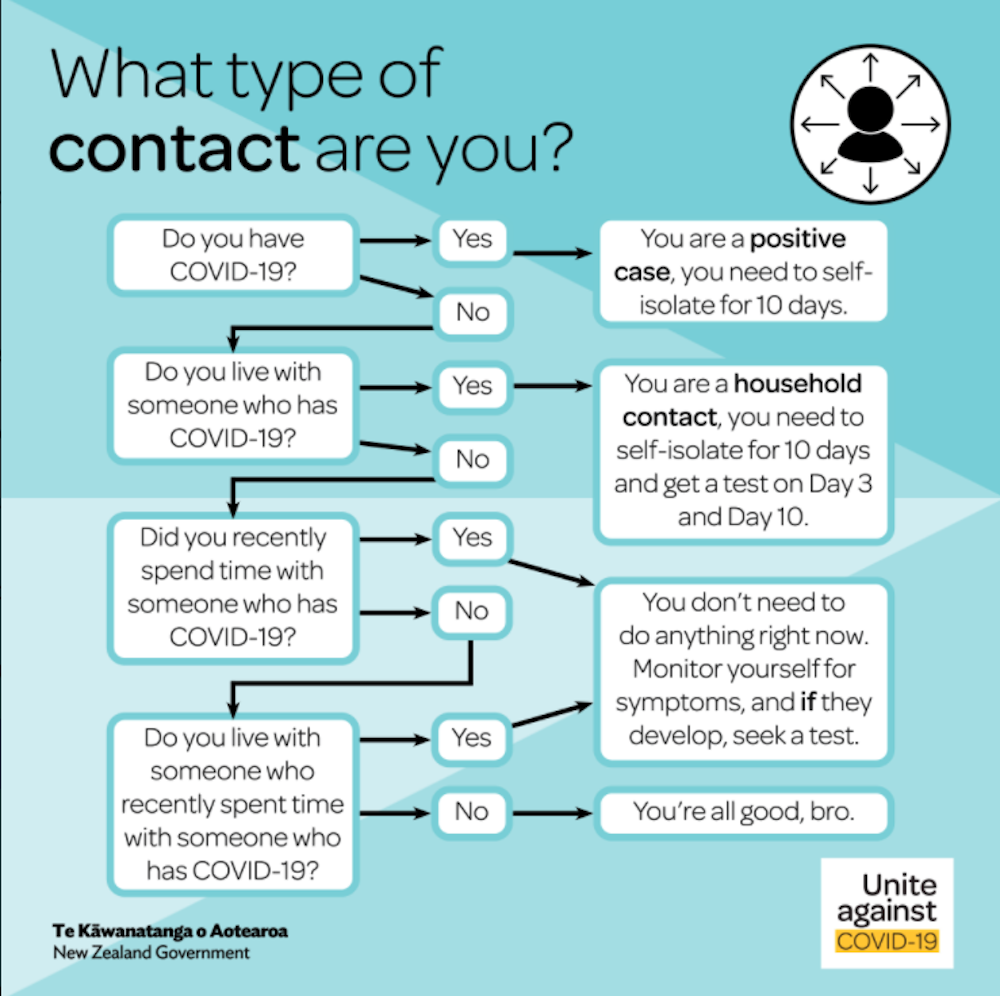
With Aotearoa New Zealand’s move into phase 3 of its response to the Omicron outbreak, new definitions and protocols for testing and isolation will mean new ways of measuring the impact of COVID-19.

Broadly speaking, there are two aspects to this new regime. The first relates to the changing definitions of who counts as a close contact, and what their isolation requirements are.

The second concerns testing processes, advice for who should get tested when, what sort of test they should take, and how the result is recorded. Switching to phase 3 means a switch to predominantly using rapid antigen tests (RATs).

Testing policy is important because the number of confirmed or probable cases informs our estimate of the number of underlying infections.

New confirmed cases are a lagging indicator of new infections, but a leading indicator of other important metrics like hospitalisations. The more we know about who is newly infected and where, the better we can plan individual and community responses to the outbreak.

RATs and risk

With the high case numbers we’re now seeing with Omicron, speed is key in returning test results. Quick results mean people can modify their behaviour accordingly and isolate if necessary. The sooner people receive a positive result, the sooner they can notify recent contacts, and those people can also isolate.

When case numbers are high, the risk of a false positive from a RAT is very low. This means the extra value from having a more sensitive PCR test is reduced compared with when we had lower case numbers.

Read more: As New Zealand's Omicron infections rise rapidly, genome surveillance is shifting gears

Conversely, when case numbers in the community are high, there is a risk of false negative results on a RAT for someone who either has symptoms or is a close contact of a confirmed case.

In such cases the prudent course of action would be to take a second test – either another RAT or a PCR test – and to assume there is still a decent chance you may be infected.

People who have no known exposure to a confirmed case, and no symptoms, can be relatively confident in the accuracy of a negative result from a RAT. And regardless of test results, anyone with COVID-like symptoms should be isolating until they recover from whatever is causing those symptoms, COVID or otherwise.

Estimating actual infection numbers

The move to phase 3 acknowledges that infection and confirmed cases are becoming high enough that many of the processes for monitoring and planning will be stretched and may become inaccurate.

As the number of infections rise, we can expect the “case ascertainment rate” (CAR) will start to fall. The CAR is a measurement of the percentage of total infections at a given point in time that are turned into confirmed cases.

Read more: 15 things not to do when using a rapid antigen test, from storing in the freezer to sampling snot

That is, given an observed number of confirmed cases, how many infections do we think are actually in the community, including those that are unconfirmed?

Keeping track of this metric at different stages of the outbreak is important. When isolation requirements for close contacts relax, infections may increase, while fewer people will be eligible for testing.

Or, people may test positive on a self-administered RAT but not report it. Both of these lead to higher numbers of unconfirmed infections.

Why accurate numbers matter

The only way to accurately estimate the CAR is through an “infection prevalence survey”. An example is the UK’s Office of National Statistics (ONS) survey, one of the strongest aspects of the UK’s otherwise patchy COVID response.

This randomised survey tries to directly measure the fraction of people who are infected with COVID at any point in time. A well-designed survey makes sure to sample sufficient people in different demographic groups and with different infection risk factors.

Read more: How accurate is your RAT? 3 scenarios show it's about more than looking for lines

Modelling can estimate the number of infections in different populations, subject to different assumptions. But without an infection prevalence survey, or equivalent data, only confirmed cases can be directly observed.

Since confirmed cases are an unknown fraction of total infections, and this fraction changes over time, it’s important to be able to accurately estimate the underlying infection numbers to validate such modelling.

And since infection numbers are a leading indication for hospitalisations, they are valuable for planning adjustments to processes or policies, such as testing or isolation.
Case numbers a fraction of the whole Without an infection prevalence survey it is necessary to fall back on less accurate measures of infection estimates. For example, the fraction of people admitted to hospital who test positive for COVID is an unreliable estimate of infection prevalence because it is biased by a large number of factors that are difficult to control for. Namely, people rarely turn up at hospital for random reasons. Many of the same factors that might drive hospital admissions, even for reasons not directly linked to COVID, are nonetheless related to COVID infection risk. Read more: How accurate is your RAT? 3 scenarios show it's about more than looking for lines As an example of infection prevalence data in action, in early January 2022, the UK recorded an average of around 200,000 daily confirmed cases. The ONS survey estimated just under 4 million people were infected at the time. Details around the length of the survey period during which people might test positive can affect the exact value of the CAR. But the UK figures paint a picture of only a small fraction of infections being detected, even with RATs being provided frequently and free to every household. With access to testing in Aotearoa being more limited than in the UK, we might expect our CAR to be even lower, and hence the number of reported cases is likely to significantly undercount true infections. But without an infection prevalence survey, it’s difficult to tell exactly how much we are undercounting by. Kylie Stewart from Te Matatini o te Horapa contributed to this article. Authors: Dion O'Neale, Project Lead - COVID Modeling Aotearoa; Senior Lecturer - Department of Physics, University of Auckland; Principal Investigator - Te Pūnaha Matatini, University of Auckland

Read more https://theconversation.com/nzs-confirmed-covid-case-numbers-are-rising-fast-but-total-infections-are-likely-much-higher-heres-why-177901

What to Do When an Older Car Is No Longer Worth Keeping in Melbourne

Ever looked at another repair quote and wondered whether your old car is still worth the trouble? It is a common turning point for Melbourne motoris...

Your Baby's First Year: A Local Guide to Feeding, Sleep, and When to Get Extra Support

Ask ten parents in a Brisbane mothers' group how their baby is feeding or sleeping, and expect ten different answers.  Someone's baby sleeps throug...

Kitchen and Laundry Makeover Ideas That Don't Require a Full Renovation

Full kitchen renos are expensive — and most people don't actually need one.  They need the kitchen to stop looking like it's stuck in 2009, or they...

How Technology Is Reshaping the Modern Australian Commercial Kitchen

The commercial kitchen has always been shaped by technology. Refrigeration changed how ingredients could be stored, modern ventilation transformed k...

The Number on a Roller Blind Fabric That Nobody Explains

Somewhere in the fabric book, next to the colour name, there is a percentage. Three per cent. Five per cent. Ten per cent. Nobody explains it, most c...

What’s Trending in Men’s Jewellery This Father’s Day!

Finding a Father’s Day gift that feels personal, stylish and genuinely wearable is not always easy. While socks and novelty mugs have traditionally ...

Road Signs: Understanding Their Role in Clear and Effective Signage

Effective signage and display hardware can help businesses communicate information, promote products and organise customer or visitor movement. Road...

Bottle Label Printing: Key Factors to Consider Before Your Next Packaging Run

Effective packaging begins with understanding the product, bottle material, artwork and production requirements when planning bottle label printing. H...

Planning a Long-Distance Move With Interstate Movers Melbourne

Moving between states involves more planning than a typical local relocation. Along with packing and transporting household belongings, you need to...

Understanding the Role of an I/O Controller in Industrial Automation

Modern industrial systems depend on accurate communication between sensors, machines and control systems. An I/O controller can help manage this commu...

How the Right Mining Hose Supports Demanding Operations

Mining environments place considerable demands on equipment used for material transfer, water management and processing. Hoses operating in these co...

Simple Ideas for Making Social Gatherings More Memorable

We have all been to those parties where everyone just stands around the kitchen island, staring at their phones, waiting for someone else to make a mo...

Outdoor Wall Lights: Improving Exterior Lighting Around Your Home

Lighting can influence how a room looks, feels and functions, so the right fitting should be selected according to both appearance and practical req...

Commercial Office Cleaning: Combining Routine Office Cleaning With Melbourne Service

Keeping a workplace clean requires a service that can accommodate everyday tasks as well as the particular needs of the business. Professional comme...

Caravan Sales in Queensland: How to Find the Right Caravan for Sale QLD

Caravan ownership is about more than having somewhere to sleep while travelling. For many Queenslanders, it is one of the best ways to explore regio...

What Sir Walter Buffalo Turf Actually Costs in 2026 (And Why Quotes Vary So Much)

Two quotes landed on a Hills District homeowner's kitchen table last spring for the exact same 80-square-metre backyard. One said $12 a metre. The o...

Nearly 1,300 NSW Hospital Beds Are Occupied By People Who Are Ready To Go Home

1,276 people in NSW hospitals have been medically cleared for discharge but remain in hospital because they're still waiting for NDIS or aged care sup...

National Survey Launched to Measure Operational Impacts of Federal NDIS Policy Reforms

The effects of recent NDIS reforms are beginning to move beyond policy papers and into day to day service delivery. A new national survey is asking ...
















