

1 in 5 fossil fuel projects overshoot their original estimations for emissions. Why are there such significant errors?
- Written by: Samantha Hepburn, Director of the Centre for Energy and Natural Resources Law, Deakin Law School, Deakin University
When estimating the amount of greenhouse gases a project – such as a new mine or power station – would release, it’s important to be as accurate as possible. This is not only because of the impact an approved project will have on the climate, but because the data are used to determine Australia’s national emission targets.
And yet, a report released this week by the Australian Conservation Foundation (ACF) showed one in five fossil fuel projects emit far more greenhouse gases annually than what was originally estimated – as much as 20 times more in some years.
This is a huge concern, as Australia’s industrial emissions increased by 60% between 2005 and 2020. What’s more, if estimates are grossly inaccurate, Australia’s emission-reduction targets will not be grounded in a credible assessment of greenhouse gas outputs.
So which projects had the biggest discrepancies? And why are there such significant errors?
Enormous discrepancies
When fossil fuel companies seek approval for a new project they must submit an environmental impact statement to the relevant government department. This statement is crucial for all projects with the potential to significantly impact the human environment. Estimating the amount of emissions likely to flow from a project each year is a critical part of the environmental impact process.
With a team of undergraduate students from the Australian National University, ACF investigated 48 fossil fuel projects. They found 11 had significantly exceeded their estimation of annual emissions.
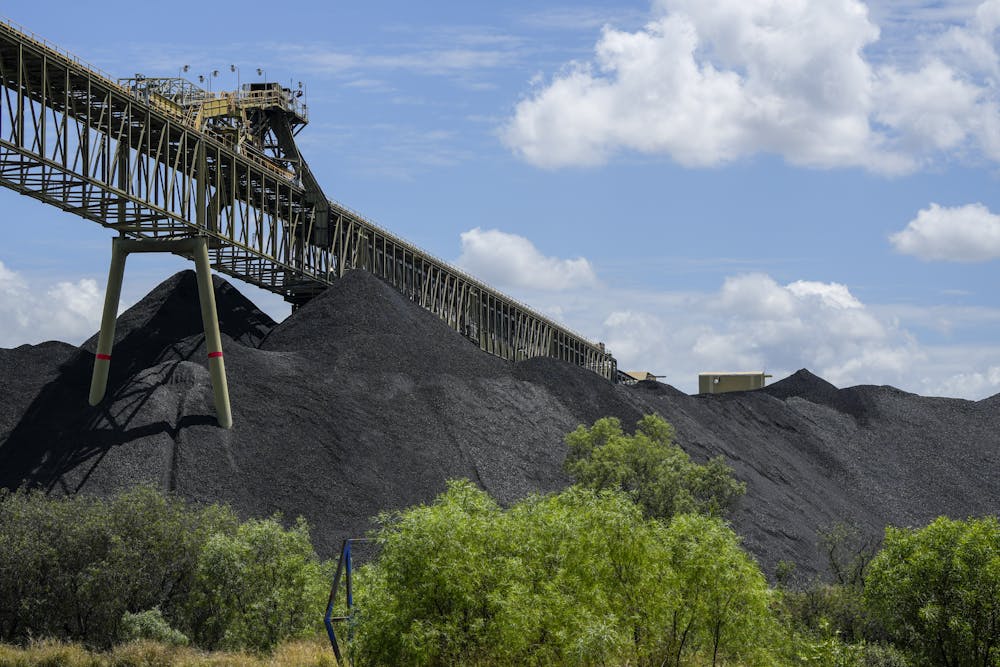
The projects involved fit into three broad categories: gas projects, coal mines in Queensland’s Bowen Basin, and coal mines in New South Wales.
The worst discrepancy, in terms of overall aggregate emissions, came from Chevron’s West Australian Gorgon liquefied natural gas project. The ACF report found the project emitted 16 million tonnes of CO₂ more than it anticipated. Its annual reported emissions in its environmental impact statement ranged from 157% to 226%.
The project was initially approved on the basis it would sequester at least 80% of emissions from its offshore gas drilling plan over the project’s first five years via carbon capture and storage.
Chevron told the ABC it disputed the research. A spokesperson said:
The assumptions underpinning calculations used for the ACF report appear to be incorrect.
While it acknowledged delays in its carbon capture and storage system, Chevron said it is committed “to make good on this shortfall”.
(This includes) the acquisition and surrender of 5.23 million greenhouse gas offsets and a $40 million investment in Western Australian lower carbon projects. Chevron Australia shares and takes seriously the expectations of our community and governments in regard to lowering emissions and addressing the challenge of climate change.
There were also significant discrepancies at other major projects run by several major fossil fuel companies, with one gas project estimated to have overshot its projected emissions by 1,800-2,000%.
So how are emissions calculated?
The method used depends upon the type of project. Underground coal mines in operation must vent gas for safety purposes, so the infrastructure needed to measure emissions with reasonable accuracy already exists, although fugitive (leaking) emissions will still need to be calculated.
Other projects such as onshore gas drilling must calculate their estimate by taking into account all potential emissions. This may include, for example, the amount of diesel likely to be used or the global warming potential any methane that might be released from deeper coal seams.
According to the ACF, one of the most significant factors that may be contributing to inaccurate emission estimates is our changing understanding of the global warming potential of methane.
The latest scientific assessment from the Intergovernmental Panel on Climate Change has stated that methane has about 28 times greater global warming potential than CO₂. This is higher than previous assessments. The ACF report suggests this factor may account for some level of inaccuracy, if environmental impact statements are grounded in those previous assessments.
However, this factor and other reasonable margins for error cannot fully explain the degree of inaccuracy we’re seeing. While inaccuracies will vary from case to case, the ACF report says the errors may stem from a failure to, for example, install technology, or accurately evaluate diesel emissions, or consider the methane intensity of coal in the Bowen basin.
Whatever the case, the gap between estimated and reported emissions suggests a fundamental regulatory failure.
 Australia’s industrial emissions have increased 60% over the past 15 years.
Shutterstock
Australia’s industrial emissions have increased 60% over the past 15 years.
Shutterstock
The ‘safeguard mechanism’ isn’t working
The safeguard mechanism is a federal government policy that’s supposed to cap industrial emissions. It requires large fossil fuel companies to report emissions where they exceed 100,000 tonnes of CO₂ equivalent per year.
Where this occurs, operators must either buy carbon credits to offset the emissions, or pay a penalty. The imposition of this arbitrary baseline is problematic for two main reasons.
First, it’s grounded in absolute tonnes of CO₂ equivalent rather than “emission intensity”. Emission intensity refers to the volume of emissions per gross domestic product, and is a preferable measure because it corresponds with production – it’ll rise if expected production increases.
Second, the mechanism is too high. Many operators are exceeding their estimates, but not reaching the baseline of 100,000 tonnes. This means there are no consequences for inaccurate estimates.
Read more: Be worried when fossil fuel lobbyists support current environmental laws
What needs to change?
Without strong regulation, large emitters can continue to emit significantly more than estimated without incurring additional costs, until those emissions breach the safeguard baseline. This needs to change.
The safeguard mechanism should set the baseline on the estimated emissions, which approval for a project is based upon. If a project exceeds those estimates, giving regard for a reasonable margin of error, the mechanism should be triggered.
This would mean approved projects that emit well beyond the estimate must either mitigate or offset those excess emissions.
The ACF report found if baselines were set on the estimates when projects were approved, the companies responsible for excess emissions would’ve been required to surrender more than 24 million Australian carbon credit units. At the current average price of A$12.06 per unit, they would have had to pay more than A$290 million.
Under such a law, the federal government could be confident the estimated emission impacts from proposed projects are actually reliable.
Authors: Samantha Hepburn, Director of the Centre for Energy and Natural Resources Law, Deakin Law School, Deakin University


















