Modern Australian
Times Advertising

Jessica Au's precise, poetic meditation on mothers and daughters

  • Written by Jen Webb, Dean, Graduate Research, University of Canberra
Jessica Au's precise, poetic meditation on mothers and daughters

Jessica Au has been appearing on the Australian literary scene for quite some time now. I first noticed her work in the noughties: short fictions published in Overland and Wet Ink, stories with well-crafted sentences and engaging characters and an aesthetic that leaned toward stillness and dissociation.

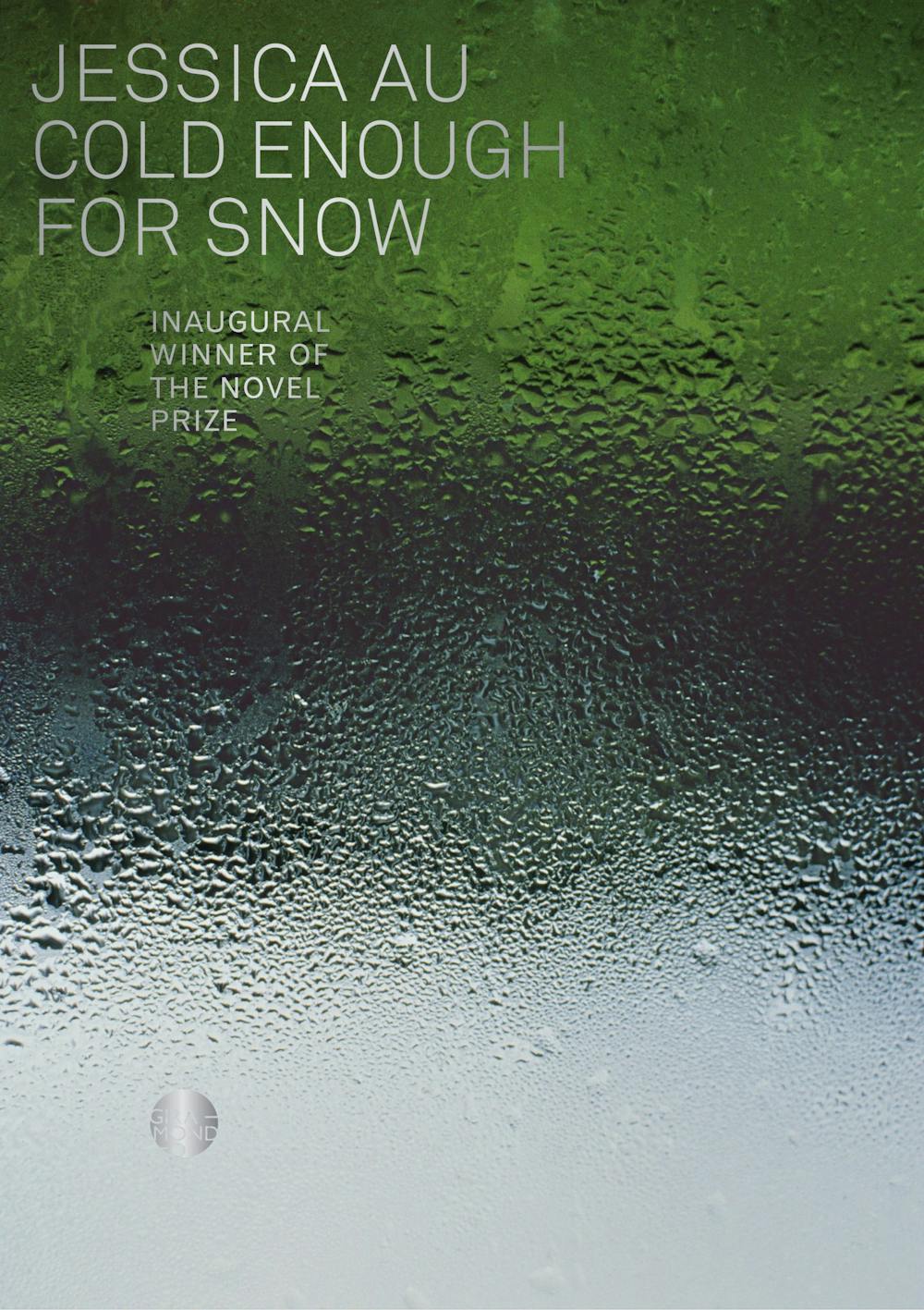
She didn’t publish much, or not much that I found, before or after her first novel, Cargo (2011), another book I would encourage people to read. I think it is fair to say she is not prolific. She has conceded that she is a “slow writer”. But the writing is worth the wait. Au’s new book, Cold Enough For Snow, has already won the inaugural Novel Prize, and been published in fifteen languages.

Review: Cold Enough for Snow - Jessica Au (Giramondo)

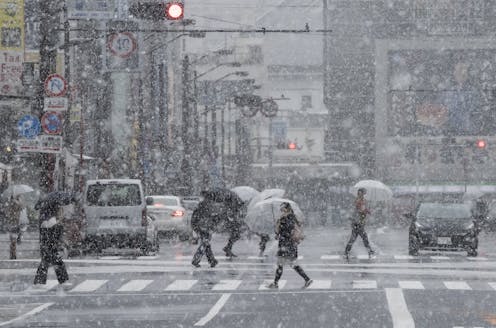
Cold Enough For Snow is a little book, so short (at 97 pages) that it hasn’t bothered with chapter breaks, but is structured more in stanzas, or perhaps stations. The narrator and her mother travel through Japan on a short holiday, visiting destinations – art galleries, historic sites, parks – in Tokyo, Osaka, Kyoto and elsewhere. They are travellers characterised by what seems a careful relationship with their surroundings, and with each other. Mother and daughter seem to connect only en passant, as is hinted in the first paragraph of the novel, where the narrator senses her mother’s fear that if they are separated by the Tokyo crowd, “we would not be able to make our way back to each other, but continue to drift further and further apart”. Drifting, whether together or apart, is what it felt like to move through the novel’s pages. But it is not a thoughtless or oneiric drifting. It is characterised by an intense focus on what most of us mostly ignore – the utterly quotidian. There is no enthusiasm for cherry blossoms or temples here; there is, however, close attention paid to the colour of the glaze at the bottom of a rice bowl, the texture of curtains in a hotel room, the way garments in a clothing shop sway on their hangers, and the splash of rain on the ground, “which was not asphalt, but a series of small, square tiles, if you cared enough to notice”. The narrator recounts such details with precision, as though she is looking for somewhere to locate her own cares, working out how and what to be in the quotidian world, and how to love effectively. Cold Enough For Snow is also a mother-and-daughter story. The narrator has visited Japan previously, with her partner Laurie, and “it was like when we were children again, mad and excitable, endlessly talking, endlessly laughing”. Though she had wanted to have the same sort of experience with her mother, theirs is a companionship marked by silence, or the exchange of small banal comments: “I asked her what she had thought of today, and she said it had been very nice.” On the one occasion she asks her mother about her beliefs, the response is not encouraging: “She said that she believed that we were all essentially nothing … there was no control, and understanding would not lessen any pain.” The narrator responds with silence, then: “I looked at my watch and said that visiting hours were almost over, and that we should probably go.” Intimacy avoided. What it might mean to be a mother – ethically, ontologically – demands the narrator’s close attention because she and her partner are discussing starting a family. For them, this means more than having a small person to love, or expanding from two in the house to three; it means more than sleepless nights and nappies and all the appurtenances of parenthood. Although, as she says, the idea of having a child is “as lovely and elusive as a poem”, she is also deeply conscious of the responsibilities of parenthood: I knew that if I had a daughter, she would live partly because of the way I had lived, and her memories would be my memories, and she would have no choice in that matter. It is perhaps not surprising, then, that she is ambivalent about being a mother, and about being a daughter. After all, “My lecturer had said to us once that parents were their children’s fate.” This is a weighty consideration. Yet the narrator seems, at last, to reach a sort of accord. In the final paragraph, while they are preparing to go back to Australia, she observes her mother as an object, an artwork: “she sat as a statue might have sat … She had too the quality of a sculpture.” But she sees too that her mother is an ageing woman. In the penultimate sentence, her mother says (in what I think is the only direct dialogue in the novel), “Could you help me with this?” And she does help her. The novel ends at this uncertain but somewhat optimistic point. We move through our generations, connected through all our ambivalences, the uncertainties and unknowns. And at the end, we can connect, if only through our capacity to help and be helped. The density and the, dare I say it, magic of this book is how it weaves together a somewhat chilling distance with a close and sympathetic attunement to the lived world. It rejects the consolations of plot and – in conventional terms – character. It provides instead a sort of pentimento made of words, all allusion and invocation. It is like a poem or, as many critics have said about this book, a meditation. They have offered phrases like “beautifully observed”, “hypnotic”, “calm simplicity”, and (from Helen Garner): “So calm and clear and deep, I wished it would flow on forever”. I wished that too; but I think it ends at the right moment. It does not precisely let go of its concerns, but it gestures toward the clarity and complexity and confusion of the world. It orients the narrator, and maybe the reader, toward to a fresh way of seeing, and a fresh way of considering the responsibilities of being, and being alive. Authors: Jen Webb, Dean, Graduate Research, University of Canberra

Read more https://theconversation.com/the-responsibilities-of-being-jessica-aus-precise-poetic-meditation-on-mothers-and-daughters-175632

A Beginner's Guide to Owning a Caravan in Australia

Owning a caravan opens up a style of travel that's hard to match for freedom and flexibility. However, for those just starting out, the process of c...

Preparing Your Air Conditioner for Summer: What Most Homeowners Overlook

As temperatures rise, many homeowners switch on their air conditioning for the first time in months — only to find it’s not performing the way i...

What Actually Adds Value to Properties in Newcastle

Newcastle has seen steady growth over the past few years, with more buyers looking beyond Sydney for lifestyle, space, and long-term value. As dema...

What is Design and Build in Construction?

Imagine you’re about to start a new construction project, maybe it’s a custom home or a commercial building. You’ve got the idea, the land, an...

Commercial roof leak detection: why early action protects your building

Water ingress is one of the most disruptive and costly issues facing commercial properties. For property managers and facilities teams, even a minor...

Custom Photo Frames: Turning Everyday Moments into Lasting Displays

Photos capture moments, but how you display them determines how they’re experienced every day. A meaningful photograph deserves more than a generi...

Managed IT Services: A Smarter, More Predictable Way to Run Your Business Technology

If you’ve ever had your systems go down in the middle of a busy day, you’ll know how quickly things can unravel. Phones stop ringing, emails sto...

Landscaping Geelong — Coastal Elegance Meets Practical Design

A Landscape Shaped by Location Geelong occupies a unique position within Victoria’s broader landscape. It carries the energy of a growing city, y...

Electric Adjustable Beds: A Simpler Way To Sleep Better

Sleep should feel natural. It should come easily, without discomfort, without constant repositioning, and without waking up feeling sore. But for ma...

Healthy Snacking Sorted: Premium Beef Jerky

In today's fast-paced world, finding a snack that's both satisfying and genuinely good for you can feel like a mission. Many readily available optio...

What to Know Before Getting Dental Implants: A Guide for First-Time Patients

Dental implants Perth patients often look for a long-term solution for missing teeth without the hassle of dentures or bridges. If you are thinking ...

Why Protective Packaging Matters More Than Ever In Modern Shipping

In today’s fast-paced world of logistics and eCommerce, ensuring that products reach customers safely is a top priority. This is where a bubble wrap...

Pest Control Albury: Protecting Your Property From Hidden Damage And Health Risks

Pests rarely announce their arrival. They creep into spaces quietly, turning small, unnoticed corners into breeding grounds for bigger problems. Tha...

Why Root Canal Treatment Melbourne Is Essential For Saving Natural Teeth

Tooth pain has a way of demanding attention at the worst possible time. When the discomfort becomes persistent and intense, it often signals an infe...

How Bird Flight Diverters Help Protect Wildlife Around Power Infrastructure

Power infrastructure plays an essential role in modern life, but it can also create risks for wildlife, particularly birds moving through establishe...

What Businesses Should Look for in a Commercial Coffee Partner

Choosing a commercial coffee partner is not the same as choosing a machine. It is a broader decision that affects beverage quality, staff efficiency...

3PL Logistics Australia Driving Smarter Supply Chains And Faster Deliveries

In a world where customers expect speed almost as much as quality, logistics has become the silent heartbeat of every successful business. Behind th...

Why Professional Electrical Services Are Essential For Modern Properties

Electricity powers almost every aspect of daily life, from lighting and appliances to complex systems in homes and businesses. This makes choosing a...