

Can a martini stop Putin? How consumers and investors are imposing DIY sanctions on Russia
- Written by: Erin O'Brien, Associate Professor, Centre for Justice, Queensland University of Technology
Russia’s invasion of Ukraine has drawn swift condemnation from the United Nations, world leaders and protesters.
But the outrage doesn’t stop there. McDonald’s has just temporarily closed 850 restaurants across Russia, while Starbucks says its 100 outlets will also shut.
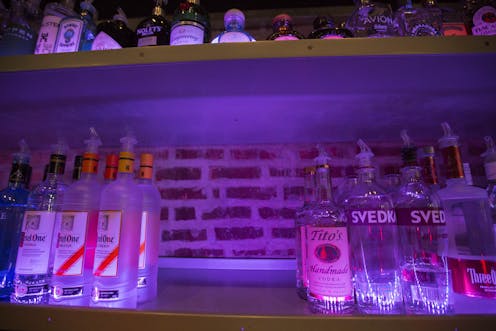
This follows boycotts of Russian vodka in Australia, Europe and North America, with patrons shunning Russian brands of vodka, bartenders pouring it down the sink and major outlets like Dan Murphy’s removing the spirit from their shelves.
As researchers of political activism and participation, we are interested in how individuals use their consumer and investor power to respond to Russia’s actions.
Applying economic pressure on foreign regimes is typically the domain of governments through sanctions. But what researchers call “political consumerism” offers individuals a chance to join the protest by applying their own personal sanctions.
How is this working against Russia?
What is political consumerism?
Whether we do it for political or ethical reasons, deciding what we buy (or don’t buy) is one of the most common forms of political participation in western liberal democracies.
Consumers can join boycotts to punish a company, or “buycotts” to reward them.
Consumers can make lifestyle commitments like veganism to align with their stance on animal rights or the environment. Individuals can also engage in “political investorism”, as our soon to be published research shows, by selecting ethical portfolios for superannuation or pension funds, supporting shareholder resolutions, or advocating for divestment.
While political consumerism is often directed at corporations, it can also be directed against countries. We may not be able to directly lobby a foreign government or vote out their president. But we can send a clear message through a “surrogate boycott” by targeting the brands, products and companies from that country.
Surrogate boycotts
Surrogate boycotts are not new. In 1995 consumers boycotted French wine and cheese to protest France’s nuclear testing in the South Pacific. Israel has since been the target of a longstanding boycott, divest and sanction campaign over Palestine.
Read more: Ukraine: the UN’s ‘responsibility to protect’ doctrine is a hollow promise for civilians under fire
Yet the rapid and extensive boycott against Russia ranging from caviar and white fish to films and sports teams suggests a growing normalisation of boycotts and political consumerism as a response to government actions.
Russian companies, sportspeople and even opera singers are now the proxy target for the Russian government, facing surrogate boycotts in addition to economic sanctions.
The surrogate boycott of Russia is not limited to Russian-owned companies or Russian-made products like vodka.
Activist groups also called for boycotts on companies that were slow to halt their own operations in Russia, including Coca Cola, Hyundai, Starbucks and McDonald’s. Two weeks after the invasion, these companies have now bowed to pressure and suspended certain operations.
Not just symbolism
Refusing to buy a Big Mac, or opting for a French-made Grey Goose vodka martini is not going to turn the tanks around. But these DIY sanctions serve an important symbolic function by condemning a country’s damaging actions and catalysing companies to join the protest.
Beyond symbolism, protesting Russia’s actions through political consumerism may have real impacts.
While governments can impose sanctions and import bans, consumers and investors can expand the scope of economic pressure. The threat of consumer and investor pressure may have contributed to the decision by major multinational companies like Apple, Visa, Mastercard and others to quickly cease operations in Russia.
What about the oil?
That pressure is now building around Russia’s oil and gas production. More than 600 civil society organisations from 57 countries have asked governments to end all trade and investment in Russian fossil fuels.
Before world leaders began to impose bans on Russian oil imports and investments, several major companies including BP and Norwegian energy company Equinor had already divested. Superannuation and pension funds were being pressured to do the same.
Australian non-government organisation Market Forces has criticised five Australian superannuation funds for their investments in Russian fossil fuels and encouraged individuals to lobby their own super funds to divest.
Meanwhile, the board of directors of Russia’s second largest oil company, Lukoil, has called for a quick end to the conflict in Ukraine. This follows a dramatic fall in its share price and threatened boycotts of Lukoil gas stations in the United States.
Ultimately, we all need to consider how we spend our money and what economic connections we may have with an aggressive regime.
Authors: Erin O'Brien, Associate Professor, Centre for Justice, Queensland University of Technology


















